Environmental Antimicrobial Resistance in Agricultural Water: Soil, Crops and One Health Perspectives
Abstract
Agricultural
water represents an important interface connecting environmental processes,
soil health, crop production, livestock systems and human health. Increasing
detection of antimicrobial-resistant bacteria and resistance genes in aquatic
and agricultural environments has raised concern regarding their persistence,
dissemination and potential movement through food and water pathways.
Irrigation with contaminated surface water may introduce resistant
microorganisms into agricultural soils, where microbial communities organic
matter, moisture, nutrient availability and environmental conditions can
influence persistence and horizontal gene transfer. Resistant bacteria may
subsequently interact with crops, farm workers, animals and downstream aquatic
systems. This review examines the environmental dimensions of antimicrobial
resistance in agricultural water, emphasizing soil–water interactions, crop
exposure, resistance surveillance, molecular detection, agricultural practices
and One Health management. Particular attention is given to β-lactamase-associated resistance and the
significance of environmental investigations. Integrated monitoring, improved
water quality, responsible antimicrobial use, molecular surveillance and
sustainable agricultural management are essential for reducing environmental
resistance dissemination.
Keywords: Antimicrobial resistance, Agricultural
water, Soil health, Irrigation, β-lactamase,
Crops, Environmental microbiology, One Health, Geoscience, Sustainable
agriculture
1.
Introduction
Agriculture
depends fundamentally on interactions among soil, water, climate,
microorganisms, plants and human management. Agricultural systems therefore
provide an important setting for studying environmental processes that
influence both productivity and public health. Soil and water science
increasingly recognizes the need to understand contamination, nutrient cycling,
microbial ecology and sustainable resource management as interconnected
processes rather than isolated components. Current soil-science and
agricultural research encompass soil chemistry, microbiology, fertility, land
management, contamination, plant–soil interactions and environmental protection1.
Antimicrobial
Resistance (AMR) represents one of the emerging environmental challenges within
this interconnected system. Resistant bacteria and antimicrobial-resistance
genes can enter agricultural environments through wastewater, manure,
biosolids, animal production, human sewage, pharmaceutical residues and
contaminated surface water. Once introduced, resistance determinants may
persist or circulate among environmental microbial communities2,3.
Agricultural
water is particularly important because rivers, canals, groundwater, treated
wastewater and drainage systems can connect multiple environments. Water used
for irrigation can transport microorganisms and resistance genes to
agricultural soils4,5. The
subsequent interaction among water, soil minerals organic matter, plant roots
and microorganisms may influence persistence and dissemination.
Environmental
surveillance has provided evidence that clinically important resistance
determinants can occur outside healthcare settings. Guma
et al.6 reported molecular identification of two β-lactamase genes in Klebsiella species isolated from
the Euphrates River in Iraq. Although Klebsiella is not specifically an
agricultural pathogen, this finding illustrates the relevance of aquatic
environments as reservoirs for bacteria carrying clinically important
antimicrobial-resistance determinants.
The
agricultural environment should therefore be viewed as part of a wider One
Health network involving humans, animals, plants, water, soil and
microorganisms. This perspective is particularly important because agricultural
systems can simultaneously receive resistant organisms from upstream sources
and provide pathways for their movement into food production.
This
review examines the environmental dimensions of antimicrobial resistance in
agricultural water, focusing on soil-water interactions, crop exposure,
microbial persistence, β-lactamase
resistance, agricultural management, molecular surveillance and One Health
strategies.
2.
Agricultural Water as an Environmental Interface
Agricultural
water is not simply a resource for crop irrigation. It is an ecological medium
containing microorganism, dissolved nutrients organic compounds, suspended
particles, minerals and potentially anthropogenic contaminants.
Surface
waters receiving municipal wastewater, agricultural runoff, livestock effluents
and industrial discharges may contain diverse bacterial communities. During
irrigation, these microorganisms can be transferred to agricultural soils and
crop surfaces.
These
factors influence microbial survival and the potential persistence of
resistance genes.
Soil
is especially important because it contains one of the most diverse microbial
communities on Earth. The introduction of resistant bacteria into soil does not
necessarily mean that resistance will persist indefinitely. Some introduced
organisms may decline rapidly because of competition or unfavorable
environmental conditions. Others may become temporarily established or exchange
genetic material with indigenous microorganisms.
The
interaction between agricultural water and soil therefore represents a dynamic
environmental process rather than a simple contamination event.
3.
Environmental Sources of Antimicrobial Resistance
AMR
can enter agricultural environments through several pathways.
3.1.
Wastewater
Municipal
and hospital wastewater can contain antimicrobial-resistant bacteria and
resistance genes. If wastewater receives inadequate treatment before
environmental discharge or agricultural reuse, resistant microorganisms may
enter surface waters and irrigation networks.
3.2.
Livestock and poultry production
Veterinary
antimicrobial use can select for resistant microorganisms in animal
gastrointestinal systems. Manure application to agricultural land can
subsequently introduce bacteria and resistance genes into soil.
3.3.
Agricultural runoff
Rainfall
and irrigation can transport bacteria and genetic material from animal
facilities, manure-amended fields and contaminated soils into drainage channels
and rivers.
3.4.
Aquatic environments
Rivers
and canals can integrate contamination from multiple upstream sources. The
Euphrates River investigation reported by Guma et al. demonstrates how
environmental water can be investigated for clinically important β-lactamase
genes6.
3.5.
Human activities
Population
growth, inadequate sanitation, wastewater discharge, informal settlements and
poor waste management can increase microbial loading in water resources.
These
sources frequently overlap. A river receiving wastewater may subsequently be
used for irrigation, creating a direct environmental connection between human
activity, water quality, soil, crops and food systems.
4.
β-Lactamase Genes and Environmental
Resistance
β-lactam antibiotics are among the most widely used antimicrobial classes
in human and veterinary medicine. Resistance can arise through several
mechanisms, including enzymatic degradation of β-lactam
compounds.
β-lactamases hydrolyze the β-lactam
ring of susceptible antibiotics, reducing their antimicrobial activity. Genes
encoding these enzymes may occur on chromosomes or mobile genetic elements such
as plasmids, transposons and integrons.
Environmental
bacteria can provide reservoirs in which resistance genes persist and
potentially move between microbial populations. Horizontal gene transfer can
occur through mechanisms including conjugation, transformation and
transduction.
The
environmental detection of resistance genes therefore has significance beyond
the individual bacterial species in which they are identified.
Guma et al.6 investigated β-lactamase-associated
genes in Klebsiella
species recovered from the Euphrates River in Iraq. Their study is particularly
relevant to geoscience and agriculture because river systems can function as
interfaces connecting environmental microbiology with agricultural water
resources.
The presence of resistance genes in environmental water should not automatically be interpreted as evidence of human infection. Instead, it indicates that the environmental compartment may contribute to the maintenance or movement of resistance determinants (Table 1).
Table 1: Major environmental pathways contributing to antimicrobial resistance in agricultural systems.
Environmental Source
Main Pathway
Potential Agricultural Consequence
Monitoring Priority
Municipal wastewater
Discharge into rivers/canals
Resistant bacteria enter irrigation water
High
Hospital wastewater
Wastewater discharge
High antimicrobial-resistance burden
High
Livestock manure
Land application
Introduction of resistant bacteria and genes into soil
High
Poultry litter
Agricultural amendment
Soil and groundwater contamination
High
Agricultural runoff
Transport during rainfall/irrigation
Movement into surface waters
Moderate–high
Contaminated rivers
Irrigation
Direct crop and soil exposure
High
Biosolids
Soil amendment
Introduction of microbial contaminants
Moderate–high
Septic systems
Groundwater contamination
Potential irrigation-water contamination
Moderate
Industrial discharge
Surface-water contamination
Chemical and microbial stress
Site-dependent
Environmental Source
Main Pathway
Potential Agricultural Consequence
Monitoring Priority
Municipal wastewater
Discharge into rivers/canals
Resistant bacteria enter irrigation water
High
Hospital wastewater
Wastewater discharge
High antimicrobial-resistance burden
High
Livestock manure
Land application
Introduction of resistant bacteria and genes into soil
High
Poultry litter
Agricultural amendment
Soil and groundwater contamination
High
Agricultural runoff
Transport during rainfall/irrigation
Movement into surface waters
Moderate–high
Contaminated rivers
Irrigation
Direct crop and soil exposure
High
Biosolids
Soil amendment
Introduction of microbial contaminants
Moderate–high
Septic systems
Groundwater contamination
Potential irrigation-water contamination
Moderate
Industrial discharge
Surface-water contamination
Chemical and microbial stress
Site-dependent
5. Soil as a Reservoir and Filter
Soil occupies a central position in agricultural geoscience because it receives materials transported by water, air organisms and human activities. Its physical and chemical properties influence microbial survival and contaminant mobility.
Clay minerals and organic matter can adsorb microorganisms and extracellular DNA. Such interactions may influence the persistence and mobility of resistance determinants.
Soil moisture is another important factor. Microbial activity generally changes considerably with water availability. Wet conditions can facilitate microbial interactions, while drying may reduce the survival of some organisms.
Soil pH can influence bacterial growth and antibiotic persistence. Temperature, redox conditions, nutrient availability and salinity can similarly alter microbial community composition.
Consequently, the risk associated with agricultural AMR cannot be evaluated using water concentration alone. Soil characteristics must also be considered.
This is consistent with modern soil-science approaches emphasizing soil chemistry, physics, microbiology, fertility, environmental quality and land management as interconnected research areas.
6. Crop Exposure and Plant–Microbe Interactions
Crops
can interact with microorganisms present in irrigation water and soil. Leaf
surfaces, roots, rhizospheres and harvested plant tissues represent distinct
microbial habitats.
Root-associated
microbial communities are particularly important. The rhizosphere contains root
exudates that provide nutrients and signaling compounds to microorganisms.
These conditions can support microbial growth and alter microbial community
structure.
Irrigation
water contaminated with resistant bacteria may deposit microorganisms directly
onto plant surfaces. However, detection on a crop does not necessarily indicate
internal colonization or successful transfer into edible tissues.
The probability of exposure depends on crop type, irrigation technique, water quality, environmental conditions and time between irrigation and harvest.
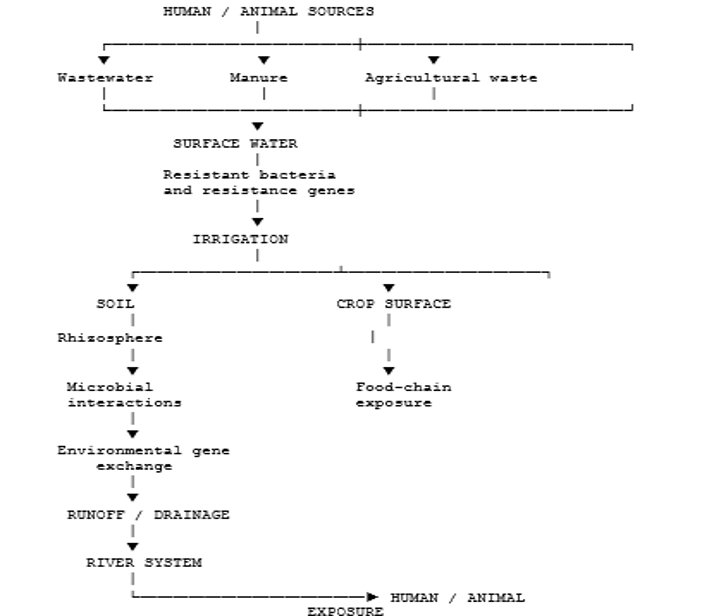
Figure 1: Conceptual pathway of antimicrobial-resistance dissemination through agricultural systems.
The diagram represents a conceptual One Health pathway rather than a quantitative estimate of transmission probability.
7.
Agricultural Practices Influencing AMR
Agricultural
management can influence environmental resistance through water use, manure
management, fertilizer selection, antibiotic application, crop rotation and
soil conservation.
Excessive
antimicrobial use in livestock production can increase selection pressure.
Manure management is therefore important because untreated manure may contain
resistant bacteria and resistance genes.
Composting
can modify microbial communities and may reduce some microbial hazards,
although treatment effectiveness depends on temperature, duration, moisture and
management conditions7.
Irrigation
method can also influence exposure. Drip irrigation can reduce direct contact
between irrigation water and edible plant surfaces compared with overhead
irrigation, although the overall environmental risk depends on crop type and
production system.
Integrated
agricultural management should therefore include both productivity and
environmental quality.
8.
Antimicrobial Resistance and Agricultural Geoscience
Geoscience
contributes to AMR research by providing tools for understanding the movement
of contaminants and microorganisms through soil, groundwater, surface water,
sediments and agricultural landscapes8,9.
Spatial
variability is particularly important. A resistance determinant detected in one
river location may not be uniformly distributed throughout the watershed.
Concentrations can change with hydrology, wastewater inputs, rainfall, sediment
movement and seasonal agricultural activity.
Geospatial
mapping can identify potential contamination hotspots. Remote sensing cannot
directly identify bacterial resistance genes under ordinary agricultural
monitoring conditions, but satellite and geospatial information can
characterize land use, irrigation networks, water bodies, crop distributions
and environmental conditions that influence exposure10.
Agro-geoinformatics
increasingly integrates spatial information with agricultural sustainability,
environmental research, natural-resource conservation, land management, climate
change and agricultural decision-making.
Combining
geospatial data with microbiological sampling can therefore strengthen
environmental AMR surveillance.
9.
Molecular Surveillance
Culture-based
microbiology remains important because it provides viable isolates for
antimicrobial susceptibility testing. However, molecular methods can detect
resistance determinants that may be difficult to identify through conventional
culture.
Polymerase
Chain Reaction (PCR) can target specific resistance genes. Quantitative PCR can
estimate relative or absolute abundance under appropriate experimental
conditions. Metagenomic sequencing can provide broader information concerning
microbial communities and resistance genes.
Whole-genome
sequencing can additionally characterize bacterial lineages, plasmids,
virulence determinants and resistance-associated mutations.
The
molecular study of β-lactamase genes in Klebsiella
from the Euphrates River6
provides an example of how targeted molecular surveillance can identify
environmental resistance determinants.
10.
Agricultural Water Quality and Food Safety
Water
quality is a major determinant of agricultural sustainability and food safety.
Water containing fecal indicators, pathogenic bacteria, resistant organisms or
chemical contaminants can introduce multiple risks.
Water-quality
assessment should therefore include conventional physicochemical parameters
alongside microbiological indicators where risk warrants11.
Microbiological
analysis may include fecal indicators, bacterial pathogens, antimicrobial
susceptibility patterns and selected resistance genes.
This
integrated approach is more informative than testing a single bacterial
indicator because environmental AMR is influenced by multiple factors.
11.
Nanotechnology and Agricultural Environmental Monitoring
Nanotechnology
has potential applications in agricultural environmental monitoring, including
nanosensors, biosensors, antimicrobial surfaces and analytical platforms.
Nanotechnology-based
systems have also been investigated in drug-delivery and tissue-engineering
applications. Shallal et al.12 reviewed
nanotechnology-based drug-delivery approaches for bone tissue engineering.
Although that work is biomedical rather than agricultural, the underlying
concept of controlled nanoscale interactions has relevance to environmental
sensor development.
However,
nanotechnology can also introduce environmental concerns. Shallal and Owaid
discussed hazards and challenges associated with nanotechnology in agriculture13. Nanomaterials entering soil or water may
interact with microorganisms, plants, minerals and organic matter.
Consequently,
the application of nanotechnology to AMR surveillance should incorporate
environmental fate, toxicity, persistence and ecotoxicological assessment.
12.
Immunological and Environmental Biomarkers
Environmental
contamination can affect organisms through complex pathways. Biomarkers may
provide information about physiological responses to environmental stressors,
although they require careful interpretation.
Shallal
reported changes in inflammatory markers and biochemical parameters associated
with smoking in males11. Although
smoking is unrelated to agricultural AMR, this work illustrates the broader
importance of biomarker interpretation when evaluating environmental or
lifestyle exposures.
Similarly,
Shallal's work on immunomodulatory pathways in renal failure demonstrates the
complexity of inflammatory signaling and biomarker relationships14. These concepts may inform environmental
health studies where agricultural workers, livestock or wildlife are exposed to
multiple environmental stressors.
Biomarker
studies should therefore incorporate appropriate controls and avoid attributing
nonspecific inflammatory changes to a single environmental exposure without
supporting evidence.
13.
One Health Framework
The
One Health concept provides an appropriate framework for agricultural AMR
because resistant microorganisms can circulate between humans, animals, plants,
soil, water and food systems.
The
major advantage of such integration is the ability to identify relationships
between environmental reservoirs and clinically important resistance15.
For
example, if a resistance gene is detected in agricultural water, soil, animal
samples and clinical isolates, genomic and epidemiological analysis may help
determine whether these findings represent related transmission pathways or
independent occurrences.
Such interpretation requires carefully designed sampling rather than assuming that detection in different compartments establishes direct transmission (Table 2).
14. Environmental Management Strategies
Table 2: Integrated strategies for controlling antimicrobial-resistance dissemination in agricultural landscapes.
|
Intervention |
Environmental target |
Expected benefit |
Key implementation consideration |
|
Irrigation-water monitoring |
Rivers, canals, wells |
Early identification of contamination |
Seasonal sampling |
|
Wastewater treatment |
Municipal/hospital effluent |
Reduce microbial and resistance burden |
Treatment efficiency |
|
Manure management |
Agricultural soil |
Reduce introduction of resistant organisms |
Composting and controlled application |
|
Antimicrobial stewardship |
Livestock systems |
Reduce selection pressure |
Veterinary oversight |
|
Drip irrigation |
Crop exposure |
Reduce direct contact with contaminated water |
Appropriate crop and soil design |
|
Soil monitoring |
Agricultural fields |
Identify persistent contamination |
Spatially representative sampling |
|
Molecular surveillance |
Resistance genes |
Detect emerging resistance |
Validated assays |
|
Whole-genome sequencing |
Resistant isolates |
Track lineages and transmission |
Laboratory capacity |
|
GIS mapping |
Agricultural landscapes |
Identify spatial hotspots |
Accurate georeferenced data |
|
Farmer education |
Farm-level practices |
Improve prevention |
Local extension programs |
15. Climate, Hydrology and Future Agricultural Risk
Climate
variability can modify environmental AMR pathways. Rainfall events can mobilize
contaminants from agricultural fields into rivers, while drought can increase
reliance on lower-quality irrigation sources.
Flooding
may redistribute contaminated sediments and microorganisms across agricultural
landscapes. Conversely, prolonged dry periods can concentrate contaminants in
limited water resources.
Hydrological
modeling can therefore complement microbiological surveillance. Agricultural
geoscience approaches that combine rainfall, drainage, groundwater, soil
characteristics, land use and water-quality measurements may provide better
estimates of environmental exposure.
Climate-smart
agricultural planning should incorporate water-quality risks alongside
conventional considerations such as yield, water availability, soil fertility
and drought tolerance.
16.
Research Gaps
Several
research gaps remain.
First,
standardized environmental AMR sampling protocols are required. Differences in
sample collection, DNA extraction, culture methods and reporting can make
studies difficult to compare.
Second,
more research is needed to distinguish viable resistant bacteria from
extracellular resistance DNA. Detection of a resistance gene does not
necessarily demonstrate that a viable pathogen is present.
Third,
quantitative risk assessment should evaluate the probability of human or animal
exposure rather than relying solely on detection frequency.
Fourth,
more longitudinal research is needed to determine whether resistant organisms
persist in agricultural soils after contaminated irrigation ceases.
Fifth,
genomic studies should investigate plasmid-mediated resistance and horizontal
gene transfer in agricultural microbial communities.
Finally,
research should integrate geoscience, agronomy, microbiology, environmental
chemistry, molecular biology and public health.
17.
Conclusion
Antimicrobial resistance in agricultural water represents an important intersection between geoscience, soil science, environmental microbiology and sustainable agriculture. Rivers, irrigation systems, wastewater, manure, soil and crops can form interconnected pathways through which resistant microorganisms and resistance genes move across environmental compartments. β-lactamase investigations in aquatic environments demonstrate the value of molecular surveillance for identifying resistance determinants beyond clinical settings. Sustainable management requires improved irrigation-water quality, responsible antimicrobial use, manure management, soil monitoring, molecular surveillance and geospatial assessment. A One Health approach can integrate environmental, agricultural, veterinary and human-health information to clarify resistance pathways and guide prevention. Future research should prioritize standardized sampling, quantitative risk assessment, genomic surveillance, hydrological modeling and environmentally responsible agricultural practices to reduce resistance dissemination while maintaining productive food systems.
18. References
- Berendonk TU, Manaia CM, Merlin C, et
al. Tackling antibiotic resistance: The environmental framework. Nature Reviews
Microbiology. 2015;13: 310-317.
- Bürgmann H, Frigon D, Furhacker M, et
al. Water and sanitation: An essential contribution to antimicrobial resistance
control. Nature Reviews Microbiology. 2018;16: 591-592.
- FAO, UNEP, WHO, & WOAH. One
Health Joint Plan of Action (2022-2026): Working together for the health of
humans, animals, plants and the environment. Rome: Food and Agriculture
Organization of the United Nations. 2022.
- Flemming HC, Wingender J, Szewzyk U, et
al. Biofilms: An emergent form of bacterial life. Nature Reviews Microbiology. 2016;14:
563-575.
- Gatica J, Cytryn E. Impact of treated
wastewater irrigation on antibiotic resistance in the soil microbiome.
Environmental Science, Technology. 2013;47: 12386-12393.
- Guma MA, Jubier OJ, Shallal AF, et al.
Molecular identification and antibiotic resistance evaluation of two
β-lactamase genes in Klebsiella species isolated from Euphrates River in Iraq.
Egyptian Journal of Medical Microbiology. 2026.
- Karkman A, Do TT, Walsh F, et al.
Antibiotic-resistance genes in waste water. Trends in Microbiology. 2018;26:
220-228.
- Larsson DGJ, Flach CF. Antibiotic
resistance in the environment. Nature Reviews Microbiology. 2022;20: 257-269.
- Manaia CM. Assessing the risk of
antibiotic resistance transmission from the environment to humans: Non-direct
proportionality between abundance and risk. Trends in Microbiology. 2017;25:
173-181.
- Shallal AF. The changes in some
inflammatory markers and biochemical aspects during smoking in males.
Communities. 2020;1: 4.
- Shallal AF, Akram M, Muslim RF, et al. Bone
tissue engineering using nanotechnology-based drug delivery system. In Advances in
Nanotechnology-Based Drug Delivery Systems. 2022: 177-196.
- Shallal AF, Owaid MN. Challenges
and hazards associated with nanotechnology in agriculture. In Advances in
Nanotechnology-Based Drug Delivery Systems. 2022: 399-414.
- Shallal AF. Immunomodulatory pathways
of some biomarkers in individuals with renal failure. ARO-The Scientific
Journal of Koya University. 2025;13(2): 326-333.
- Shallal AF. Modulation of immune
pathway and biomarkers: Impacts of lifestyle, nutrition and therapeutic
interventions. Zenodo. 2025.
- Woolhouse M, Ward M, van Bunnik B, et al. Antimicrobial resistance in humans, livestock and the wider environment. Philosophical Transactions of the Royal Society B: Biological Sciences. 2015;370: 20140083.