Formulation and in Vitro Evaluation of Herbal Emulgel
1. Introduction
Drugs can be administered by many routes to human body namely oral,
sublingual, rectal, parental etc. Topical drug delivery is an attractive route
for local and systemic treatment.
The main advantage of the topical delivery system is to bypass first
pass metabolism. The most popular products are semisolid preparation.
Among the semisolid preparations, the transparent gels are used both in
cosmetics and in pharmaceutical preparations.
Gel formulations generally show better drug release than ointments and
creams When gels and emulsion are mixed together emulgel is formed. It also
shows good penetration through the skin.
Emulgels with properties such as being thixotropic, greaseless, easily
spreadable, easily removable, emollient, water soluble, longer shelf life.
1.1. Advantages:
• Avoidance of first
pass metabolism.
• More selective to a
specific site.
• Suitability for
self-medication.
• Drug with short
biological half-life and narrow therapeutic window.
• Convenient and easy
to apply.
1.2. Disadvantages:
• Skin irritation on
contact dermatitis.
• Possibility of
allergenic reactions
1.3. Application of Emulgel
in Drug Delivery System
• Emulgel preparation
is short and simple.
• There are no
specialized instruments needed for the production of emulgels.
• Patient compliance
• They are less
greasy and easy to apply.
• Better stability
1.4. Constituents of
Emulgel
• Aqueous Material:
This forms the aqueous phase of the emulsion. Commonly used agents are water,
alcohols.
• Oils: Mineral oils,
either alone or combined with soft or
hard paraffin
• Emulsifiers: They
are used to maintain stability of a preparation during its shelf life.. e.g.
Span 80, Tween 80.
• Gelling Agent: It
is used to improve the consistency of any dosage form and also used as a
thickening agent. E.g. carbopol 940
• Permeation
Enhancers: They are used to improve the absorption of drugs. Commonly used
penetration enhancers are oleic acid, lecithin, clove oil, menthol etc.
Curcumin which is obtained from dried rhizome of Curcuma longa is well
known plant extract used to treat inflammation. Curcumin showed
anti-inflammatory action by inhibiting enzymes like cyclooxygenase 2 (COX-2)
and lipoxygenase (LOX).
2.Review of Literature
2.1.Past work on Emulgel:
Jaise Thomas, et al. Topical drug delivery system can be defined as a direct effect of drug containing medication to the skin to
get the effect of drug or to cure disorders. Major disadvantage of gel is the
delivery of hydrophobic drug1.
Anil R.Phad, et al. In comparison with the other semisolid
preparations, the use of gels has been emerged both in cosmetics and
pharmaceutical preparations2.
Abhijeet Ojha, et al. Gels are the preferable dosage forms for topical
delivery of drugs in present days, but their use is not suitable for drugs with
hydrophobic nature3.
2.2. Past work on Curcuma
longa:
Jaggi Lal, et al. Turmeric is a very important spice in India, which is
obtained from rhizomes of plant Curcuma longa, a member of the Zingiberaceae
(ginger) family.
Abraham A, et al. to evaluate Curcuma longa rhizome by pharmacognostic
and phytochemical analysis and standardize one of its formulations by HPLC.
Ghasem D. Najafpour, et al. in this study, extraction of curcumin, the
bioactive compound of turmeric (Curcuma longa L.), through different extraction
methods was investigated.
3. Drug Profile for
Herbal Emulgel (Curcuma Longa)
Kingdom: Plantae
Family : Zingiberaceae
Genus : Curcuma
Species: Longa
Scientific name: Curcuma longa

Figure 1: Curcuma longa.
3.1.Chemical constituents
Curcuminoids are phenolic compounds which are the main active
constituents
Other constituents of turmeric include terpenes, steroids and fatty
acids, which contribute to its aromatic taste and smell4.
3.2. Applications:
• Curcuma longa
rhizome is important as it is a commonly used spice and a widely used
ingredient of herbal and ayurvedic formulations.
• The volatile oils
and curcumin and exhibit potent anti-
inflammatory effects.
• Constituents of
turmeric exert several protective effects on the gastrointestinal tract.
• Turmeric lower
serum cholesterol levels.
• Constituents of
turmeric block the replication of HIV. Stimulate muscle regeneration.
4. Excipient Profile
for Herbal Emulgel
4.1. Carbopol: Carbopol is
a water-soluble polymer, used as an emulsifying, stabilizing, suspending,
thickening and gelling agent.
4.2.Liquid Paraffin: Liquid paraffin is highly refined mineral oil used in cosmetics and for medicinal purposes.
4.3. Methyl Paraben: Methyl
Paraben is an antimicrobial agent, Flavoring agent and Preservative.
4.4. Poly Sorbate 80:
Polysorbate 80 is a hydrophilic nonionic surfactant. In pharmaceutical
products, it can acts as an emulsifier, solubilizer, antimicrobial,
preservative and disinfectant.
4.5. Menthol
• Menthol is widely
used as a natural product in cosmetics.
• Menthol is used as
traditional medicine for a number of ailments including infections, insomnia.
4.6.Propylene Glycol:
Propylene glycol is used as an organic solvent and diluent in pharmaceuticals
and many other industrial applications.
4.7. SPAN 20: Sorbitan laurate is an emulsifier in cosmetic creams and lotions as well as a stabilizer5.
4.8. Triethylamine
• Tri ethylamine is
commonly employed in organic synthesis as a base.
• It is useful as an
intermediate for manufacturing medicines, pesticides.
• Triethyl amine is
the active ingredient of fly Nap.
5. Materials for Emulgel
Table 1: List of chemicals used in Emulgel.
|
S.No |
Chemicals |
Suppliers |
|
1 |
Curcuma longa |
Local market |
|
2 |
Liq.Parrafin |
Vijaya scientific center |
|
3 |
Tween80:Span20 1:1 |
Vijaya scientific center |
|
4 |
Carbopol |
Vijaya scientific center |
|
5 |
Propylene Glycol |
Vijaya scientific center |
|
6 |
Methyl Parabin |
Vijaya scientific center |
|
7 |
Propyl parabin |
Vijaya scientific center |
|
8 |
Triethanolamine |
Vijaya scientific center |
|
9 |
Menthol |
Vijaya scientific center |
|
10 |
Distilled Water |
Vijaya scientific center |
6. Methods For Emulgel
6.1. selection of Herb
• Curcuma longa
(Family-Zingerberaceae) chemically known as diferouloul methane has been
reported to possess antioxidant, anti-inflammatory.
• It undergoes
extensive first pass metabolism and hence is a
suitable candidate for topical emulgel formulation.
6.2. Preparation of
Extract: Maceration process of Curcuma longa
6.3. Preparation of 6.8 pH
Buffer
6.4.Determination of Wave
Length: Curcumin was examined in the range 200-600nm by using 3µg/ml solution.
6.5. Construction of
calibration curve for Curcumin
• Preparation of
stock solution
• Preparation of
working standard
• Preparation of
Dilutions
6.6. Evaluation Tests for
Extract
• Tests for
carbohydrates: Molisch test, Fehling test.
• Tests for
terpenoids: Salkowski test
• Tests for
alkaloids: Mayer’s reagent test, Hager’s reagent test, Wagner’s reagent test
• Tests for
glycosides: Legal’s test
• Tests for
flavonoids: Aqueous sodium hydroxide test, Concentrated sulphuric acid test
• Tests for
polyphenols: Ferric chloride test.
6.7. Preparation of Emulgel
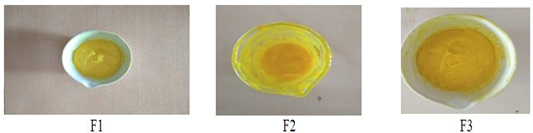
Figure 2: Curcuma Longa Herbal Emulgels.
6.8. Evaluation of Emulgel
• Physical appearance: The Emulgel is checked for their
color, homogeneity, consistency.
• Spreadability.
• Skin Irritation Test (Patch Test).
• Drug Diffusion.
7. Results and Discussions
Table 2: Composition of all formulations of Herbal Emulgel.
|
S.No |
Ingredients |
Quantity For 50gComposition of all formulations of Herbal Emulgel | ||
|
F1 |
F2 |
F3 | ||
|
1 |
Curcuma longa Extract |
2.5g |
2.5g |
2.5g |
|
2 |
Liq.Parrafin |
2.5mL |
2.5mL |
2.5mL |
|
3 |
Tween80:Span20 1:1 |
5mL |
5mL |
5mL |
|
4 |
Carbopol |
0.100g |
0.250g |
0.750g |
|
5 |
Propylene Glycol |
5mL |
5mL |
5mL |
|
6 |
Methyl Parabin |
0.1g |
0.1g |
0.1g |
|
7 |
Propyl parabin |
0.1g |
0.1g |
0.1g |
|
8 |
Triethanolamine |
0.25mL |
0.25mL |
0.25mL |
|
9 |
Menthol |
0.25g |
0.25g |
0.25mL |
|
10 |
Water |
Q.S |
Q.S |
Q.S |
• Curcuma longa
(Family-Zingerberaceae) is selected for this work. Curcumin is chemically known
as diferouloul methane has been reported to possess antioxidant, anti-
inflammatory.
• In the present work, studies were carried out on herbal emulgel by employing pharmaceutically acceptable excipients like carbopol, methyl parabin, propylene glycol, liquid paraffin etc…with a main objective to control the drug release and to improve bioavailability.
• Curcumin is
extracted from Curcuma longa by maceration process.
7.1. Preparation of Emulgel
• Herbal emulgel of
Curcuma longa formulated with different concentrations (0.5, 1, and 1.5%) of
carbopol and with different excipients like liquid paraffin, propylene glycol,
Tween 20, span 80, menthol, Triethylamine.
• Then these prepared
emulgels were evaluated for various physical parameters such was texture,
appearance, Spreadability, irritability, and diffusion studies.
7.2. Physical parameters of
herbal emulgel of Curcumin longum
The herbal emulgel has good texture without having any lumps. It has
good appearance with acceptable color and fragrance, it also has good
Spreadability character because it evenly spread in applied area. It has good
consistency and overall acceptability. (Table 3) (Figure 3)
Table 3: Calibration data of Curcumin in 6.8 PH Buffer.
|
S.No |
Concentration(µ g/ml) |
Absorbance |
|
1 |
1 |
0.276 |
|
2 |
2 |
0.592 |
|
3 |
3 |
0.956 |
|
4 |
4 |
1.256 |

Figure 3: Calibration curve of Curcumin in 6.8 pH Buffer.
7.3. Determination of Wave
Length: Curcumin was examined in the range 200-600nm by using 3µg/ml solution,
it shows absorption maxima at 426 nm.
7.4. Preparation of
calibration curve of curcumin: An analytical method used in the present work
for the estimation of curcumin was UV spectrophotometric method. This method
was adopted for the estimation of above drug in the herbal emulgel and in vitro
diffusion studies. The method obeyed Beer’s law in concentration range of
1-4(µg/ml) (Table 4).
Curcuma longa was analyzed for presence of carbohydrates, proteins,
glycosides, tannins, saponins, polyphenols and flavonoids by using general
identification tests. It composed of mono and sesquiterpenes6. (Table 5)
(Figure 4)
7.5. Invitro drug release
studies: Curcumin release from the emulgel was evaluated by invitro diffusion
studies. % Drug release from emulgel depends on concentration of gelling agent.
Gelling agent increases release of drug decreases. In F1, F2, F3 formulations
concentration of carbopol is 0.5%, 1%, 1.5% respectively. Based on the release rate, the order of drug release from
the three formulations was F1>F2>F3. The invitro release data was
presented in table.
Table 4: Phyto Chemical Analysis of Curcuma Longa Extract.
|
S.No |
Name of the Test |
Result |
|
1 |
Carbohydrates Test |
|
|
|
Molisch Test |
Negative |
|
|
Fehling test |
Negative |
|
2 |
Tests for terpenoids |
|
|
|
Salkowski test |
Positive |
|
|
Antimony trichloride test |
Positive |
|
3 |
Tests for alkaloids |
|
|
|
Mayer’s reagent test |
Positive |
|
|
Hager’s reagent test |
Positive |
|
|
Wagner’s reagent test |
Positive |
|
4 |
Tests for glycosides |
|
|
|
Legal’s test |
Negative |
|
5 |
Tests for flavonoids |
|
|
|
Aqueous sodium hydroxide test |
Positive |
|
|
Concentrated sulphuric acid test: |
Negative |
|
6 |
Tests for polyphenols |
|
|
|
Ferric chloride test |
Positive |
|
7 |
Test for saponins |
Negative |
Table 5: Cumulative % Drug release from Emulgel formulations at
different time intervals.
|
S.NO |
TIME (hrs) |
F1 |
F2 |
F3 |
|
1 |
0 |
0 |
0 |
0 |
|
2 |
1 |
10.45 |
8.67 |
6.87 |
|
3 |
2 |
22.31 |
19.13 |
15.44 |
|
4 |
3 |
31.4 |
24.31 |
22.67 |
|
5 |
4 |
38.65 |
32.12 |
30.22 |
|
6 |
5 |
44.56 |
41.35 |
39.44 |
|
7 |
6 |
51.21 |
49.36 |
41.23 |
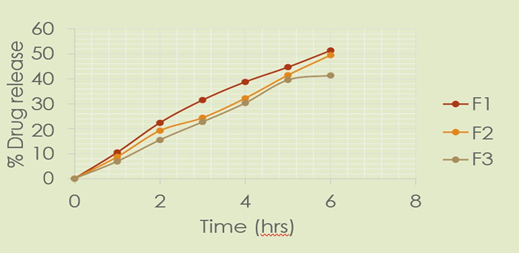
Figure 4: Comparative in vitro drug release plots of curcumin.
8. Conclusion
The
following conclusion were made from these experimental results.
- Emulgel was prepared with
herbal drug.
- Curcuma longa is selected
for preparation of Emulgel.
- Maceration is used
for extraction of curcuma longa,
- Extract was evaluated by phyto chemical analysis
like presence of carbohydrates, proteins, glycosides, s polyphenols and
flavonoids.
- Emulgel was evaluated by Physical appearance, Spreadability, Skin irritation test, Drug diffusion.
- And it has evaluated
by invitro drug diffusion studies. % Drug release from emulgel depends on
concent gelling agent. Gelling agent increases release of drug decreases.
9. References
- Jaise Thomas, Kuppuswamy S, Sahib AA, et al.
Emulgel as a Current Trend in Topical Drug Delivery System. Ijppr Human
Journals, 2017;9(3): 273-281.
- Anil
RP, Dilip NT, Ganapathy S. Emulgel: A Comprehensive Review for Topical Delivery of Hydrophobic Drugs. Asian Journal of
Pharmaceutics, 2018;12(2): 382-393.
- Shambhvi S, Indu S. Evolving Implementation of Emulgel as a Topical
Drug Delivery System: A Systematic Review. Current Research
in Pharmaceutical Sciences, 2022;12(3): 121-131.
- Thakur S, Thakur N, Ghosh NS. Formulation and
in-vitro evaluation of Polyherbal Micro-emulgel containing Tinospora cordifolia
and Curcumin for treatment of Arthritis. International Journal of
Pharmaceutical Sciences and Drug Research, 2016;8(5): 259-264.
- Pakhare
AV, et al. Design and Development of Emulgel Preparation Containing Diclofenac Potassium. Asian Journal of Pharmaceutics,
2017;11(4): 712-716.
- Haneef
KPM, et al. Emulgel: An advanced review. J Pharm Sci and
Res, 2013;5(12): 254-258.