Assessment of Nomophobia and Development of an Educational Booklet Among Nursing Students
Abstract
Background: Nomophobia, defined as the fear or anxiety of being without access to a mobile phone, has emerged as a significant behavioral concern
among college students, particularly those enrolled in professional courses
such as nursing. Excessive smartphone dependence can adversely affect academic performance, mental health, sleep patterns and social functioning.
Objective: The present study
aimed to assess the level of nomophobia among nursing college students and to
develop an informational booklet for the prevention and management of nomophobia.
Methods: A quantitative,
descriptive research design was adopted for the study. A total of 130 nursing students aged 18-25 years
were selected using a probability stratified sampling technique
from a nursing college in Jammu. Data were collected
using a standardized Nomophobia Questionnaire (NMP-Q).
Descriptive and inferential statistics were employed to analyze the data.
Results: The findings
revealed a high prevalence of nomophobia among the participants. The majority of students (57.69%) exhibited
a moderate level of nomophobia, while 22.31% demonstrated severe nomophobia.
Mild nomophobia was observed in
19.23% of students
and only 0.77% reported no nomophobia. Significant associations were found between nomophobia levels
and selected variables
such as educational level, duration of mobile phone use and primary reasons for mobile phone usage.
Keywords: Nomophobia,
Nursing students, Smartphone use, Descriptive study, Informational booklet
1. Introduction
The rapid global
diffusion of smartphones has produced new
patterns of social interaction and behaviour and with them, new forms of psychological stress. One such emerging
phenomenon is nomophobia, defined
broadly as the fear or anxiety experienced when an individual is without access to
a mobile phone or mobile
phone connectivity. Nomophobia
Measurement of nomophobia in research most commonly uses the Nomophobia Questionnaire (NMP-Q), a psychometrically
evaluated self-report scale that identifies multiple dimensions of phone-related anxiety (e.g., not being
able to communicate, losing connectedness, inability to access information and giving up convenience). The NMP-Q has been
translated and validated in multiple languages and cultural contexts, making it suitable for cross-sectional
descriptive studies among student populations6. Nursing students are a particularly
important group to investigate. As
future healthcare providers they must sustain attention, manage stress and
adhere to clinical responsibilities where uninterrupted focus is essential; yet
studies focused specifically on nursing cohorts show notable prevalence of
nomophobia and links
to academic difficulties and poorer sleep. Understanding the level of
nomophobia in nursing colleges therefore has both educational and
patient-safety implications and can inform the design of targeted informational
and self- management interventions7.
A systematic
review of the literature published in 2021 revealed a wide global variation in
the prevalence and severity of nomophobia across population-based surveys.
Depending on the level of
severity, the proportion of individuals identified as being at risk of nomophobia ranged
from 13% to 79%, indicating substantial heterogeneity
across studies and populations8.
The same review highlighted considerable disparities between countries.
Furthermore, studies focusing on university students worldwide have reported
prevalence rates ranging from as low as 6%
to as high as 73%, underscoring the global inconsistency in nomophobia
prevalence. These findings were
further supported by a comprehensive review published in January 2023, which emphasized significant cross-cultural differences
in nomophobia among young adults and university students9.
Nursing students
are among the most frequent users of internet-based social media platforms, often engaging with them
in ways that may negatively affect multiple aspects
of their lives. Social media addiction is
characterized by a compulsive urge to
repeatedly check and use social networking sites, excessive cognitive and emotional investment in online interactions and an imbalanced
allocation of time and energy toward social media. Such problematic usage
patterns can disrupt essential life domains, including interpersonal
relationships, academic performance, clinical responsibilities and overall
psychological well-being10.
Furthermore, nursing students primarily rely on smartphones for online
activities such as internet browsing, video streaming and social media
engagement, with their usage largely driven by the desire
to remain continuously informed and socially
connected across multiple platforms11.
Nursing students
must develop healthy technology-use habits and effective coping strategies to
mitigate the negative consequences associated with nomophobia, particularly in
light of the growing reliance on smartphones
within healthcare settings. Smartphones are increasingly used for
clinical communication, electronic documentation, medication reference and rapid access
to medical information, making them an essential
yet potentially problematic
tool in nursing education and practice12.
Excessive or uncontrolled smartphone use, however, has been linked to
heightened stress, anxiety,
reduced attention and impaired well- being among nursing students13. Incorporating digital literacy education and mindfulness-based training
into nursing curricula may support students in
achieving a healthier balance between professional technology use and personal
well-being. Such educational interventions can enhance self-regulation, promote
responsible smartphone use and reduce the risk of nomophobia and technology-related stress14. The mobile technology industry has undergone rapid growth and continuous innovation
since the introduction of the first smartphone in 2007, with significant
technological advancements reshaping the
sector and profoundly transforming the ways individuals communicate,
access information and utilize mobile technologies in everyday life15.
Nursing students,
who require high levels of concentration, clinical competence and emotional
stability, may be adversely affected by uncontrolled mobile phone use. Assessing the level of nomophobia among
nursing college students is therefore essential to understand the magnitude of
this problem. The findings of the present study will help identify the extent
of nomophobia and provide
a basis for developing an informational
booklet aimed at creating awareness, promoting healthy mobile phone usage and
supporting students in maintaining a balanced academic and personal life.
2. Methodology of the Study
The present study adopted a quantitative research approach with a descriptive, non-experimental research design to assess the level of nomophobia among nursing
students. The study was conducted at Stephens College of Nursing Jammu. The population
comprised nursing students, with the target population
including students aged 18 to 25
years studying at the selected college.
The accessible population consisted of nursing
students within the same age group
who were available during the period of data collection. A probability stratified sampling technique was used to select the
participants. The sample included 130
nursing students aged 18 to 25 years. Students who were present during data
collection, willing to participate and owned mobile phones were included
in the study, while those
who were absent or unwilling to participate were excluded. The systematic
representation of the research methodology used in the study are shown in (Figure 1).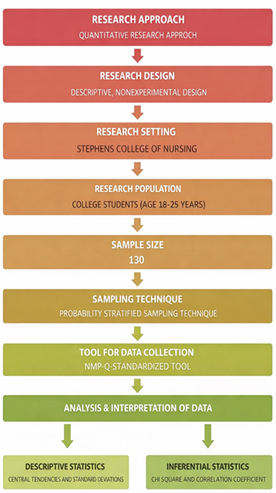
Figure 1: Systematic Representation of Research Methodology.
2.1. Selection and development of the tool
A data collection
tool refers to the instrument used to gather
information relevant to the research objectives. In the present study, a
standardized questionnaire was employed to measure nomophobia among
participants. The Nomophobia Questionnaire (NMP-Q) is a standardized instrument consisting
of 20 items. Each item is rated
on a 7-point Likert scale,
ranging from 1 (strongly disagree) to 7 (strongly agree). The total score on the NMP-Q ranges from a
minimum of 20 to a maximum of 140, with higher
scores indicating greater
levels of nomophobia.
The NMP-Q score is interpreted to indicate
the level of nomophobia, ranging from absence to severe, with higher scores reflecting greater severity. Scores
of 20 indicate no nomophobia,
scores between 21 and 59 indicate mild nomophobia, scores between 60 and 99 indicate moderate nomophobia and scores between 100 and 140 indicate severe nomophobia. The validity of the
tool was confirmed through expert opinions regarding its relevance. The tool was reviewed by experts in the nursing
field and modifications were made to the sociodemographic variables based on their valuable suggestions.
2.2. Data analysis and interpretation
The overall
analysis reveals that the respondents are predominantly young undergraduate
students, with females forming a substantially larger proportion of the sample.
Most participants fall within the 20–21 years age group and are primarily
enrolled in B.Sc. programs. The
sample demonstrates an almost equal representation of students from rural and urban areas. The majority of respondents own a single mobile phone and belong to middle- to higher-income families. Parental occupation data
indicate that most parents are employed, particularly in the government sector.
Overall, the study
population reflects a
relatively stable socio-economic background with sufficient access to
educational and technological resources.
(Table 1) presents the
socio-demographic profile of the respondents
based on variables
such as age, gender, educational level, residential area,
number of mobile phones owned, economic status and parental occupation. The
analysis and interpretation are detailed below.
The largest
proportion of respondents (48.46%) belongs to the 20-21 years age group,
indicating that the majority are in early adulthood. This is followed by
respondents aged 22-23 years (26.92%) and 18–19 years (23.85%). Only a
negligible percentage (0.77%) falls within the 24 years and above category,
suggesting that the sample is largely concentrated within a narrow youth age
range.
Gender
distribution shows a clear dominance of female respondents (76.15%) compared to
males (23.85%), indicating higher female participation in the study. With
regard to educational level, most respondents are enrolled in B.Sc.
third year (40.77%), followed by B.Sc. first semester students (35.38%). B.Sc.
fourth semester students account for 17.69%, while B.Sc. second semester
students represent the smallest group (6.15%). This pattern reflects greater
participation from students in the advanced stages of their undergraduate
studies.
The residential
background of respondents is almost evenly split, with 50.77% from rural areas and 49.23% from urban areas,
ensuring balanced representation. In terms of mobile phone ownership, a
large majority (82.31%) reported owning one mobile phone, while 12.31% own two
phones and only 5.38% possess more than two devices. This suggests moderate and
adequate access to mobile technology among the respondents.
Regarding
economic status, most respondents (43.31%) belong to families with a monthly
income exceeding ◻30,000. Equal proportions (28.35% each) fall within the
◻10,000- 20,000- and ◻20,000-30,000-income categories, indicating that a significant portion of the sample
comes from middle- to higher-income households.
Parental
occupation data reveal that more than half of the respondents’ parents are
government employees (51.97%), followed by private
sector employees (26.77%). About 21.26% reported parental
unemployment. This highlights the predominance
of stable government employment among parents.
In summary, the
respondents are largely young female undergraduate students from B.Sc.
programs, with balanced rural and urban representation. Most belong to middle- to upper-
income families, own a single mobile phone and have parents primarily employed
in the government sector. This socio- demographic profile provides a clear and
relevant context for interpreting the findings of the study.
2.3. Statement on frequency distribution of demographic variables
The frequency
distribution of demographic variables provides
a comprehensive overview
of the characteristics of the respondents included in the study (Figure 2). The gender-wise distribution
indicates that a large majority of the respondents are female (76.15%), while males constitute 23.85% of the total
sample. This shows a higher
participation of female students in the study. Age-wise
classification reveals that most respondents belong to the 20-21
years age group
(48.46%), followed by 22-23 years (26.92%) and 18-19 years
(23.85%). Only a very small proportion of respondents are aged 24 years and
above (0.77%), indicating that the sample largely consists of young adults.
Table 1: Frequency and percentage distribution of study subjects according to demographic variables.
|
Variable |
Category |
Frequency |
Percentage (%) |
|
Age |
18-19
years |
31 |
23.85% |
|
20-21
years |
63 |
48.46% |
|
|
22-23
years |
35 |
26.92% |
|
|
24 years
and above |
1 |
0.77% |
|
|
Gender |
Female |
99 |
76.15% |
|
Male |
31 |
23.85% |
|
|
Educational
Level |
B.Sc
1st Sem |
46 |
35.38% |
|
B.Sc
2nd Sem |
8 |
6.15% |
|
|
B.Sc
3rd year |
23 |
40.77% |
|
|
B.Sc
4th Sem |
23 |
17.69% |
|
|
Residential Area |
Rural |
66 |
50.77% |
|
|
Urban |
64 |
49.23% |
|
No. of Mobile Phones |
One |
107 |
82.31% |
|
Two |
16 |
12.31% |
|
|
More
than two |
7 |
5.38% |
|
|
Economic
Status |
10,000-20,000 |
36 |
28.35% |
|
20,000-30,000 |
36 |
28.35% |
|
|
More
than 30,000 |
55 |
43.31% |
|
|
Parental
Occupation |
Govt.
employee |
66 |
51.97% |
|
|
Private
employee |
34 |
26.77% |
|
|
Unemployed |
27 |
21.26% |
Regarding
residential area, the distribution is almost balanced, with slightly more
respondents from rural areas (50.77%) compared to urban areas (49.23%). This
suggests adequate representation of both rural and urban backgrounds. In terms of educational level, the
majority of respondents are pursuing undergraduate studies.
A significant proportion are in B.Sc. 3rd year (40.77%), followed by B.Sc. 1st semester
(35.38%). Smaller percentages are observed in B.Sc. 4th semester (17.69%) and
B.Sc. 2nd semester (6.15%). This indicates that most respondents are in the middle stages
of their academic programs.
Parental occupation data shows that government employment is the most common category (51.97%),
followed by private employment (26.77%), while 21.26% of parents are unemployed.
This reflects a relatively stable occupational background for a large portion of the respondents. The economic status of
families further supports this finding, as the highest proportion of respondents belong to the income group of more than 30,000 (43.31%). The remaining
respondents are equally distributed between
the income groups
of 20,000-30,000 and 10,000-20,000
(28.35% each).
With respect
to mobile phone ownership, the majority of respondents own one mobile phone
(82.31%), indicating widespread access to communication technology. A smaller proportion own two phones (12.31%), while only 5.38% own more than two devices. Overall,
the demographic profile suggests that the respondents are predominantly young,
female undergraduate students with moderate to stable socioeconomic backgrounds
and good access to digital resources.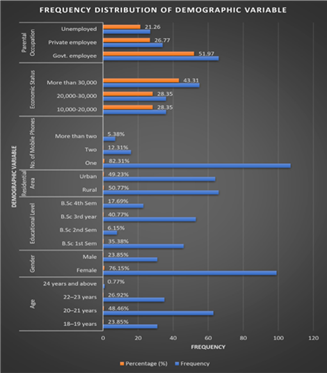
Figure 2: Bar diagram
showing frequency percentage distribution according to the demographic
variables of study subject.
2.4. Nomophobia levels among participants
The present
findings reveal a notable prevalence of nomophobia among the study
participants, with varying levels of severity observed. As shown in the (Table 2), the majority of respondents fell within the moderate
nomophobia category,
accounting for 57.69% of the total
sample. This indicates that more than half of the participants experience a
considerable level of discomfort or anxiety when separated from their mobile phones, suggesting a strong
dependence on mobile technology in daily life.
In addition,
22.31% of the participants were classified as having severe nomophobia, reflecting a high level of psychological
distress related to the inability to access or use their mobile devices. This substantial proportion highlights a potential
risk for negative behavioral and emotional consequences, including increased stress,
reduced concentration and
impaired social interactions.
Meanwhile, 19.23% of the respondents exhibited mild nomophobia, indicating occasional
or manageable anxiety related to mobile
phone unavailability. Only 0.77% of
participants were found to be absent
of nomophobia, demonstrating that complete independence from mobile phones
is extremely rare within the sample.
Overall, the
findings underscore the widespread nature of nomophobia, with the majority of
participants experiencing moderate to severe levels. These results emphasize the need for increased awareness,
preventive strategies and interventions aimed at promoting healthier mobile
phone usage behaviors.
Table 2: The Scores of
Nomophobia Levels among Study Subjects.
|
Nomophobia Level |
Frequency |
Percentage (%) |
|
Absent |
1 |
0.77 |
|
Mild |
25 |
19.23 |
|
Moderate |
75 |
57.69 |
|
Severe |
29 |
22.31 |
|
Total |
130 |
100.00 |
The frequency distribution illustrated in the (Figure 3), indicates that most respondents fall within the moderate category, accounting for 75 cases or 58% of the total. This suggests that the condition being assessed is commonly experienced at a moderate level among the population. The severe category represents the second largest proportion, with 29 cases (22%), highlighting a substantial group facing more serious levels of the condition. Meanwhile, mild cases account for 25 respondents (19%), indicating that nearly one-fifth experience the condition at a lower intensity. In contrast, the absent category is negligible, with only 1 case (1%), showing that very few respondents report no presence of the condition. Overall, the distribution emphasizes the predominance of moderate to severe cases.
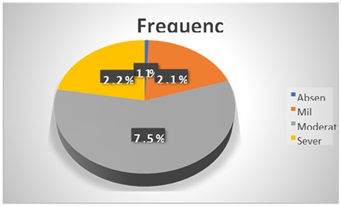
Figure 3: Bar diagram showing frequency percentage distribution according to the level of nomophobia among study subject.
2.5. Relationship between socio-demographic characteristics and patterns of mobile phone use
The frequency distribution of demographic variables provides a comprehensive overview of the characteristics of the respondents included in the study (Table 3). The gender-wise distribution indicates that a large majority of the respondents are female (76.15%), while males constitute 23.85% of the total sample. This shows a higher participation of female students in the study. Age-wise classification reveals that most respondents belong to the 20–21 years age group (48.46%), followed by 22–23 years (26.92%) and 18–19 years (23.85%). Only a very small proportion of respondents are aged 24 years and above (0.77%), indicating that the sample largely consists of young adults.
Regarding residential area, the distribution is almost balanced, with slightly more respondents from rural areas (50.77%) compared to urban areas (49.23%). This suggests adequate representation of both rural and urban backgrounds. In terms of educational level, the majority of respondents are pursuing undergraduate studies. A significant proportion are in B.Sc. 3rd year (40.77%), followed by B.Sc. 1st semester (35.38%). Smaller percentages are observed in B.Sc. 4th semester (17.69%) and B.Sc. 2nd semester (6.15%). This indicates that most respondents are in the middle stages of their academic programs.
Parental occupation data shows that government employment is the most common category (51.97%), followed by private employment (26.77%), while 21.26% of parents are unemployed. This reflects a relatively stable occupational background for a large portion of the respondents. The economic status of families further supports this finding, as the highest proportion of respondents belong to the income group of more than 30,000 (43.31%). The remaining respondents are equally distributed between the income groups of 20,000–30,000 and 10,000-20,000 (28.35% each).
With respect to mobile phone ownership, the majority of respondents own one mobile phone (82.31%), indicating widespread access to communication technology. A smaller proportion own two phones (12.31%), while only 5.38% own more than two devices. Overall, the demographic profile suggests that the respondents are predominantly young, female undergraduate students with moderate to stable socioeconomic backgrounds and good access to digital resources.
Table 3: Frequency Distribution of Demographic Variables of the Respondents.
|
Variable |
Chi-Square |
DF |
p-value |
|
Age |
8.89 |
9 |
0.4472 |
|
Gender |
4.68 |
3 |
0.1972 |
|
educational
level |
21.85 |
9 |
0.0094 |
|
Ni
residential area |
1.44 |
3 |
0.6962 |
|
no.
of mobile phones |
5.07 |
6 |
0.5355 |
|
duration
of using mobile phones |
18.52 |
9 |
0.0296 |
|
most frequent reason for using
your phone |
12.84 |
6 |
0.0456 |
|
economic
status |
4.31 |
6 |
0.6354 |
|
parental
occupation |
5.52 |
6 |
0.4785 |
The present descriptive study was conducted to assess the level of nomophobia among nursing college students and to develop an informational booklet for its prevention. The findings of the study indicate that nomophobia is highly prevalent among nursing students, with the majority exhibiting moderate to severe levels of nomophobia. Specifically, more than half of the respondents (57.69%) demonstrated moderate nomophobia, while a considerable proportion (22.31%) experienced severe nomophobia. Only a negligible percentage of students were found to be free from nomophobia, suggesting that mobile phone dependence has become almost universal among the study population. These findings are consistent with previous studies conducted among university and health science students, which have reported moderate to high levels of nomophobia due to excessive smartphone use, increased reliance on digital communication and fear of disconnection. Nursing students, in particular, may be more vulnerable due to academic pressure, clinical responsibilities and frequent use of smartphones for both educational and social purposes. Continuous access to information, social networking and entertainment through mobile phones may contribute to increased anxiety when access is restricted.
The predominance of moderate nomophobia observed in the present study suggests that while students may not yet experience extreme psychological distress, they are at risk of developing more severe symptoms if preventive measures are not implemented. The presence of severe nomophobia in more than one-fifth of the respondents is a matter of concern, as it may negatively affect concentration, academic performance, sleep patterns, mental well-being and interpersonal relationships. These effects are particularly significant for nursing students, who require sustained attention, emotional stability and professional competence during both academic and clinical training.
The analysis of
socio-demographic variables revealed that educational level, duration of mobile
phone use and the most frequent reason for mobile phone usage were
significantly associated with nomophobia levels. This indicates that prolonged
exposure to smartphones and usage patterns driven by social networking,
entertainment and constant connectivity play
an important role in the development of nomophobia. Other variables such as age, gender,
residential area, economic status and parental occupation did not show a
statistically significant association, suggesting that nomophobia affects
students across different
backgrounds in a relatively uniform manner.
This pie diagram (Figure 4) depicts the proportional
distribution of nomophobia levels among nursing students. The largest segment represents moderate nomophobia (57.69%),
indicating that more than half of the students experience a noticeable level of
anxiety related to mobile phone separation. Severe nomophobia (22.31%) accounts for nearly one-fourth of the
respondents, highlighting a significant risk group. Mild nomophobia (20%) forms the smallest proportion. The figure
visually emphasizes the predominance of moderate to severe nomophobia among the
study population.
The findings
highlight the urgent need for awareness and preventive strategies to address
nomophobia among nursing students. Developing and distributing an informational booklet, as undertaken in this study, is a relevant and practical intervention
to educate students
about nomophobia, its consequences and strategies for healthy mobile phone
use. Educational interventions focusing on digital well-being, self-regulation and
responsible smartphone use can help students achieve
a healthier balance between
technology use and academic life.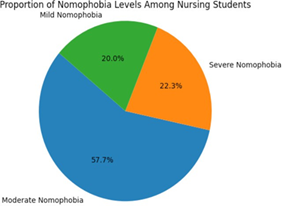
Figure 4: Proportion of
Nomophobia Levels Among Nursing Students.
4. Conclusion
The study
concludes that nomophobia is highly prevalent among nursing college students,
with most experiencing moderate to severe levels of mobile phone dependence. Very few students were free from nomophobia, indicating that smartphone use
has become an integral part of daily life. Significant associations were found
between nomophobia and factors such as educational
level, duration and purpose of mobile phone use.
The development of an informational booklet highlights the
importance of educational interventions in promoting healthy smartphone usage.
Early identification, awareness and preventive
strategies are essential to reduce the negative impact of nomophobia and to support the
mental well-being, academic performance and professional development of nursing
students.
5. Acknowledgement
The authors
are thankful to the Principal of Stephens College of Nursing, Jammu, for
facilitating and supporting the conduct of this research work.
6. Funding
The authors
report that the research was not funded by any organization or agency.
7. Competing Interesting
The authors
declare that they have no form of conflict of interest in this work.
8. References
1. Bhattacharya S, Bashar MA, Srivastava A, et al.
Nomophobia: No mobile phone phobia. Journal of Family Medicine and
Primary Care, 2019;8: 1297-1300.
2. Mudgal SK, Sharma SK, Gaur R, et al. Prevalence and
severity of nomophobia among nurses: A systematic review and
meta-analysis. Investigación y Educación en Enfermería, 2024;42: 05.
3. Sethi S, Melwani V, Melwani S, et al.
A study to assess the degree of nomophobia among the students of a medical college
in Bhopal. International Journal of Community Medicine and
Public Health, 2018;5: 2442-2446.
4. Bragazzi NL, Del Puente G. A proposal for
including nomophobia in the new DSM-V. Psychology Research and Behavior
Management, 2014;7: 155-160.
5. King ALS, Valença
AM, Silva ACO, et al. Nomophobia: Dependency on virtual environments or social phobia? Computers
in Human Behavior, 2013;29: 140-144.
6. Yildirim C, Correia AP. Exploring the dimensions of
nomophobia: Development and validation of a self-reported
questionnaire. Computers in Human Behavior, 2015;49: 130-137.
7. Anand S, Anoopa KR, Joseph PG, et al.
A study to assess the prevalence of nomophobia among nursing students in Kollam.
Indian Journal of Psychiatric Nursing, 2022;19: 147-151.
8. Rodríguez-García AM, Moreno-Guerrero AJ, López-Belmonte J. Nomophobia: An individual’s growing fear of being
without a smartphone-A systematic literature review.
International Journal of Environmental Research and Public Health, 2021;18:
580.
9. Sharma N, Sharma P, Sharma N, et al. Nomophobia and its relationship with anxiety, stress and academic
performance among university students: A systematic review and meta-analysis.
Frontiers in Psychiatry, 2023;14: 1123456.
10. Andreassen CS. Online
social network site addiction: A comprehensive review. Current Addiction Reports, 2015;2: 175-184.
11. Smith A anderson
M. Social media use in 2018. Pew Research Center, 2018.
12. McBride DL, LeVasseur SA. Smartphone use among nursing
students and its impact on academic and clinical performance. Journal of Nursing Education, 2017;56:
646-652.
13. Gezgin DM, Hamutoglu NB, Sezen-Gultekin G, et al. The relationship between nomophobia and
anxiety among university students. International
Journal of Research in Education and Science, 2018;4: 47-53.
14. Oducado RMF, Estoque H. Mindfulness, stress and
coping strategies of nursing students in the digital age. Nurse Education
Today, 2021;98: 104664.
15. Jamshidifar S, Aliabadi, PK, Musavi SJ, et al.
Prevalence of nomophobia and associated factors in adolescent
female students: A cross-sectional study in northern Iran. Iranian
Journal of Psychiatry and Behavioral Sciences, 2023;17: 132909.