Beyond the Common: Unusual Causes of Acute Confusional State in a Quinquagenarian
Abstract
Here we describe an unusual case of acute confusional state with clinical signs that led to diagnosis of datura toxicity.
Keywords: Delirium, Dilated pupil, Datura, Tachycardia
1. Clinical Image
Datura poisoning exhibits symptoms such as confusion, dilated pupils and signs associated with anticholinergic effects. Timely identification is essential for providing supportive treatment and avoiding serious complications.
A 56-year-old man without any comorbidities presented with acute confusional state to emergency. The examination revealed that he was agitated and in a state of confusion; his pupils were dilated (Figure 1) and he exhibited resting tachycardia (Figure 2).
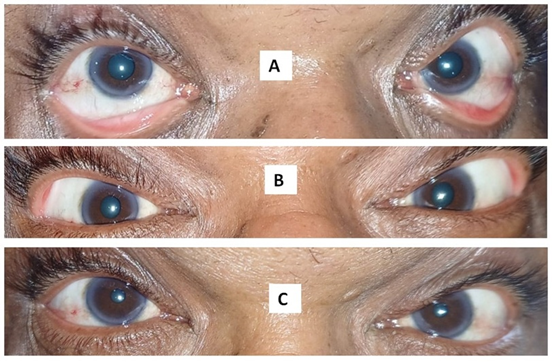
Figure 1: Showing pupillary appearance Mydriasis on day 1(A), day 2(B), normal on day 3(C).
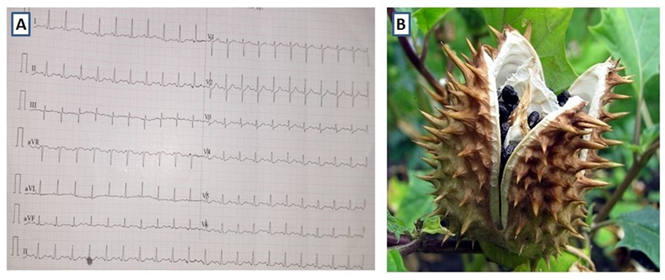
Figure 2: A) showing electrocardiogram showing sinus tachycardia (heart rate 124/minute) B) Datura plant with fruit and seeds.
There was no recorded history of fever or any substance abuse. He was not taking any serotonergic or anticholinergic medications. The MRI brain, EEG, metabolic analysis and toxicology tests were normal. On the second day, he disclosed that he had consumed 2 seeds of datura (Figure 2) from a field casually. The presence of delirium, mydriasis and tachycardia in this case confirmed the cause of acute confusional state due to datura toxicity.
Datura stramonium (jimsonweed) is a toxic plant found worldwide1. Its leaves and seeds are used recreationally for hallucinogenic effects. The toxic alkaloids found in Datura include, atropine scopolamine and hyoscyamine. Toxicity results from muscarinic receptor blockade, causing symptoms like mydriasis, dry mouth, tachycardia, delirium and respiratory arrest. Effects begin within 30-60 minutes and can last up to two weeks. Treatment includes monitoring, supportive care and antidotes if needed2.
2. References
- Krenzelok EP. Aspects of Datura poisoning and
treatment. Clinical Toxicology. 2010;48(2): 104-110.
- Khoshnam-Rad N, Heydari M, Mohammadi K, et al. Datura poisoning in a family: Case series and literature review. Clin Case Rep. 2022;10(7): 6091.