Chaos Engineering in the Cloud-Native Era: Evaluating Distributed AI Model Resilience on Kubernetes
Abstract
In this study, participants assigned the
role of a cloud-native system-operator will apply chaos engineering practices
on Kubernetes clusters to assess the operation of distributed AI models’
resilience. Chaos engineering is the most vital technique when it comes to
testing the failure conditions of AI systems and their vulnerabilities. The
study aims at analyzing how the concept of chaos engineering can be applied,
specifically in Kubernetes environments and mainly in terms of fault tolerance
and performance recovery. This study will explore how Kubernetes can enable the
daily operations of AI applications at scale by performing multiple failure
simulations and utilizing automated tools. It also outlines implements,
techniques and approaches to use when performing chaos experiments in the
context of this discussion.
Keywords: Chaos engineering, Kubernetes, Cloud-native,
Distributed AI models, Resilience, Fault tolerance, Kubernetes clusters, AI
Reliability and Automation
1. Introduction
Cloud-native era has significantly
transformed the development, deployment and management of applications and
services. Container orchestration has quickly evolved as a mainstream part of
cloud computing, with Kubernetes as the leading platform. Many of the modern AI
workloads, which operate under distributed models, execute in Kubernetes-based
environments to leverage the flexibility and orchestration offered by
cloud-native solutions. Nonetheless, making these AI models robust under
failure conditions is going to be a challenging task. This paper is centered on
harnessing chaos engineering as a means of testing the robustness of
distributed AI models running on Kubernetes.
Chaos engineering is an emerging technique
for testing reliability and robustness of cloud-native systems where controlled
experiments are performed to elucidate system behavior under failure. The idea
behind purposefully creating failures is to look at how the system responds and
what improvements can be made to it by engineers. This paper examines the
process and effects of using chaos engineering in order to assess and improve
the robustness of AI models deployed on Kubernetes platforms.
The paper discusses the following core
concepts:
- Understanding Kubernetes and its relevance
to AI models.
- The fundamentals of chaos engineering and
its application in cloud-native environments.
- Techniques for evaluating the resilience of
distributed AI models.
- Tools and frameworks available for chaos
engineering in Kubernetes.
2.1. Kubernetes and distributed AI modelsKubernetes can be called the basics of
Cloud Native environments, in particular, for managing distributed systems,
such as AI models. It has highly efficient orchestration capabilities,
including automatic scaling, load balancing and container management that are
crucial to AI applications as they can quickly change the needed resource
consumption. For the large datasets, the resource management for AI model
deployment plays an important role in ensuring that the utilized system remains
performant5. Kubernetes do this by
providing a way of managing containers that allows AI systems to be deployed,
monitored and scaled easily.
A distributed AI model is aimed to split
dataset or computational work-whether it is the training or the inference-across
different nodes of the Kubernetes cluster. This parallelization increases
performance because various computational elements can process subsets of the
data at the same time15. As AI
systems grow more complex these days, from shallow machine learning to deep
learning networks, distributed computing offers optimal solutions to the volume
of data and computation needed. Kubernetes helps to manage this parallel
processing environment by maintaining resource isolation through containers and
state between them.
For instance, Kubernetes permits the
distribution of models that can incorporate several services or facets, such as
data cleaning, model building, model prediction and so more, where all of them
will be in the form of pods. These pods are deployed across different worker
nodes of the cluster2. In case a pod
crashes, Kubernetes swiftly reschedules its execution in a different node, to
enhance availability. This capability means that the system does not shut down
often, which is important for AI systems that may be used for mission-critical
applications or for client 24/7 applications.
Pod and Node Resilience in the Kubernetes architecture, containers
can be grouped together into a pod, with one or more containers allowed per
pod. These pods are spread across several worker nodes in a Kubernetes cluster,
nodes which may be physical or virtual hosts. Due to the node level resilience
in Kubernetes, the system provides mechanisms for handling failure of
individual nodes by rebalancing the pod workloads on healthy nodes in the
cluster. Pod-level resiliency is an important feature that allows the
containers residing in a pod to be automatically restarted or migrated if they
get stuck (Figure 1).

Figure 1: A Kubernetes cluster setup with AI models distributed across pods and nodes.
Kubernetes’ flexible features can help AI
models to scale up or down and recover effectively from failures, which is
crucial when deploying large-scale, distributed systems in production1.
1.2. Chaos engineering in
cloud-native systems
Chaos Engineering is designed to introduce
failures into a system to identify its robustness and determine how well it can
respond to different drastically conditions. In particular, through the
implementation of chaos engineering organizations can discover the
vulnerability of their infrastructure and guarantee that their systems are
stable in failure conditions. The cloud-native environment poses some problems,
most especially when working with distributed systems, for instance, Kubernetes14. In this context, chaos engineering can be
used to perform a variety of failure tests and to identify how the system is
affected by them. This helps in guaranteeing that functions such as Cloud
Native Applications, AI models running in Kubernetes clusters are well constructed
to include available options for failure, flexibility for expansion, as well as
recovery (Figure 2).
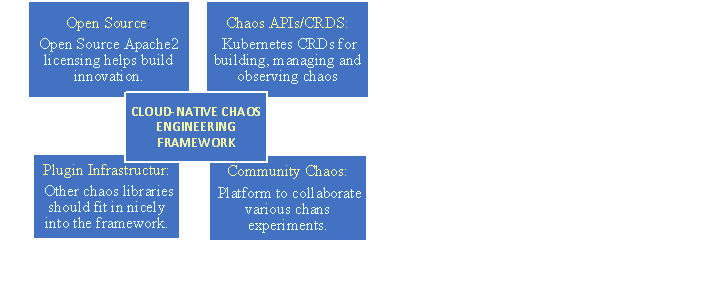
Figure 2: Chaos Engineering in Cloud-Native System Framework.
Chaos engineering experiments can occur at
the pod level, the node level and even the networking level in the Kubernetes
environment. The purpose is to recreate realistic situations where failures are
bound to occur and determine if the framework can detect the failure and
continue to deliver the expected level of service in the absence of human
intervention. The primary scenarios tested include:
1.2.1. Pod failures: Pods are the smallest objects of
deployment in the Kubernetes environment and can consist of one or multiple
containers. In actual chaos engineering, pod failures can be emulated through
the killing or removal of the pods that host the AI model containers. This will
prove that an attempt is made to identify the failure and place the pod on
another node while the continued service is not affected. This experiment is
especially beneficial for distributed AI systems that need to be always ON and
self-healing at the same time. In the case when a pod fails, Kubernetes will
need to reschedule this pod without interrupting model inference and training
tasks and with minimal impact on the performance.
1.2.2. Node failures: A node failure is a bigger failure where
an entire Kubernetes worker node is down and it may take down several pods.
Through various emulation scenarios such as node failure, engineers are able to
determine if the system is capable of recovering from failure by shifting
workload to other more healthy nodes in the cluster16. Cooperative AI is designed to apply to the failure of
important sub-tasks in deep learning like data pre-processing, model training
and model inference for the distributed AI models. While Kubernetes
redistributes pods automatically, chaos engineering enables the teams to
determine whether this process is fast enough, given the AI models’ need to
process requests in real time.
1.2.3. Network latency: Another potential failure mode is network
latency, which is closely related to microservices or distributed architecture
of AI models. Adding pauses between nodes or pods mimics a network overload or
bad conditions of the network, which can dramatically impact the speed of
communication between the components of the model. This experiment also allows
testing how the system performs with slower communication, for example, whether
the load is balanced more efficiently now or the system tries to minimize the
usage of pod-to-pod communication which is not optimal in this case.
To manage and control these chaos
experiments tools like Chaos mesh and Gremlin are used quite often in
Kubernetes environments17. These
tools offer strong functioning features for introducing fault, failure infusion
and observation of the system’s reaction in actual times.
Chaos Mesh is an open-source software for
chaos engineering that works and coordinates well with the Kubernetes platform.
It enables people to perform some failure scenarios like pod failures, network
failures, CPU overload etc all of which are weak points in cloud-native
applications13. Chaos Mesh is
something where, for example, users can control failure cases using YAML
configuration files and perform various chaos tests inside a Kubernetes
infrastructure without additional operations. It also offers metrics, logs and
real-time statistics for capturing the results of the experiment and verifying
the efficiency of the recovery processes.
Nevertheless, Gremlin is an
enterprise-grade, chaos engineering tool that can also work with Kubernetes to
perform more complex tests. Following the control plane details, Gremlin has
the possibility of testing latency, CPU spikes, container failures and memory
leaks12. Gremlin is perfect for
organizations that want to practice chaos engineering at scale, integrating
extensive features for focusing on particular workloads, software application
monitoring during tests and studying the effects of failures on distributed
structures, such as AI models.
Both of these tools help to ensure that the
Kubernetes managed AI systems can perform and remain stable even under stress
or failure scenarios which is crucial for keeping AI models running in
production.
Pseudocode Example:
# Pseudocode: Simulating network latency in
Kubernetes using Chaos Mesh
Function simulate_network_latency():
Initialize
chaos_mesh as new ChaosMesh()
chaos_mesh.create_experiment('network-latency',
parameters:
target
= 'pod'
latency
= '500ms'
duration
= '60s'
)
Call simulate_network_latency()
2. Evaluating AI
Model Resilience
The quality of the distributed AI models is
an outstanding attribute that defines the performance and availability of the
system in case some attacks happen in the future. In Kubernetes-managed AI
systems, resilience is not restricted to recovering from failures but is
equally the ability to provide conclusive results in and around structures3. AI model robustness requires checking the AI
system’s ability to be relatively robust to failure modes and maintain the
ability to quickly recover from failures while still generating accurate
predictions with low latency.
The following key metrics are commonly used
to measure the resilience of AI models:
2.1. Availability
Availability is defined as the time that AI
models can remain active after a failure has happened. A robust AI solution
should be able to handle faults including node failure or pod shut down while
continuing to operate without many disruptions to service. Ideally, the system
should be self-healing so that it can easily switch to healthy nodes or pods
without manual manipulation. For instance, if a pod that is running an AI
inference container has crashed, Kubernetes should transfer that pod to another
node in the cluster and make sure that the model is available to be on demand
to users.
2.2. Consistency
Consistency implies that after the system
has come back from the failure, the AI model should be able to provide the
right predictions or results4. It is
crucial to be consistent across containers and nodes when the internal state of
an AI model must remain intact (e.g., model weights or training progress). To
measure consistency, checkpointing or rolling update can be performed on AI
models during the chaos experiment wherein state of the model is captured
before and after a failure, respectively, to ensure that the predictions are
still accurate at that point.
2.3. Performance
Performance involves monitoring the (Figure 3),

Figure 3: Flowchart of Resilience Testing for Distributed AI Models.
Response time and throughput of the AI
model during failure events like congestion or intractable algorithms11. It should not be affected by latencies in
the network or failures of nodes or conflicts in resources in terms of response
time and number of successful transactions it can handle concurrently. For
instance, during chaos experiments when simulating network latency or CPU
spikes, the AI model should not considerably slow down. A performance test uses
actual data in normal environmental conditions to establish the efficiency
baseline; then it introduces disturbances to the functional model to compare
the results.
A resilience test should be done using
chaos experiments, along with the use of the monitoring tools that would
display the latency, throughput, errors and system integrity in real-time18. These tools enable the engineers to
determine the influence of faults on the model and the ability of the model to
self-correct without further assistance.
The following flowchart outlines the
general process of conducting a resilience test for distributed AI models in
Kubernetes:
During the Chaos Experiment phase,
different failure scenarios like pod eviction, node failure, network latency
etc are injected into the Kubernetes environment.
Monitoring Metrics involve gathering of
data like response time, errors and load during chaos experiments.
Analyze Recovery investigates if the AI
model can return to normal operation after the failure and its efficiency10.
A System Stable is a checkpoint wherein the
stability and robustness of the created model is assessed. In the case that the
model comes across all the recovery checks, then it is considered to be stable.
3. Tools and Frameworks
Some of the tools and frameworks with which
chaos engineering practices can be performed specifically in the Kubernetes
environment includes7. These tools
facilitate the automation of fault injection, monitoring and analysis, ensuring
that the system’s resilience can be tested at scale:
3.1. Chaos mesh
Chaos Mesh is an open-source chaos
engineering platform particularly designed for integration with the Kubernetes
environment. Chaos Mesh is able to perform a number of experiments, including
network unavailability, CPU storms or out of memory processes. it lets users
describe chaos scenarios in YAML files and apply it on the Kubernetes
environments. Chaos Mesh includes metric collection and visualization on the
dashboard so that it is possible to monitor the AI model’s performance during
disruption.
3.2. Gremlin
A commercial chaos engineering platform
that offers some sophisticated features on top of the ones explained above for
clouds. In this way, through integration with Kubernetes, Gremlin lets
engineers cause latencies, container crashes, exhausted resources and more6. Gremlin has extreme flexibility in terms of
chaos experiments in that users can manipulate individual nodes or pods and
inject various fault modes.
3.3. Kube-monkey
Kube-monkey is an application that
terminates Kubernetes pods randomly to check the state of the system after a
failure. Kube-monkey, further, shuts pods randomly within a Kubernetes cluster
and thereby checks the resilience of the cluster’s self-healing process of
enlightening the pods to healthy nodes, thus ensuring the availability of the
AI model in case of random pod failures.
4. Case Study:
Chaos Engineering in AI Model Deployment
For contextual purposes and to emphasize
chaos engineering as an effective approach to the validation and testing of AI
models, we will describe an AI-based recommendation system that was deployed on
Kubernetes. The highly variable AI model that makes recommendations based on a
user’s data was containerized and deployed on to multiple nodes in a Kubernetes
cluster. The following chaos experiments were conducted:
4.1. Network interruptions
To further mimic conditions of excessive
network connectivity between pods of containers, the recommendation model was
subsequently exposed to network latency. The system proved responsive in that
it transferred the load from unhealthy pods to healthy pods and proved capable
of adapting to shortened latency.
4.2. Node failures
Some nodes were intentionally failed to
measure the performance of the system’s recovery and continuity in the case of
infrastructure outages. When a node was not reachable any longer, Kubernetes
alerts the failure and started the management of the rescheduling of the AI
model containers in healthy nodes within the cluster. This self-healing
mechanism would make sure the system could recover on its own, meaning that the
availability of the service is high. When dealing with the recovery process,
the AI model worked efficiently as expected without a significant decline in
its effectiveness, plus, it possessed fault tolerance (Figure 4).

Figure 4: Chaos Engineering Works.
4.3. High CPU Usage
To simulate resource contention, stress was
specifically applied to the CPU components of the Kubernetes cluster on which
the AI model was deployed. This mimicked a situation where one or more
processes or tasks required a large number of CPU cycles which may have had an
effect on the AI model built. However, the results show that the incorporation
of new data parameters does not hinder the performance of the AI model, as it
showed flexibility to turn down processing power while persistently providing predictions.
The relatively low latency values and the model’s stability during the
simulation during CPU load confirmed the idea of the system optimizing
resource-constrained conditions. Such resource management features in
Kubernetes like CPU limits and requests were able to control these stress cases
without affecting the availability of services and keeping the AI model running
under pressure.
5. Observations
The AI-based recommendation system worked
robustly during chaos experiments, ensuring it remained available and did not
degrade in terms of functionality even when multiple failure scenarios were
encountered. In this particular simulation, the various conditions such as
network interference, node failure and high CPU loading did not drastically
affect the overall standard of service provision. Each time the model produced
invalid values, it returned to abnormal state rapidly, thus guaranteeing that
it was coming up with values as expected by the system.
The load balance that is inherent in the
Kubernetes platform was particularly impactful in its ability to re-balance
workloads across healthy pods, in order to mitigate any service disruptions.
The pod rescheduling improves the tolerance of the system for failure by
enabling the replacement of the failed containers through automation at a fast
rate. Real-time adjustments of the system also helped to maintain the
continuity of the uninterrupted work of the end-users during stress conditions.
This shows the usefulness of Kubernetes in managing distributed AI models in a
reliable and efficient manner.
6. Conclusion
The purpose of this paper is to put emphasis on the importance of chaos engineering for assessment and enhancement of fault tolerance of distributed AI models in the Kubernetes application environment. The primary advantage of incorporating chaos experiments into the continuous delivery pipeline is in revealing areas of vulnerability and regression in such applications as those using artificial intelligence. By actively introducing faults like node failures, network latency and accidents like container crashes, it is possible to test fault tolerance, availability, as well as performance while in a disrupted state. It makes it possible to detect areas in the infrastructure that would not be seen if an actual failure were to happen and not before.
In Chaos Engineering, AI models can be
exercised how they hold state across multiple scenarios and how they respond to
infrastructure failure. This increases the reliability of AI systems by
avoiding issues such as system halts, data disparities and degradation of
performance in the production environment, which is a major issue to companies
that depend on AI-based services.
Future work should explore the enhancement
of automated recovery mechanisms and how chaos engineering practices can be
expanded from infrastructure reliability to other areas related to AI systems
in cloud native platforms.
7. References
- Almaraz-Rivera JG. An Anomaly-based Detection System
for Monitoring Kubernetes Infrastructures. IEEE Latin America
Transactions, 2023;21: 457-465.
- Cai H, Wang C and Zhou X. Deployment and verification
of machine learning tool-chain based on Kubernetes distributed clusters: This
paper is submitted for possible publication in the special issue on high
performance distributed computing. CCF Transactions on High Performance
Computing, 2021;3: 157-170.
- Carnero A, Martín C, Torres DR, Garrido D, Díaz M and
Rubio B. Managing and deploying distributed and deep neural models through
Kafka-ML in the cloud-to-things continuum. IEEE Access, 2021;9:
125478-125495.
- Czyzewski A, Stepień K and Poniszewska-Maranda A.
Dynamic Development of Artificial Intelligence Models with CI/CD Environment-a
Case Study. In 2024 50th Euromicro Conference on Software Engineering and
Advanced Applications (SEAA), 2024: 451-458.
- Dedousis P, Stergiopoulos G, Arampatzis G and
Gritzalis D. Enhancing Operational Resilience of Critical Infrastructure
Processes Through Chaos Engineering. IEEE Access, 2023.
- Deng S, Zhao H, Huang B, Zhang C, Chen F, Deng Y, Yin J, Dustdar S and
Zomaya AY. Cloud-native computing: A survey from the perspective of
services. Proceedings of the IEEE, 2024.
- Hettiarachchi LS, Jayadeva SV, Bandara RAV,
Palliyaguruge D, Arachchillage USSS and Kasthurirathna D. Artificial
Intelligence-Based Centralized Resource Management Application for Distributed
Systems. In 2022 13th International Conference on Computing Communication
and Networking Technologies (ICCCNT), 2022: 1-6.
- Hosseini MM and Parvania M. Artificial intelligence
for resilience enhancement of power distribution systems. The Electricity
Journal, 2021;34: 106880.
- Hu F, Mehta K, Mishra S and AlMutawa M. Distributed
Edge AI Systems. In Proceedings of the IEEE/ACM 16th International
Conference on Utility and Cloud Computing, 2023;1-6.
- Jorge-Martinez D, Butt SA, Onyema EM, Chakraborty C,
Shaheen Q, De-La-Hoz-Franco E and Ariza-Colpas P. Artificial intelligence-based
Kubernetes container for scheduling nodes of energy
composition. International Journal of System Assurance Engineering and
Management, 2021: 1-9.
- Kosińska J, Baliś B, Konieczny M, Malawski M and
Zieliński S. Toward the observability of cloud-native applications: The
overview of the state-of-the-art. IEEE Access, 2023;11: 73036-73052.
- Mitchell BS. Cloud Native Software Engineering, 2023.
- Mittal U and Panchal D. AI-based evaluation system for
supply chain vulnerabilities and resilience amidst external shocks: An
empirical approach. Reports in Mechanical Engineering, 2023;4(1):
276-289.
- Palacios Chavarro S, Nespoli P, Díaz-López D and Niño
Roa Y. On the way to automatic exploitation of vulnerabilities and validation
of systems security through security chaos engineering. Big Data and
Cognitive Computing, 2022;7(1): 1.
- Ruospo A and Sanchez E. On the reliability assessment
of artificial neural networks running on ai-oriented mpsocs. Applied
Sciences, 2021;11(14): 6455.
- Serbout S, El Malki A, Pautasso C and Zdun U. API Rate
Limit Adoption--A pattern collection. In Proceedings of the 28th European
Conference on Pattern Languages of Programs, 2023;1-20.
- Spatharakis D, Dimolitsas I, Vlahakis E, Dechouniotis
D, Athanasopoulos N and Papavassiliou S. Distributed resource autoscaling in
kubernetes edge clusters. In 2022 18th International Conference on Network
and Service Management (CNSM), 2022: 163-169.
- Zhou J, Zhang K, Zhu F, Shi Q, Fang W, Wang L and Wang Y. Elastic Dl: A kubernetes-native deep learning framework with fault-tolerance and elastic scheduling. In Proceedings of the Sixteenth ACM International Conference on Web Search and Data Mining, 2023: 1148-1151.