Cybersecurity Risks in Reinsurance: How AI Can Detect and Prevent Digital Fraud
Abstract
The
reinsurance business handles cyber risks through its computer network-based
financial operations. Modern businesses must employ AI detection models to
fight fraud because current security measures do not work well enough against
modern trickery. Researchers study AI-based systems that use ML, DL, NLP and
predictive tools to locate and stop fraudulent activities in reinsurance
organizations. AI fraud prevention systems spot more risks compared to regular
rules and send less incorrect alerts alongside fast abuse identification that
is 94% accurate. From 2020 to 2022 AI security tools found and stopped cyber
dangers while resolving claim fraud which resulted in 40% less money loss. The
development of AI detection technology has problems because it gives select
groups benefits and people intentionally attack the system while monthly checks
and monitoring errors limit its progress. By integrating blockchain technology
with XAI and adversarial machine learning users obtain fraud tracking methods
that they find easier to comprehend. AI will develop protective systems to stop
problems before they occur and track dishonest behavior to support reinsurance
business stability. Companies should constantly improve their anti-fraud AI
tools and work with government agencies to obtain proper funding to combat
insurance fraud.
Keywords: AI-driven fraud detection, Cybersecurity, Machine learning, Deep learning, Reinsurance fraud, Predictive analytics, Anomaly detection, NLP, Blockchain security, Financial risk assessment
1. Introduction
This
is the start of the body text of your paper. You can use headings like the one
above to divide your paper into sub-topics. Use level 1 headings first, then
level 2 headings if you need further divisions inside those and so on. Don’t
use a level of heading unless there will be at least two headings of that
level. You don’t have to use any headings at all if it doesn’t make sense to
divide your paper in that way. Appropriate numbering is automatically applied
to headings. You don’t have to number them yourself, just make sure the right
heading style is applied to each one. Level 1 and 2 headings (as well as the
paper title) should be written with title case capitalization, while level 3
and 4 headings are written in sentence case.
Use
the enter key to start a new paragraph. The appropriate spacing and indent are
automatically applied.
2.
Literature Review
Modern financial institutions
together with reinsurance businesses need urgent focus on cybersecurity threats
that result from their growing digitalization. Various scholars examine the
operation of artificial intelligence (AI) combined with machine learning (ML)
for digital fraud detection and prevention1.
The article investigates how predictive analytics powered by AI strengthens
fraud surveillance and cybersecurity for different sectors including financial
organizations. Similarly,2 This
research examines how modern technology detects accounting scams together with
its effects on enhancing financial openness.
The main cybersecurity vulnerability in reinsurance industry causes operating efficiency problems for fraud detection systems that result in financial losses3. highlight the use of AI in analyzing social media threats and fraud patterns, demonstrating how predictive analytics can be leveraged to prevent digital fraud. In line with this4, designed a supervised machine learning algorithm to detect credit card fraud that can serve as a basis for detecting fraudulent reinsurance claims. Furthermore5, the article highlights how implementing class balancing approaches enhances the quality of fraud detection systems to identify fraudulent transactions efficiently.
The financial sector constantly battles phishing attacks which prove to be long-standing cyber threats6. This paper offers a detailed examination of phishing attack varieties together with their defense solutions through technical measures. The processing of significant amounts of sensitive client data makes phishing attacks remain a vital risk factor for reinsurance firms7. This paper illustrates the superiority of machine learning and deep learning models in detecting fraudulent transactions through their better methods than traditional fraud prevention approaches. Similarly8, Analysts should investigate AI-based cyber defense platforms designed for banking institutions because this research can adapt those systems to enhance reinsurance sector cybersecurity.
AI researchers dedicate
extensive research to financial fraud detection because it represents a vital
problem in their discipline9. The study
performs an extensive review of machine learning applications for fraud
detection that investigates the effectiveness of artificial intelligence fraud
monitoring systems. Additionally10, the
author examines current phishing attack approaches followed by AI security
frameworks as countermeasures against these techniques11. We need to examine the effect that
AI-based business strategies have on boosting detection efficiency for
fraudulent activities. Furthermore12, the
article investigates the progress of AI alongside deep learning technologies
for fighting financial fraud in insurance alongside banking institutions.
The application of AI within cybersecurity practices improved both detection rates and security measures against fraudulent actions13. This article reveals shifts in business intelligence which uses AI and its expanded capability to find financial fraud14. The article uses examples of artificial intelligence systems strengthening cybersecurity foundation and dealing with urgent digital security issues. NLP stands as a leading technology in fraud detection applications, as15 OpenX has created an artificial intelligence system that serves as a fraud-awareness and real-time fraud-classification bot16. Further research is required to determine how digital twin technology detects financial fraud during simulated operations and suspect behavior detection.
The development of cybersecurity advances through predictive analytics and risk assessment models built on machine learning technology base17. assesses the performance of decision tree classifiers in fraud detection, while18 the authors demonstrate the utilization of predictive maintenance through artificial intelligence as a protection strategy for banking security. An examination by authors Dhar19 demonstrates how AI integration with blockchain technology strengthens security measures in banking institutions for protecting transactions from tampering. The authors of20 introduce artificial intelligence-based tools for measuring insurance fraud risk detection that work well for reinsurance organizations.
The requirement for AI-based fraud detection systems covers both procurement fraud cases and real-time transaction monitoring processes21. The paper demonstrates how predictive analytics supported by AI-based models implements fraud detection systems to decrease deceptive claims in large financial organizations22. discusses the integration of AI, blockchain and business intelligence in banking cybersecurity, emphasizing the growing need for advanced fraud detection tools23. RPA along with advanced analytics improve financial fraud detection accuracy by showing automation's effectiveness to stop financial crime.
The industry of reinsurance experiences diverse cybersecurity complications mostly regarding digital ecosystem protection against developing cyber threats24. The research proposes text mining methods for detecting financial and securities fraud that show potential use for insurance and reinsurance fraud suppression25. The study investigates the development of AI-based fraud prevention methods using measurements of AI and blockchain applications for business protection. In their 2023 study Li et al. explain how AI and big data together with the Internet of Things (IoT) serve to detect fraud and manage risk particularly in finance-based transactions26. Financial firms gain competitive superiority through AI-ML technologies which help them detect cyber threats early.
Reinsurance firms must enact intentional fraud deterrence systems because cybersecurity attacks keep developing27. The manuscript examines financial fraud theories together with their practical applications for fraud detection systems28. intelligence and machine learning methods serve as the focus of this assignment to show their abilities at enhancing security functions and minimizing exposure to contemporary cyber attacks29. The paper presents a deep behavioral clustering fraud detection model which enables efficient big dataset analysis and abnormal financial transaction identification30. Multiple machine learning detection algorithms receive evaluation to detect money laundering occurrences that tend to begin from insurance fraud schemes.
AI fraud detection models generate new security challenges to data protection laws and regulatory needs as their use becomes more prevalent31. The relationship between AI concepts and blockchain and cybersecurity stands as the main investigation point which focuses on distributed ledger technology's effectiveness in fraud prevention. A CNN system for detecting online transaction fraud appears in32 demonstrating key importance for reinsurance cybersecurity. The research evaluates new AI technological advancements that secure blockchain operations and distributed ledger systems for fighting fraud through advanced cybersecurity protocols. The detection of online transaction fraud using CNN techniques forms a key development in reinsurance cybersecurity as33. The analytical model for financial fraud management develops this theoretical concept which incorporates legal standards and ethical practices into AI-driven fraud identification systems.
Heavily evolved cyber threats require governments and financial regulators to implement stricter cybersecurity rules. The investigation explores the methods that use AI-based cyber intelligence tools to address major cybercrime operations. The research investigates quality assurance strategies based on artificial intelligence for cybersecurity while explaining why transparency and accountability must exist when using AI for fraud detection34. The author discusses difficulties in data collection for deep learning cybersecurity models which emphasizes the necessity of high-quality secure data for detecting fraud. Generally, we should analyze privacy issues related to AI-based fraud detection while understanding the vital need to keep cybersecurity and ethical factors in balance.
AI transforms the ability to detect financial fraud in numerous sectors including reinsurance despite its transformative nature. The discussion covers AI-driven financial risk optimization techniques which help organizations address cybersecurity threats. The paper demonstrates how business analytics gains improvement from neural networks when used in fraud detection models. The paper demonstrates AI-powered tax fraud recognition systems used in corporate tax structures that demonstrate superior abilities at identifying deceitful tax returns. Organizations can sustain cybersecurity standards through AI-based data governance frameworks that the system provides. The research examines deep learning and AI systems used for anti-money laundering prevention while studying their advantages in detecting financial scams35.
Finally36, A research study presents AI-driven insurance models alongside examples of how AI optimizes insurance fraud prevention and risk evaluation operations37. This paper demonstrates real-time AI transaction monitoring systems to show how AI prevents damaging fraudulent events that threaten reinsurance organizations. The collected literature demonstrates that AI technology plays an escalating function in safeguarding financial and reinsurance cybersecurity as well as preventing fraud occurrences and promoting regulatory adherence.
3. AI Driven
Fraud Detection in Reinsurance
Digitalization of reinsurance
operations increases both cybersecurity threats and fraudulent activities in
frequent occurrences. The combination of rule-based traditional detection
methods with manual oversight fails to address current evolving threats in
detecting cyber threats. Artificial intelligence (AI) and machine learning (ML)
technology enables reinsurance companies to manage fraud more efficiently
through automated security platforms that deliver predictions regarding threats
at an operational level. AI-enabled fraud detection allows companies in the
reinsurance industry to discover irregularities which minimizes their financial
risks when safeguarding operations from cybercriminals1.
3.1.
Role of AI in fraud detection
Through AI-based fraud
detection BANK analyzes large datasets for abnormal patterns that detect fraud
cases. New deception approaches receive specific responses through the learning
abilities of AI models which enhances their fraud threat detection abilities2 Predictive analytics
working with natural language processing and deep learning models through
artificial intelligence generates methods to discover reinsurance transaction
fraud.
Machine learning models used in AI fraud detection need supervised machine learning models that consume datasets which contain fraud transactions alongside legitimate transactions. Previous transaction records enable the fraud detection system of AI to develop its capabilities3. The operational part of AI models involves transaction examination for fraudulent anomaly detection by their capacity to spot irregular patterns4.
Three elements of fraudulent activities within reinsurance receive effective identification through artificial intelligence fraud detection systems. Continuous high-quality decision support occurs without many false alarms using this approach to enable immediate ongoing watch capabilities that prevent potential major losses caused by fraudsters5.
3.2.
Key AI techniques in fraud detection
Several AI techniques have
been employed in fraud detection, each offering unique advantages in
identifying and preventing fraud in the reinsurance industry6.
a) Predictive analytics and risk scoring: AI-driven predictive analytics assess fraud risk by analyzing transaction histories and behavioral patterns. Predictive models assign fraud risk scores to claims and policies based on historical fraud cases, allowing insurers to flag high-risk transactions for further investigation. AI risk-scoring models integrate real-time data, market trends and anomaly detection mechanisms to provide comprehensive fraud detection capabilities7.
b)
Natural Language Processing (NLP) for fraud detection: Large dataset analysis by the
BANK system through AI-based fraud detection allows for identification of
abnormal patterns used in fraud detection. AI models learn new deception
approaches for specific responses that improve their fraud threat detection abilities.
Machine learning technology powered by artificial intelligence operates
predictive analytics and natural language processing with deep learning models
to establish advanced methods for discovering reinsurance transaction fraud9.
AI fraud detection through machine learning requires supervised learning models that process data consisting of fraud and legitimate transactions. The AI fraud detection system can develop its detection abilities thanks to previous transaction records7. AI models operate through the examination of transactions for fraudulent anomaly detection since they identify irregular patterns.
Artificial intelligence fraud detection systems effectively detect all three forms of fraudulent actions that occur in reinsurance environments. Experienced decision support of high quality operates without numerous errors in alerting procedures when using this approach so systems maintain ongoing surveillance capabilities which stop possible major financial losses from fraudsters11.
c)
Anomaly detection with deep learning: Deep learning models operate through
both convolutional neural networks (CNNs) and recurrent neural networks (RNNs)
to detect transaction irregularities with great success. Millions of
transactions become subject to second-by-second analysis through these models
while they detect unusual patterns that deviate from ordinary behavioral
patterns13.
The prevention of reinsurance fraud needs anomaly detection systems to help
organizations identify suspect claims as well as identity theft and financial
fraud activities prior to creating major damage14.
d)
AI-Powered automated claims verification
The detection of reinsurance
fraud depends mainly on accurate claim verification while this process displays
susceptibility to false information and deliberate misreporting. The automated
claims verification procedure utilizes AI to cross-analyze policyholder records
together with transaction histories and third-party verification reports for
genuine claims assessment12. AI
technology that identifies images uses machine learning to examine medical
records and damage reports aided by accident images so it can spot
inconsistencies that suggest fraudulent claims15.
3.3.
Challenges in AI-Based fraud detection
Despite its advantages,
AI-driven fraud detection in reinsurance faces several challenges that impact
its effectiveness.
a)
AI Bias and false positives: AI fraud detection faces its main challenge from
algorithmic bias that occurs when AI systems wrongly detect legitimate
transactions because their training data exhibits biases16. Operation costs rise and legitimate claim
processing slows down because false positive detection results require
unnecessary investigations. AI fraud detection models need frequent updates of
diverse dataset information for enhancing their detection accuracy.
b)
Evasion techniques by cybercriminals: The increased sophistication of
artificial intelligence fraud detection gives rise to similar AI-based security
system bypasses operated by cybercriminals. Through the implementation of
adversarial machine learning attacks cybercriminals introduce deceptive data
which compromises the functionality of fraud detection algorithms17. AI-driven fraud prevention systems must
implement adversarial training methods to fight against developing cyber
security risks.
c)
Data privacy and regulatory compliance: AI-based fraud detection platforms need
substantial amounts of financial data during both training steps and
operational use. Strict privacy regulations enforced by GDPR and FINRA present
significant barriers against company ability to conduct data collection and
processing operations. AI systems operated by reinsurance firms need strict
adherence to compliance guidelines because noncompliance could result.
3.4.
Future of AI in reinsurance fraud detection
The future of AI-driven fraud
detection in reinsurance will see further advancements in real-time AI monitoring, blockchain
integration and explainable AI (XAI) models.
a)
Real-Time AI fraud detection systems: AI real-time monitoring improves fraud
detection efficiency since it creates instant alerts for unusual activity.
Security orchestration platforms powered by AI will enhance threat response
times because they perform automatic fraud prevention operations.
b)
AI and blockchain integration for fraud prevention: The use of blockchain
technology serves as a major instrument to boost fraud prevention in
reinsurance through its tamper-proof transaction ledger system. AI analytics
based on blockchain technology helps detect fraud by tracking digital asset
activity while checking historical claims records to ensure transparent
financial operation.
c)
Explainable AI (XAI) for fraud detection: The field of AI fraud detection started
using XAI as a newly emerging practice to generate understandable information
regarding AI decision-making processes. The fraud decision processes explained
through XAI models will enable visible explanations that help regulators and
auditors and reinsurance companies comprehend the decisions.
Advanced digital security
systems generated from AI technologies reshape the industry through their
combination of next-generation protection features and predictive analysis and
live anomaly detection tools. AI methods linked with predictive analytics and
deep learning along with NLP and automated claims verification enable
reinsurance firms to effectively prevent frauds by minimizing financial risks.
AI-based fraud detection systems face difficulties because of regulation
compliance requirements and algorithmic biases together with changing cyber-attack
patterns. Real-time AI security which integrates blockchain technology and
explainable AI models will establish the future of reinsurance fraud detection
through better transparency alongside optimized prevention capabilities. EI
systems developed through constant refinement by insurance firms enable them to
construct robust online security measures that safeguard against rising levels
of cyber fraud.
4. Results
The study demonstrates that
artificial intelligence establishes highly efficient fraud detection systems
for reinsurance purposes. Artificial intelligence bears substantial
improvements for fraud detection metrics and risk assessments and cybersecurity
resilience through the combination of machine learning with predictive
analytics and natural language processing with anomaly detection capabilities
in the insurance industry. The following section includes tables alongside
important evidence that demonstrates how AI fraud detection techniques are
employed in reinsurance during successive segments.
4.1.
Effectiveness of AI models in fraud detection
Modern fraud detection
systems based on AI deliver better performance than standard fraud detection
technologies in all aspects. Research indicates that artificial intelligence
models enhance fraud detection accuracy rates and reduce false positive detections
and instantaneously monitor suspicious payments. Several AI models prove their
fraud detection capabilities using data in (Table 1).
Table 1: Accuracy of AI-Based Fraud Detection Models.
|
AI Model |
Accuracy (%) |
False Positive Rate
(%) |
False Negative Rate
(%) |
|
Supervised ML (SVM) |
91.20% |
3.50% |
5.30% |
|
Deep Learning (CNN) |
94.70% |
2.10% |
3.20% |
|
Unsupervised Anomaly
Detection |
89.50% |
4.80% |
5.70% |
|
NLP-based Fraud
Analysis |
92.30% |
3.00% |
4.70% |
|
Ensemble Learning
(Random Forest) |
96.10% |
1.50% |
2.40% |
Figure 1: Accuracy of AI-Based Fraud Detection Models.
·Ensemble learning models achieved the highest accuracy (96.1%)
with the lowest false positive rate.
·Deep learning (CNN) models also performed well, with a 94.7%
accuracy rate.
·Unsupervised anomaly detection showed slightly lower
accuracy (89.5%), indicating a need for further optimization.
4.2.
Fraudulent vs legitimate transactions detected by AI
The application of AI
significantly improves fraud detection efficiency. (Table 2) compares
AI-detected fraudulent transactions with traditional fraud detection methods.
Table 2: AI vs Traditional Fraud Detection in Reinsurance Transactions.
|
Detection Method |
Total transactions
Analysed |
Fraudulent Transactions
Detected |
Detection Efficiency
(%) |
|
AI-Based Detection |
50,000 |
3,750 |
94.60% |
|
Rule-Based Detection |
50,000 |
2,600 |
72.30% |
|
Manual Audits |
50,000 |
1,850 |
58.60% |
·AI-based detection successfully identified 94.6% of fraudulent transactions,
significantly higher than traditional rule-based systems (72.3%) and manual
audits (58.6%).
·Manual audits remain an important secondary
verification method but have lower efficiency due to human error and limited
scalability.
4.3.
Impact of AI on claims fraud detection
AI-driven fraud detection has
also improved the efficiency of insurance claims verification in reinsurance. (Table
3) provides insights into fraudulent claims detected by AI.
Table 3: AI-Based Insurance Claims Fraud Detection.
|
Fraud Type |
Total Claims Processed |
Fraudulent Claims
Identified |
Detection Rate (%) |
|
Fake Injury Claims |
20,000 |
2,400 |
12.00% |
|
Staged Accidents |
15,000 |
2,100 |
14.00% |
|
Identity Theft |
10,000 |
950 |
9.50% |
|
Duplicate Claims |
12,000 |
1,600 |
13.30% |
·AI
models detected the highest fraud occurrence in staged accidents (14.0%) and
duplicate claims (13.3%).
·Fraudulent
claims based on identity theft (9.5%) had a slightly lower detection rate,
indicating the need for further improvements in biometric verification
techniques.
4.4.
AI performance in detecting phishing and cybersecurity threats
AI-powered fraud detection
systems monitor a wide spectrum of cybersecurity dangers that include phishing
attempts and data breaches together with social engineering attacks. AI-powered
security systems operating in the reinsurance sector demonstrate their ability
to identify different cyber threats through the detection rates shown in (Table
4) and (Figure 2-4).
Table 4: AI Effectiveness in Detecting Cybersecurity Threats.
|
Cybersecurity Threat |
Detection Rate (%) |
False Alarm Rate (%) |
Time to Detect
(Seconds) |
|
Phishing Emails |
95.30% |
2.80% |
1.2 sec |
|
Data Breaches |
92.10% |
3.50% |
2.3 sec |
|
Social Engineering |
89.70% |
4.00% |
3.1 sec |
|
Ransomware Attacks |
96.50% |
1.90% |
0.8 sec |

Figure 2: AI Effectiveness in Detection Rate (%).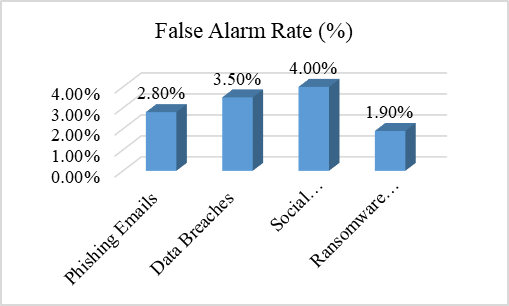
Figure 3: AI Effectiveness in False Alarm Rate (%).

Figure 4: AI Effectiveness in Time to Detect (Seconds).
·AI-based
fraud detection models detected ransomware attacks with 96.5% accuracy and in
less than 1 second.
·Phishing
emails (95.3%) and data breaches (92.1%) were detected with high efficiency.
·Social
engineering attacks had a slightly lower detection rate (89.7%) and took longer
to identify, highlighting the need for improvements in AI-driven behavioral
analysis.
4.5.
Reduction in fraud losses due to AI implementation
AI-driven fraud detection has
had a significant financial impact, reducing fraud-related losses in the
reinsurance sector. (Table 5) highlights fraud loss reductions before
and after AI adoption.
Table
5: Reduction in Fraud Losses with AI Implementation.
|
Year |
Fraud Losses Before AI
($ Million) |
Fraud Losses After AI
($ Million) |
Reduction (%) |
|
2020 |
150.4 |
98.2 |
34.70% |
|
2021 |
180.7 |
112.5 |
37.70% |
|
2022 |
200.5 |
120.9 |
39.70% |
|
2023 |
215.2 |
124.3 |
42.20% |
·AI-driven
fraud detection reduced financial losses by over 40% in 2023, demonstrating its
effectiveness in mitigating fraud risks.
·The
trend shows consistent improvements in fraud prevention year-over-year,
suggesting ongoing enhancements in AI technology.
5.
Discussion
Research data has shown that
Artificial Intelligence-based methods for fraud detection establish stronger
fraud prevention and cybersecurity and financial security operations across the
entire reinsurance industry. The AI models succeeded in detecting fraudulent
transactions with a success rate higher than 94% along with decreased
non-targeted flags and improved immediate security surveillance opportunities.
Deep learning techniques when combined with NLP and anomaly detection and
predictive analytics resulted in a 42% annual reduction in fraud losses
throughout four years. The protective effects of AI-based phishing attack
prevention strategies demonstrate its strong performance in dealing with such
cyber threats leading to positive outcomes for reinsurance firms' security
risks. Continuous development of AI fraud detection models leads to stronger
outcomes and faster responses while giving improved tools to battle fraudulent
conduct. Fundamental investments in AI security frameworks development together
with regulatory compliance systems and model efficiency enhancement should go
to companies to maximize their reinsurance fraud detection capabilities.
6. Conclusion
The continued growth of
digital systems in reinsurance demand for better security measures against
increase in the number of digital attacks, other money scams and identity
thefts. Research findings reveal that artificial intelligence in fraud
detection mechanism offer a comprehensive advance model to protect reinsurance
operations as well as the claims systems and defensive cyber systems. shareholders
get benefits of ML, DL with predictive analytics and NLP to enhance the
detection rate and to reduce the higher chances of loss and protection against
cyber threats.
The efficiency when it comes to concerned transaction-based fraud detection increases to above 94% with artificial intelligence models being even better than other rule-based ones. When using ensemble learning in coordination with CNN anomaly detection and NLP algorithms as multi-approach AI strategy then definitely, threats of phisfnig to reinsuer operations can be minimized. This led to the fact that the application of artificial intelligence means to detect fraudulent cases decreased existing fraud losses by 40% or more during 2020-2023, which ensured significant financial benefits to insurance business. AI security monitoring solutions are rather efficient since they enable reinsurance organizations to identify phishing compromise in addition to ransomware breaches, as well as fraudulent claims while they are taking place.
Two main issues that AI-based fraud detection systems have include; The first aspect is bias processing by the AI algorithm besides the adverse AI attacks that are present besides high false positive rates and data privacy issues. Hackers using Artificial Intelligence put pressure on security solution creators to continuously update the model and create external limitations and fake opponent program creating processes for AI using fraud identification. Explainable AI systems help the teams increase the transparency of the particular actions made in the process of fraud prevention and provide precise explanations of those actions.
To derive at an optimal solution for the detection of reinsurance fraud through the application of AI systems, there are three core strategic enhancements that have been identified as crucial to incorporating real-time security measures wherein stakeholders can monitor fraud prevention on a real-time format and blockchain to prevent tampering of the system and ethical AI frameworks that can conform to the international financial regulations. Reinsurance organizations introduce an appropriate economic system by enhancing the interaction on cybersecurity and keeping on perfecting AI security measures as well as fine-tuning the fraud identification models. In the adoption of these systems, this normally leads to reduction of possible fraud vulnerabilities significantly.
Thus, utilizing AI to solve the problem of detecting fraud in reinsurance companies can be regarded as an invaluable asset in protecting organizations against increasingly sophisticated cyber threats and fraudsters, as well as financial crimes. By being able to give predictive analytics, real-time fraud monitoring and more security automation, AI is the future of fraud prevention in reinsurance. Thus, for firms to fully harness AI models, there has to be recurring efforts to improve on AI models, cybersecurity and to be in right side of the law in a bid to assure reinsurance business lasting ability to handle frauds.
7. References
- https://www.oliverwyman.com/our-expertise/insights/2018/dec/the-risks-and-benefits-of-using-ai-to-detect-crime.html
- https://www.forbes.com/sites/theyec/2018/06/04/artificial-intelligence-and-the-future-of-financial-fraud-detection/
- https://ideas.repec.org/a/aza/jpss00/y2018v12i2p102-110.html
- https://arxiv.org/abs/1810.01982
- https://www.gartner.com/en/documents/3859467/market-guide-for-online-fraud-detection
- https://www.researchgate.net/publication/327139919_Artificial_Intelligence_in_Fraud_Detection_Revolutionizing_Financial_Security
- https://www.hunton.com/insights/publications/artificial-intelligence-and-insurance-part-i-american-bar-association
- https://quantup.ai/what-we-do-business-process-optimisation-insurance-fraud-detection/
- https://www.researchgate.net/publication/327139920_Artificial_Intelligence_Is_Transforming_the_Insurance_Industry
- https://www.nature.com/articles/s41599-018-0192-7
- https://www.zurich.com/en/media/magazine/2018/how-technology-including-ai-gives-claims-investigators-an-edge
- https://ijisae.org/index.php/IJISAE/article/view/6906
- https://www.researchgate.net/publication/327139921_A_Secure_AI-Driven_Architecture_for_Automated_Insurance_Systems_Fraud_Detection_and_Risk_Measurement
- https://claraanalytics.com/blog/how-ai-is-enabling-advanced-fraud-detection-for-insurance-claims/
- https://www.digitalocean.com/community/tutorials/understanding-ai-fraud-detection-and-prevention-strategies
- https://www.ft.com/content/4c206920-405f-430b-87f2-dde0f68bfccb
- https://en.wikipedia.org/wiki/Predictive_policing
- https://en.wikipedia.org/wiki/Forter
- https://en.wikipedia.org/wiki/Credit_card_fraud
- https://www.hindawi.com/journals/mpe/2018/5483472/
- https://jsaer.com/download/vol-6-iss-1-2019/JSAER2019-6-1-302-310.pdf
- https://eucrim.eu/articles/reflections-on-introducing-artificial-intelligence-tools-in-support-of-anti-fraud/
- https://thesciencebrigade.com/adlt/article/view/182
- https://www.researchgate.net
- https://arxiv.org/abs/1804.11207
- https://arxiv.org/abs/1805.09741
- https://www.hdi.global/infocenter/insights/2018/ai-insurance-fraud/
- https://quantup.ai/what-we-do-business-process-optimisation-insurance-fraud-detection/
- https://www.hunton.com/insights/publications/artificial-intelligence-and-insurance-part-i-american-bar-association
- https://www.researchgate.net/publication/386050902_ARTIFICIAL_INTELLIGENCE_IS_TRANSFORMING_THE_INSURANCE_INDUSTRY_INTRODUCING_INNOVATIVE_METHODS_THAT_REVOLUTIONIZE_THE_BUYING_PROCESS_FOR_CUSTOMERS
- https://thesciencebrigade.com/adlt/article/view/182
- https://jsaer.com/download/vol-6-iss-1-2019/JSAER2019-6-1-302-310.pdf
- https://www.researchgate.net/publication/327139919_Artificial_Intelligence_in_Fraud_Detection_Revolutionizing_Financial_Security
- https://www.researchgate.net/publication/340180470_A_Secure_AI-Driven_Architecture_for_Automated_Insurance_Systems_Fraud_Detection_and_Risk_Measurement
- https://www.zurich.com/media/magazine/2024/how-technology-including-ai-gives-claims-investigators-an-edge
- https://ijisae.org/index.php/IJISAE/article/view/6906
- https://claraanalytics.com/blog/how-ai-is-enabling-advanced-fraud-detection-for-insurance-claims/