In-depth Analysis of USB Type-C Standard & Enhanced Power Delivery
Abstract:
USB Type-C Power Delivery has multiple power delivery levels, each with different maximum power ratings. The standard power rating or default mode for USB Type-C Power Delivery is called "USB Power Delivery 1.0" (also known as "USB PD 1.0" or simply "PD 1.0"). This standard supports power delivery up to 15 watts (W). However, it's important to note that USB Type-C Power Delivery can support much higher power levels than the standard 15W for specific use cases and devices, such as laptops or high-power mobile devices. For these scenarios, there are more advanced versions of the Power Delivery specification, like PD 2.0 and PD 3.0, which can provide up to 65W, 100W, or even higher power levels, such as 240 watts (W). These advanced specifications require compliant chargers and devices to deliver and receive these increased power levels effectively. However, it should be noted that standard devices are not required to support the higher power level due to the requirement for specific hardware and software components to enable and test the devices to make them safe and reliable for operation. The article will discuss the potential methods for setting up a standard setup and various testing methods.
1. Introduction
USB Type-C Power Delivery (PD) is a specification that defines how power can be delivered over the USB-C connector. This specification is essential because it allows for safe and reliable power delivery to devices such as laptops, smartphones, and other accessories. The USB-C connector is designed to be reversible, meaning it can be inserted either way into a port. This makes it easier to use and reduces the risk of damage to the connector or the port. The USB-C Power Delivery specification defines how power can be delivered over this connector, including the maximum voltage and current and the methods used to negotiate power delivery between devices. Since the introduction of Type-C in 2013, there have been many evolutions, and speed and power have increased progressively5.
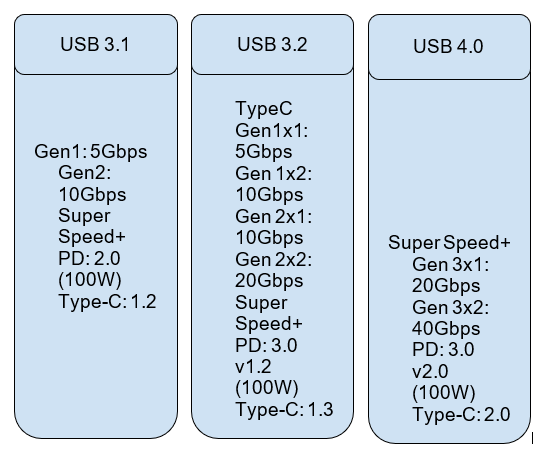
One of the critical benefits of USB Type-C Power Delivery is its ability to support high levels of power delivery, up to 240W in some cases. It allows for the safe and reliable charging of more extensive devices, such as laptops, without requiring specialized chargers or adapters. The specification includes built-in safety features, such as overcurrent protection and thermal monitoring, to prevent device damage or user injury.
USB Type-C Power Delivery can impact the design and development of devices that use this connector. For example, you may need to consider the power delivery capabilities of a device when designing software that interacts with it, or you may need to implement specialized power management features to ensure safe and reliable operation. USB-C connector provides high flexibility and scalability for devices that use this connector. Understanding this specification allows you to design and develop secure, reliable, and robust devices with a great user experience.
USB Type-C Power Delivery (PD) is an advanced specification for USB Type-C cables and connectors. Its significance in the context of charging and powering electronic devices. USB Type-C Power Delivery enables efficient power transfer between devices and chargers over the same USB Type-C connector for data transmission. The main advantage of PD is the support for higher power levels than previous versions of USB power delivery. This capability allows faster charging and powering devices like laptops, tablets, and high-performance smartphones. USB Power Delivery uses a negotiation protocol between the charger and the device to determine the optimal power delivery level based on their capabilities. The USB PD Controller manages the negotiation process, implemented in the charger and the device's hardware or software. Once they agree on a power delivery level, the charging process starts, delivering an appropriate amount to charge or power the connected device efficiently. From a Software development perspective, implementing USB power delivery in devices involves writing software that interacts with the PD controller to manage power negotiation and delivery. This can include handling different power delivery levels, monitoring the battery status, and controlling charging algorithms to optimize charging speed and efficiency. Thermal testing will be conducted at the hardware level as these pins transmit power and high-speed data [5]. Testing this software is essential to ensure its compatibility with various chargers and proper functionality under different use cases and scenarios.
USB Type-C Power Delivery offers several benefits over older USB power delivery standards. PD can deliver more power over the same cable, making it an ideal choice for charging laptops, tablets, and other high-power devices. It supports various power levels, enabling a single connector to serve multiple use cases. The USB Type-C connector is reversible, making it easier to connect devices without worrying about the orientation of the cable. PD allows faster charging than older USB standards. As technology advances, new versions of Power Delivery are expected to support even higher power levels, ensuring that the technology remains relevant and valuable in future devices.
2. Typical Setup
In any Standard Power Delivery device or Device Under Testing (DUT) that can support the SPR or EPR functionality would be required. With the DUT, the Power Source and Sink device, which can help the SPR and EPR modes, must be used along with similar cable types.
2.1. Functionality test
Perform basic functionality tests to ensure your DUT can communicate with EPR devices properly. These tests include a Power negotiation, where proper power negotiation between the DUT and the EPR device is performed during various connection scenarios (initial attachment, Re-attachment, etc.). A multimeter or oscilloscope monitors the VBUS and CC1/CC2 pin's voltage levels during power delivery negotiations. After the power translate tests are performed to validate the DUT's ability to transmit and receive data with EPR devices using various transfer modes (Low-Speed, Full-Speed, High-Speed, and Super-Speed). Use tools like HID Wiz, USB Bench, or other available software for this purpose. Once Power and data tests are done, if applicable, the Alt mode or Alternate mode test is performed to verify that the DUT supports alternative modes such as DisplayPort Alt Mode or Power Delivery Alternate Mode (PD Alt Mode). Test these features with EPR devices.
2.2. Interoperability test
Perform interoperability tests to validate your DUT's compatibility with multiple EPR devices using different operating systems, drivers, and test cases. These tests include compatibility with multiple EPR devices, which tests the DUT's compatibility with numerous EPR devices. Connect the DUT to various EPR power sources and sinks and verify proper communication and data transfer. Power cycling tests ensure that the DUT maintains proper communication during power cycles and does not enter a fault state when connected to an EPR device. The last test would be a cable Swap Test where data transfer should not be affected when using different USB Type-C cables or connecting the DUT to EPR devices with reversed cables (upside-down, sideways).
2.3. Compliance test
Perform compliance tests to ensure that your DUT adheres to the USB Power Delivery specification. Use certified test equipment like JESD204B or other compliance testers to perform the following tests: These tests are conducted to ensure they follow the electrical, mechanical, and thermal requirements in any given device. Electrical Testing ensures proper voltage levels, current consumption, and signal integrity during power delivery negotiations with EPR devices. Test voltage drop, current draw, and power delivery under various load conditions. Mechanical testing ensures that the DUT's mechanical alignment and retention with various EPR devices and USB Type-C cables can function correctly regardless of orientation. Finally, thermal testing ensures the DUT can handle different temperature environments without affecting performance or causing damage when connected to an EPR device.
3. Conclusion
In conclusion, USB Type-C Power Delivery is a versatile and efficient power delivery specification for modern electronic devices. Its advanced features enable faster charging, efficient power transfer, and support for various power levels using the same connector. Understanding this technology's functionality and implementing and testing the related software is crucial to ensuring optimal performance, compatibility, and reliability. Testing USB Type-C ports with Enhanced Power Delivery (EPR) devices requires a systematic approach that includes functionality tests, interoperability tests, compliance tests, and documentation. Following these steps and utilizing appropriate tools and equipment can validate your DUT's compatibility with EPR devices to ensure high-quality and reliable connectivity.
4. References
- Hewlett-Packard Company, Intel Corporation, Microsoft Corporation, Renesas Corporation, ST-Ericsson, Texas Instruments. Universal Serial Bus 3.1 Specification. 2013.
- Universal Serial Bus Type-C Cable and Connector Specification 2019.
- https://www.usb.org/document-library/usb-power-delivery
- Shah M, Kodali S, Rani A, Bharathi V. Seamless interfacing with ThunderboltTM 4.0. 2022 ICECET 2022; 1-6.
- Delshadpour S, Janssen JHJ, Kulkarni A. Thermal and Life Analysis for USB PD Chip with Integrated Load Switches. 2018 24rd International Workshop on Thermal Investigations of ICs and Systems (THERMINIC) 2018; 1-6.