No-Code AI: Empowering Business Users to Harness the Power of Artificial Intelligence
Abstract
The rise of no-code AI platforms is revolutionizing
the way businesses adopt and implement artificial intelligence
solutions. These platforms democratize AI by empowering non-technical users to
create and deploy AI applications without the need for extensive coding
knowledge or deep technical
expertise. This article explores the key features and capabilities of no-code
AI platforms, their benefits for businesses, and a use case demonstrating their practical application in optimizing supply
chain operations. The future of no-code AI looks
promising, with projected growth in adoption across industries and the
potential to drive innovation and competitive advantage. However, businesses
must also consider challenges such as data privacy and model governance when
embracing these platforms. As the no-code AI ecosystem evolves, businesses that
invest in upskilling their employees and leveraging these tools will be
well-positioned to harness the power of AI and stay ahead in the rapidly
changing digital landscape.
Keywords: No-code AI platforms, Artificial Intelligence (AI), Democratization of
AI, Visual programming, Pre-built AI models, AutoML, Seamless integration, Collaboration tools, Supply chain optimization, Demand
forecasting, Quality control,
Route optimization, AI
adoption, Innovation.
1. Introduction
Artificial intelligence (AI) has become
an increasingly crucial tool for businesses across various industries. From
automating repetitive tasks to providing
valuable insights and predictions, AI has the potential to
revolutionize the way companies operate
and compete in the market1. However, despite the growing importance of
AI in business, many organizations face significant challenges in adopting and
implementing AI solutions (Figure 1).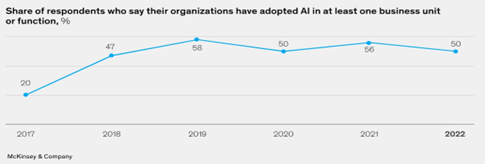
Figure 1: AI Adoption
has more than doubled from 2017 to 20222
One of the primary obstacles to AI
adoption is the lack of deep technical expertise among non-technical users,
such as business analysts, domain experts, and decision-makers3. Traditional AI development requires a strong
background in programming, data science,
and machine learning,
which can be a daunting
barrier for those without extensive technical training. This skill gap often
leads to a reliance on IT departments or external consultants, resulting in
longer development cycles, higher costs, and reduced agility in adapting to
changing business needs3.
Moreover, the complexity of AI
development can hinder experimentation and innovation, as non-technical users
may be hesitant to explore new ideas or test hypotheses without the necessary
technical skills4. This limitation can prevent
businesses from fully leveraging the potential of AI and staying competitive in
an increasingly data-driven world.
However, the emergence of no-code AI
platforms is revolutionizing the way businesses harness
AI by empowering non-technical users to create and deploy AI
solutions without deep technical expertise. These platforms provide intuitive,
visual interfaces that allow users to build, train, and deploy AI models using drag-and-drop components and pre-built templates5. By abstracting away the underlying complexity of AI development, no-code platforms
democratize access to AI and enable a wider range of users
to participate in the creation and implementation of AI solutions.
The impact of no-code AI platforms on
businesses is significant. By empowering non-technical users to directly
develop and deploy AI applications, these platforms can accelerate the adoption of AI, reduce
development costs, and foster a culture of innovation and
experimentation5. Furthermore,
no-code AI platforms enable businesses to be more agile and responsive to changing market
conditions, as they can
quickly adapt and refine their AI solutions without relying on scarce technical
resources.
In this article, we will explore the rise
of no-code AI platforms and their transformative potential for businesses. We
will delve into the key features and capabilities of these platforms, examine a
real-world use case of how a company successfully adopted a no-code AI platform
to enhance their customer support, and discuss the future trends and
implications of this technology. By the end of this article, readers will have a comprehensive understanding of how no- code AI platforms are empowering
business users and revolutionizing the way organizations harness the power of AI.
2. The Emergence
of No-Code AI Platforms
The complexity of AI development has
often been a barrier for businesses seeking
to harness its potential. Traditional AI development requires deep technical expertise, making it
challenging for non-technical users to participate in the process. However,
the emergence of no-code AI platforms is bridging this gap, empowering business
users to create and deploy AI solutions without the need for extensive coding
knowledge. No-code AI platforms are a revolutionary technology that enables
non-technical users to create, train, and deploy AI models without the need for
extensive programming skills or deep technical expertise.
2.1.
Key characteristics of no-code AI platforms
No-code AI platforms are software tools that enable users to develop,
train, and deploy AI models using visual, intuitive interfaces, without writing
complex code5.These platforms
abstract away the intricacies of AI development, allowing users to focus on the
business logic and outcomes of their AI applications.
The key characteristics of no-code AI platforms include:
1.
Drag-and-drop interfaces and visual programming:
No-code AI platforms provide intuitive
drag-and-drop interfaces and visual programming capabilities, allowing users to
create AI models and workflows without writing complex code. For example, Google Cloud AutoML6 and Amazon SageMaker Canvas8 offer visual interfaces that enable users to
build and train AI models using pre-built components and templates.
2.
Pre-built AI models and templates for common use cases: Many no-code AI platforms come
with pre-built AI models and templates for common use cases, such as sentiment
analysis, image classification, and predictive maintenance. These ready-to-use
components accelerate the AI development process and reduce the need for
extensive data science expertise. Platforms like IBM Watson Studio and
Microsoft Azure AI Gallery provide
a wide range of pre-built models and templates for various industries and applications.
3.
Integrated automation machine
learning capability: No-code
AI platforms often incorporate AutoML capabilities, automating tasks such as
model selection, hyperparameter tuning, and model optimization, enabling users
to create high-performing AI models with minimal manual intervention7.
4.
Seamless integration with existing data sources and business applications: No-code AI
platforms enable seamless integration with existing data sources and business
applications, allowing users to easily import and process data for AI model training and deployment. For instance,
Akkio9, a no-code AI platform, offers
connectors for popular data sources like Salesforce, Google Sheets, and
databases, making it easy to integrate AI into existing business workflows.
5.
Collaboration and sharing features for team-based AI development: No-code AI platforms
often include collaboration and sharing features
that facilitate team-based AI development. These features allow multiple users to work on the same AI project
simultaneously, share models and workflows, and provide feedback and
annotations. Platforms like DataRobot and H2O.ai offer collaboration tools that enable
users to work together
on AI projects, fostering innovation and improving the quality of AI solutions (Figure 2).
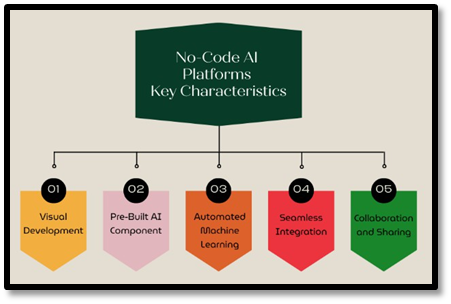
Figure 2: No-Code AI Platforms Key Characteristics
2.2.
Bridging the gap between AI and business
users
No-code AI platforms bridge the gap
between AI and business users by democratizing access to AI development. These
platforms empower non-technical users, such as business analysts, domain
experts, and decision-makers, to create and deploy AI solutions without relying
on extensive technical expertise7.
Through
a user-friendly interface and a capability to automate complex
tasks, no-code AI platforms enable business users to:
1. Quickly
prototype and test AI ideas: No-code AI platforms allow business users to
rapidly develop and test AI applications, enabling them to validate
ideas and iterate on solutions
without the need for lengthy development cycles7.
2. Align AI initiatives with business goals:
With no-code AI platforms, business users can directly
translate their domain knowledge and business requirements into AI solutions, ensuring
that AI initiatives are closely aligned with organizational objectives7.
3. Foster collaboration between business and IT: No-code AI platforms facilitate collaboration between business users and IT professionals, enabling them to work together seamlessly on AI projects, leading to better alignment and faster implementation of AI solutions7.
Table 1: Traditional AI Development vs. No-Code AI Platforms
|
Traditional AI
Development |
No-Code AI
Platforms | |
|
Technical Expertise |
High |
Low |
|
Development Time |
Long |
Short |
|
Accessibility |
Limited |
High |
|
Business Alignment |
Challenging |
Straightforward |
|
Collaboration |
Difficult |
Easy |
2.3. The Benefits of No-Code AI Platforms
No-code AI platforms offer several
significant benefits for businesses looking to adopt and implement AI
solutions:
1. Faster deployment: By reducing the time and effort required to develop and deploy AI applications, no-code AI platforms enable businesses to
quickly bring AI solutions to market, gaining a competitive edge11.
2. Reduced costs: No-code
AI platforms eliminate the need for
extensive technical expertise, reducing the costs associated with hiring and training specialized AI talent, making AI adoption more affordable for businesses of all
sizes11.
3. Increased accessibility: By democratizing AI development, no-code
AI platforms make AI accessible to a wider range of users within an
organization, fostering innovation and enabling more employees to contribute to
AI initiatives11.
4. Enhanced agility: No-code AI platforms allow businesses to rapidly
adapt and refine their AI solutions in response to changing market conditions
or business requirements, without relying on scarce technical resources11.
5. Improved ROI: By enabling faster
deployment, reducing costs, and increasing accessibility, no-code AI platforms help businesses achieve a higher
return on investment (ROI) from their AI initiatives11.
2.3. Examples of No-Code AI Tools:
1. Akkio: Akkio is a no-code AI platform that enables businesses to create and
deploy AI models for various use cases, such as lead scoring, churn prediction,
and demand forecasting. It offers drag-and-drop interfaces, pre-built
templates, and seamless integration with data sources like Salesforce and
Google Sheets9.
Primarily Used Across: Marketing, Sales, and Finance.
2. Clarifai: Clarifai is a no-code AI platform that specializes in computer
vision and natural language processing. It provides pre-built models for tasks
such as object detection, facial recognition, and content moderation.
Clarifai’s drag-and-drop interface allows users to create custom AI workflows
and integrate them with existing applications5.
Primarily Used By: E-commerce, Media, Social Networks.
3. Levity: Levity is a no-code AI platform that focuses on document processing
and automation. It offers pre-built models for tasks like invoice processing,
contract analysis, and email classification.
Levity's visual interface enables users to create
AI workflows and integrate them with tools like Zapier and Dropbox5.
Primarily Used By: Accounting, Legal, & Human Resources.
4. MonkeyLearn: MonkeyLearn is a no-code AI platform that specializes in text
analysis and natural language processing. It provides pre- built models for
sentiment analysis, topic classification, and named entity recognition.
MonkeyLearn's intuitive interface allows users to create custom AI models and
integrate them with applications like Zendesk and Google Sheets5.
Primarily Used Across: Customer Service, Marketing,
and Media.
3. USE Case: Enhancing Supply Chain with No-Code AI
To demonstrate the practical application
of no-code AI platforms in supply chain management, let's consider the a berry
manufacturer organization, which we will refer to as “Drisberry", and
explore how they leveraged a no-code AI platform to optimize their supply chain
operations.
3.1.
Introduction to drisberry
and their supply
chain challenges
Drisberry is a leading berry manufacturer
that produces and distributes a
variety of fresh berries such as strawberries and blueberries to retailers and consumers worldwide. As the
company expanded, they encountered several challenges in their supply chain:
1. Demand forecasting: Accurately predicting demand for perishable products
like berries was crucial for Drisberry
to minimize waste and ensure optimal inventory levels. However, their traditional forecasting methods struggled to
account for the complex factors influencing demand, such as weather,
promotions, and consumer preferences12.
2. Quality control: Maintaining the quality of berries throughout the
supply chain was a critical challenge for Drisberry. They needed
a system to monitor and predict
quality issues, such as spoilage and contamination, to prevent product losses
and ensure customer satisfaction12.
3. Supply chain visibility: Drisberry lacked real-time visibility into their supply chain operations, making it difficult to identify bottlenecks, optimize routes, and respond to disruptions promptly12.
To address these challenges, Drisberry
decided to explore
the use of no-code AI platforms to enhance their supply chain management.
3.2.
Leveraging a No-Code AI platform
for supply chain optimization
Drisberry chose Regrello, a no-code AI platform that offered
drag-and-drop interfaces, pre-built
machine learning models, and seamless integration with their existing
ERP supply chain management systems such as Oracle and SAP. The platform allowed them
to create AI-powered solutions without requiring extensive data science
expertise or coding skills12.
The no-code AI platform provided Drisberry with the following key features:
1. Visual
workflow builder: Regrello's intuitive visual interface enabled Drisberry's supply
chain team to design
and orchestrate AI workflows using drag-and-drop components and decision trees.
2. Pre-built
machine learning models: Regrello offered pre-trained models for common supply
chain use cases, such as demand
forecasting, quality prediction, and route
optimization. These models could be easily customized and fine-tuned using Drisberry's own supply chain data.
3. Integration
with existing IT infrastructure systems: Regrello seamlessly integrated with
Drisberry's supply chain management software, IoT devices, and data sources,
allowing for real-time data ingestion and actionable insights.
3.3. Building and deploying
AI Solutions using the No-Code platform
The process of building and deploying AI solutions for supply chain optimization using Regrello involved several key steps:
1. Data integration and preprocessing: Drisberry's supply chain data from various
sources, such as ERP systems, IoT sensors, and weather APIs, were integrated
into the platform. The platform's built-in data preprocessing tools cleaned, normalized, and transformed the data for AI model
training13.
2. Model training and customization: Drisberry's supply chain team utilized Regrello’s pre-built machine learning models and trained them using their own data. They fine- tuned the models' parameters and
features to better fit Drisberry's specific supply chain characteristics and
requirements13.
3. Workflow design and automation: Using Regrello’s visual workflow
builder, the team designed AI-powered workflows for demand
forecasting, quality prediction, and route optimization. They incorporated decision
trees, alerts, and automated
actions to streamline supply chain processes13.
4. Deployment and monitoring: The AI solutions were seamlessly deployed
into Drisberry's supply chain management systems. Regrello’s monitoring and
analytics tools provided real-time insights into the performance of the AI
models, enabling continuous improvement and adaptation13.
3.4.
Results: Improved supply
chain efficiency and performance
The implementation of AI-powered solutions using Regrello’s no-code AI platform yielded significant improvements for Drisberry's supply chain operations:
1. Enhanced
demand forecasting: The AI-powered demand forecasting models accurately
predicted demand for Drisberry's products, considering factors such as weather,
promotions, and consumer trends. This led to better inventory management, reduced
waste, and improved customer
satisfaction.
2. Proactive
quality control: The quality prediction models helped Drisberry identify
potential quality issues
early in the supply
chain, enabling proactive measures to prevent spoilage and contamination. This reduced product
losses and ensured consistent product quality for customers.
3. Optimized supply chain operations: The route optimization models, and
real-time supply chain visibility provided by the AI platform allowed
Drisberry to streamline their logistics, reduce transportation costs,
and improve on-time delivery rates.
4. Waste reduction: By accurately forecasting demand, proactively managing quality, and optimizing supply chain operations, Drisberry achieved a significant reduction in waste throughout their supply chain, leading to cost savings and improved sustainability.
|
Metric |
Before AI |
After AI |
|
Demand Forecast Accuracy |
70% |
95% |
|
Inventory Turnover |
8 |
12 |
|
On-Time Delivery |
85% |
98% |
|
Waste Reduction |
5% |
20% |
Table 2: Supply Chain Performance Metrics
at Drisberry
The success of the AI-powered supply
chain optimization at Drisberry demonstrates the potential of no-code AI platforms
in transforming supply chain management. By leveraging visual interfaces,
pre-built models, and seamless integration capabilities, businesses can create
AI solutions that enhance efficiency, reduce waste, and improve overall supply
chain performance.
4.
Future of No-Code AI and its Impact
on Business
As the demand for AI-driven solutions
continues to grow across industries, the future of no-code AI platforms looks
incredibly promising. These platforms are poised to revolutionize the way
businesses adopt and implement AI, making it more accessible, agile, and
cost-effective.
4.1.
Projected growth and adoption of No-Code AI platforms
The global no-code AI market is expected
to witness significant growth in the coming years. According
to a recent report by Grandview research, the global no-code AI
platform market size was estimated at USD 3.83 billion in 2023 and is projected to grow at a CAGR of 30.6% from 2024 to
203014. This growth can be attributed to the increasing demand for AI automation, the
need for faster time-to- market, and the desire to democratize AI across organizations.
As more businesses recognize the value of
no-code AI platforms in driving innovation and efficiency, the adoption of
these platforms is expected to accelerate across various industries, including healthcare, finance, retail, and manufacturing2. The ease of use, flexibility, and cost-
effectiveness of no-code AI platforms will make AI accessible to a wider range
of businesses, from startups to large enterprises.
4.2.
Democratizing AI and driving innovation across industries
No-code AI platforms have the potential
to democratize AI by empowering non-technical users to create and deploy AI
solutions. By lowering the barriers to entry, these platforms will enable
domain experts, business analysts, and decision- makers to leverage AI for
solving real-world problems and driving innovation within their organizations10.
The democratization of AI through no-code
platforms will foster a culture of experimentation and collaboration, where
employees across different functions can contribute to AI initiatives. This will lead to the development of AI
solutions that are more closely aligned
with business needs,
ultimately driving innovation and competitive advantage.
4.3.
The importance of upskilling employees
As no-code AI platforms gain prominence, it becomes crucial for businesses to invest in
upskilling their employees to effectively utilize these tools. While no-code AI
platforms eliminate the need for deep technical expertise, employees still need to understand the fundamental concepts
of AI, data preprocessing, and model evaluation to create effective AI
solutions12.
Organizations should provide training and
education programs to help employees develop the necessary skills to work with
no-code AI platforms. This will not only enable employees to leverage these tools effectively but also foster a
data-driven and AI-centric culture within the organization.
4.4.
Potential challenges and considerations
While no-code AI platforms offer numerous
benefits, businesses must also be aware of potential challenges and
considerations when adopting these tools. Data privacy and security are
critical concerns, as AI models often require access to sensitive data. Organizations must ensure that their
no-code AI platforms adhere to data protection regulations and implement robust
security measures to safeguard sensitive information15.
Another consideration is model governance
and explainability. As more employees create AI models using no-code platforms,
it becomes essential to establish governance
frameworks to ensure
the transparency, fairness, and accountability of these
models. Businesses must also consider the interpretability of AI models and
provide mechanisms for explaining the decision-making process to stakeholders15.
Despite these challenges, the future of no-code AI platforms remains bright. As these platforms continue to evolve
and mature, they will play a pivotal role in shaping the future of AI adoption and innovation across
industries. Businesses that embrace no-code AI platforms and
invest in upskilling their employees will be well-positioned to harness the power of AI
and stay ahead in the rapidly evolving digital landscape.
5. Conclusion
The rise of no-code AI platforms is
transforming the way businesses adopt and implement artificial intelligence
solutions. These platforms democratize AI by empowering non-technical users,
such as business analysts, domain experts, and decision-makers, to create and
deploy AI applications without the need for extensive coding knowledge or deep
technical expertise.
No-code AI platforms offer intuitive
visual interfaces, drag- and-drop components, and pre-built AI models, enabling
users to rapidly prototype, test, and implement AI solutions. By abstracting
away the complexity of traditional AI development, these platforms
significantly reduce the time, cost, and resources required to harness the
power of AI, making it more accessible to organizations of all sizes.
The key features and capabilities of
no-code AI platforms, such as visual programming, pre-built templates, seamless
integration with existing systems, and collaboration tools, facilitate the development of custom AI applications tailored to specific business needs.
These platforms also incorporate advanced techniques like AutoML, which
automates model selection, hyperparameter tuning, and optimization, further
simplifying the AI development process.
The use case of Drisberry, a fictitious
berry manufacturer, demonstrates the practical application of no-code AI
platforms in optimizing supply chain operations. By leveraging the Regrello platform, Drisberry was able to create AI-powered solutions for demand
forecasting, quality control, and route optimization without
the need for extensive
data science expertise. The implementation of these AI solutions led to significant improvements in demand forecast
accuracy, proactive quality management, optimized supply chain operations, and
waste reduction, ultimately enhancing Drisberry's overall supply chain performance and efficiency.
The success of Drisberry's AI-driven
supply chain optimization highlights the transformative potential of no- code
AI platforms across various industries. As businesses increasingly recognize the value of AI in driving innovation, efficiency, and competitive
advantage, the adoption of no- code AI platforms is expected to grow
significantly in the coming years.
However, it is essential to acknowledge
that no-code AI platforms are not a complete replacement for traditional AI
development. While these platforms excel in addressing common use cases and
provide a solid foundation for AI adoption,
they may have limitations in terms of customization
and handling highly complex or niche AI applications. In such cases, a hybrid
approach that combines no-code AI platforms with custom development by AI experts can
be an effective strategy.
As the no-code AI ecosystem continues to
evolve, we can expect to see further advancements in platform capabilities, the
emergence of industry-specific solutions, and the integration of cutting-edge AI technologies. The future of no-
code AI looks promising, with the potential to revolutionize the way businesses leverage
AI to drive innovation, improve operations, and create value for
their customers.
In conclusion, the rise of no-code AI
platforms is a game- changer for businesses seeking to harness the power of
artificial intelligence. By democratizing AI and empowering non-technical users,
these platforms are lowering the barriers
to AI adoption and enabling organizations to unlock the full potential of AI-driven innovation. As businesses navigate
the rapidly evolving AI landscape, embracing no-code AI platforms can
provide a competitive edge and pave the way for a future where AI is
accessible, agile, and integral to driving business success. As organizations
navigate the complexities of strategic planning, operational efficiency, and
stakeholder management, the Chief of Staff serves as a vital link between
executive leadership and the broader organization. For Program Managers
seeking to elevate
their careers and make a more significant impact,
the Chief of Staff
role presents a compelling opportunity to leverage their
skills and experience in a new and challenging capacity.
6. References
- Chui M. The State of AI in 2022-and a Half Decade in Review. McKinsey & Company 2022.
- Chui M. The State of AI in 2022-and a Half Decade in Review. McKinsey & Company 2022.
- Chui M, Lund S, Ramaswamy S. What’s Now and next in
Analytics, AI, and Automation. McKinsey & Company
2017.
- Agrawal A, Gans J, Goldfarb A. The economics of
artificial intelligence: An Agenda. NBER 2019.
- Kei G. Mapping
the No-Code AI Landscape. Levity 2023.
- Greene T. Google’s Automl zero lets the machines
create algorithms to avoid
human bias. TNW 2020.
- Agarwal A. No-Code Artificial
Intelligence: The new way to build ai
powered applications. BPB 2023.
- Amazon Marketing. AWS Week
in Review-June 6, 2022. Amazon web services 2022.
- Stupak T. AI for Small Business Marketing: Get a competitive edge today. Akkio 2024.
- Seger E. What Do We Mean When We Talk about ‘AI Democratisation’? Governance of AI 2023.
- Reilly J. How No-Code Platforms Can Bring AI to Small
and Midsize Businesses. HBR 2021.
- Smolic H. No-Code
AI Solutions for Supply Chain Management.
Graphite Note 2023.
- Ahmed M. No-Code Platforms for Supply Chain-All you need to know. SCMDOJO
2022.
- Lou S. No-Code AI Platform Market Size and Share
Report, 2030. Next Generations 2022.
- Rao A, Verweij G. Sizing the prize: What's the real value of AI for your business and how can you capitalise? PwC 2017.