Regulatory and Ethical Issues in IoT Healthcare Applications
Abstract
The Internet of Things (IoT) is an evolutionary change that
creates a healthcare network of connected items. IoT technology in digital
health might revolutionize patient care by enabling real-time monitoring and
individualized therapy. However, the rapid use of IoT in healthcare presents
ethical considerations. Data privacy, consent, algorithmic fairness, regulatory
compliance, and ethical design are ethical issues. These changes enhance
HIPAA/GDPR ethics and compliance. Other potential risks include unauthorized
access, computer bias, and data breaches1.
These challenges are addressed via safe code, encryption, and AI-driven
compliance monitoring in software engineering. Future AI security and ethical
decision-making alternatives include Blockchain, zero-trust architecture, and
federated learning. Ethics, regulatory compliance, and IoT healthcare
application safety software are examined in this research.
Keywords: IoT Healthcare, Regulatory Compliance, Ethical Concerns, Software
Security, Data Privacy, AI in Healthcare, Medical Device Regulations
1. Regulatory and Ethical Issues in
IoT Healthcare Applications
The new Internet of Things (IoT) uses billions of sensors in
various ways. Sensors in the IoT capture data for analysis. These technologies
enhance hospital management, precision medicine, and remote patient monitoring.
Integration challenges regulatory and ethical data security, patient privacy,
and system stability. Health data security demands strict HIPAA and GDPR
compliance. Users may regulate data access and processing with HIPAA and GDPR
permission before collecting data from smart devices or sensors. Software
development is needed for secure systems, patient data encryption, and ethical
AI decision-making. This study examines regulatory and ethical challenges in
IoT healthcare applications and how software solutions might enhance healthcare
technology compliance, security, and trust.
2. Regulatory Challenges in IoT
Healthcare Applications
IoT has transformed patient-centered
healthcare. The Internet of Things in healthcare tracks essential medical signs
while managing recurring diseases to support patient health and enhance medical
procedures. Despite progress in IoT healthcare, multiple regulatory problems
have been triggered2. IoT healthcare
systems must follow HIPAA, GDPR, and FDA rules to protect patient data and
equipment. Coverage includes medical technology ethics, privacy, and data
security. Rapid IoT improvements make compliance problematic since technology
outpaces legislation3. Data security
across devices and networks is complex. To address these issues, software
development uses encryption, safe code, and conformance testing4. Healthcare applications meet regulations with
robust authentication, real-time monitoring, and automated compliance checks.
IoT healthcare technology innovation and regulatory compliance need good
programming.
3. Ethical Concerns in IoT
Healthcare Technologies
IoT applications for healthcare
collect vast patient data, threatening privacy and informed consent. IoT
devices across industries pose substantial security risks that are typically
disregarded. IoT devices are vulnerable to hackers because they lack security
procedures. Patients' confusion about data use may cause transparency and
control issues5. Biased AI-driven
healthcare algorithms may cause unfair treatment or misdiagnosis. Software
development must be strong to guarantee IoT healthcare ethics. Transparent AI
models promote accountability, whereas bias detection systems prevent bias6. Data minimization and safe access protect
patient privacy. IoT healthcare programming ethics may increase trust,
fairness, and medical data utilization.
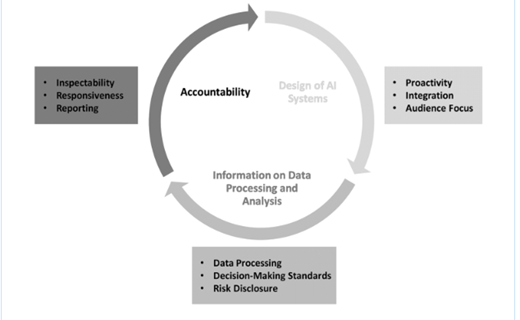
Figure 1: “A Model for transparency by design” 6.
4. Cybersecurity and Data Protection
in IoT Healthcare Systems
Malware, hacks, and illegal access
threaten IoT healthcare equipment. Old software, weak passwords, and open
networks pose security threats. Assessing risks, updating, and testing secure
SDLCs reduces risks7. Patient data is
secured for transmission and storage. Security comes via MFA and biometric
verification8. The software security
approaches protect IoT healthcare systems, patient safety, and data protection
legislation. Integrating IoT devices into healthcare requires legal knowledge
and patient data protection. Compliance is key to responsible IoT healthcare
innovation in an ever-changing market.

Figure 2: Conceptual authentication examples8.
5. Future Trends and Innovations in
IoT Healthcare Compliance
New security and automation
solutions are increasing IoT healthcare compliance. Patient data-sharing
transactions are tamper-proof using Blockchain9.
This reduces fraud and protects data. AI-driven regulatory compliance
monitoring automates real-time audits by detecting security risks and policy
violations. Zero-trust architecture and software development methods limit data
access.
A
zero-trust architecture (ZTA) plans infrastructure and processes for businesses
and industries based on zero-trust concepts10.
Federated learning improves AI models while protecting patient data across
devices. Data is safer with advanced encryption. These enhancements boost IoT
healthcare application security, compliance, and trust. There is still much
opportunity in connected devices, and as technology improves patients' health,
the industry and the many regulators monitoring this arena must keep up while
keeping cybersecurity in mind.
6. Conclusion and Future Scope
IoT healthcare applications have
numerous advantages but also regulatory and ethical challenges such as data
privacy, compliance, and security. HIPAA and GDPR must be followed for patient
safety and confidence. Software development reduces risks via safe code,
encryption, and AI-driven compliance monitoring. Future advancements like Blockchain,
zero-trust architecture, and federated learning will improve IoT healthcare
security. Technology and regulatory systems must develop to meet new dangers.
Healthcare experts, regulators, and software developers must work together to
establish ethical, secure, and compliant IoT healthcare solutions. With robust
security and ethical AI techniques, healthcare IoT can be innovative and
responsible.
7. References
- Mittelstadt
B. Ethics of the health-related Internet of things: A narrative review. Ethics
and Information Technology, 2017; 19: 157-175.
- Cohen IG,
Gerke S, Kramer DB. Ethical and Legal Implications of Remote Monitoring of
Medical Devices. The Milbank Quarterly, 2020; 98: 1257-1289.
- Banerjee
S. Hemphill T, Longstreet P. Wearable devices and healthcare: Data sharing and
privacy. The Information Society, 2017; 34: 49-57.
- Khair
MA. Security-Centric Software Development: Integrating Secure Coding Practices
into the Software Development Lifecycle. Technology & Management Review,
2018; 3: 12-26.
- Abouelmehdi
K, Hessane AB, Khaloufi H. Big healthcare data: preserving security and
privacy. Journal of Big Data, 2018; 5(1).
- Felzmann H,
Fosch-Villaronga E, Lutz C, et al. Towards Transparency by Design for
Artificial Intelligence. Science and Engineering Ethics, 2020; 26:
3333-3361.
- Mohino de V, Higuera B, Higuera B, et
al. The Application of a New Secure Software Development Life Cycle (S-SDLC)
with Agile Methodologies. Electronics, 2019; 8: 1218.
- Ometov A, Bezzateev S, Mäkitalo N, et al. Multi-Factor
Authentication: A Survey. Cryptography, 2018; 2: 1.
- Goel U, Ruhl R, Zavarsky P. Using Healthcare Authority and Patient Blockchains to Develop a Tamper-Proof Record Tracking System. IEEE Xplore, 2019.
- Rose S,
Borchert O, Mitchell S, et al. Zero trust architecture. Zero Trust
Architecture, 2020; 800-207(800-207).