Salesforce CRM and the Integration of Internet of Things (IoT) for Enhanced Customer Insights: A Deep Dive
Abstract
As we all know, due to the interrelated and data abundance of today's world, businesses are constantly looking for new approaches to improve customer interaction and facilitate greater customization. This article discusses how integrating the Salesforce customer relationship management (CRM) system with the Internet of Things (IoT) can change the landscape of engagement. Organizations can take advantage of real-time data provided by IoT devices to obtain profound customer insights, enhance service delivery and increase proactive engagement. This document examines the key benefits and challenges alongside other considerations that implement modern strategies in any business operation.
1. Introduction
1.1. The evolving customer relationship paradigm
Any digital transformation occurring in industries influences how customer relationships are managed. Providing customer support is not enough anymore and CRM systems will need to evolve to get rid of the outdated model of simply collecting customer data; they need to provide contextualized data for them to truly deliver on their promises.
The IoT provides the possibility to solve this problem using its network of connected devices. “There is an analytically projected strategy... which calls for a powerful, robust CRM system for the modern organization” (TechTimes, 2025). Let's explore how IoT and Salesforce CRM can help businesses shift from reactive CSR to proactive, business intelligence-driven customer service.
The merging of CRM and IoT systems makes it possible to gather and interpret data from multiple focal points instantly, which helps the business understand the customer's journey better.
The integration assists businesses in building a comprehensive customer profile with the added context from various connected devices, social media platforms and other sources. This perspective enables businesses to plan proactively, tailor interactions and provide astonishing services to customers.
2. Salesforce CRM and IoT Integration
Salesforce CRM, the oldest and best-in-class customer relationship management software, offers many integrated features for storing, interpreting and utilizing customer information for better relations with them.
The merger of IoT devices fundamentally broadens this scope by adding new dimensions of real-time contextual information from numerous other devices, thus creating an always-active and ever-changing customer profile that contains their present and future states.
2.1. Amplified customer understanding: Granular data insights
The details obtained by IoT devices are of high value. These devices can offer a detailed breakdown of a customer's usage, tastes and actions. By incorporating this data into their Salesforce CRM, companies can comprehend their clients better than before.
To explain, a household appliance can report in real-time how frequently it is being utilized, whether it is due for servicing and if there are any detected faults with regard to its functioning. This intelligent data can be leveraged to deliver tailored marketing campaigns, personalized product suggestions and proactive maintenance services to some customers.
2.2. Proactive service delivery: Anticipating customer needs
Every business can know exactly what their customer is doing with the help of IoT devices having real-time monitoring capabilities. This helps to prevent small issues from turning into big ones. Organizations can combine IoT information with the Salesforce Service Cloud, which gives automated service workflow management and proactive alerts for potential issues combined with better final support for customer satisfaction and less downtime.
A connected car is one example of how diagnostic data is sent to the service division. The technicians are notified of probable issues and can make necessary arrangements concerning maintenance to the user of the vehicle in advance, thus keeping the user from the hassle of unnecessary trouble.
2.3. Personalized marketing and sales: Tailored customer engagement
Marketing and sales campaigns are as precise and helpful with IoT data. When companies understand the usage patterns and preferences of a customer, they can proactively craft offers and recommendations that a customer can easily relate to. For instance, a fitness tracker can track a customer's activity level, workouts and food consumption, which allows businesses to design fitness and nutrition programs to help customers achieve their fitness goals.
2.4. Enhanced customer engagement: Interactive experiences
Businesses can also create new ways for customers to engage with their brand through personalized experiences, further promoting loyalty by leveraging the real-time data provided by IoT devices. A connected IoT home system allows the customer to custom set the lighting, temperature and even entertainment options, making them feel more at home.
3. Key Components and Implementation Strategies
For effective integration of Salesforce CRM and IoT, it is necessary to subdivide these components into smaller ones, which makes it simple to focus on them singularly as part of a more comprehensive strategic plan (Figure 1).

Figure 1: Salesforce CRM and IoT Integration.
3.1. IoT platform integration: Seamless data flow
Salesforce leverages its already existing Salesforce IoT Cloud, which makes it easier for organizations to gather, process and analyze their IoT. Many IoT systems have generic tools and APIs, making Salesforce’s integrations effortless. These seamlessly working integrations allow organizations to wire their IoT devices to the CRM system and provide customer information from them.
3.2. Data management and analytics: Extracting actionable insights
Oversights related to managing or analyzing data generated from IoT devices are gargantuan. Salesforce has offered many solutions for high-volume data management, such as the Salesforce Data Cloud, which proclaims to have a “new paradigm [for] customer success” (ScienceTimes, 2025). This cloud infrastructure allows for the gathering and consolidation of data from different sources, ranging from various IoT gadgets to business enhancement decision-making devices.
3.3. Security and privacy: Safeguarding customer data
While integrating IoT data with CRM systems, security and privacy risks are critical issues that need to be addressed. This emphasizes the fact that companies have to take strong security measures to protect sensitive information from unauthorized access while complying with strict privacy regulations. Such controls include removing data access privileges, data encryption and overseeing data security policies within the organization and the industry.
3.4. Customization and development: Tailoring the integration
In general, successful integration requires a specific level of customization and development for the particular business case to work, which is usually provided by the sales force. Salesforce offers many customization tools and APIs that businesses can use to develop application software and other required integrations.
4. Industry-specific use cases: Transforming business operations
IoT Salesforce integration has a wide range of utilizations in different industries, improving operations and the experience of the customers further:
4.1. Manufacturing: Predictive maintenance and optimization
For the manufacturing industry, IoT devices can supervise equipment operation, estimate when maintenance will be required and aid in the production of other devices. Using this data in conjunction with Salesforce Service Cloud allows businesses to offer proactive maintenance services, troubleshoot issues and maximize overall equipment effectiveness.
4.2. Retail: Personalized shopping experiences
For retail, IoT devices can monitor customer behavior while they are in stores, render services tailored to individuals and even help with stock counting. The use of these data with the Salesforce Marketing Cloud permits the provision of specific promotions, individual recommendations and smooth interaction across various channels.
4.3. Healthcare: Remote patient monitoring and personalized care
Healthcare is evolving with the help of IoT devices that monitor and provide remote care, check on patient health and track medication compliance. Integrating this information into Salesforce Health Cloud allows other healthcare providers to offer personalized care, enhance patient results and manage healthcare expenses accordingly.
4.4. Automotive: Connected vehicles and enhanced customer experiences
Connected vehicles in the automotive industry provide real-time data about a car's performance, maintenance requirements and even driving habits. That helps integrate this information into Salesforce Service Cloud, where dealerships are able to offer insightful maintenance, tailored customer interaction and the utmost vehicle safety.
4.5. Smart cities: Efficient public services and citizen engagement
Smart cities use IoT devices to monitor traffic and energy consumption and even enhance public safety. Combining these functions with Salesforce Public Sector Cloud enables city governments to greatly improve the efficiency and responsiveness of their services, improve citizen safety and enhance the overall quality of life (Figure 2).

Figure 2: Industry-Specific Use Cases: Transforming Business Operations.
5. Challenges and Mitigation Strategies in Salesforce CRM and IoT Integration
Salesforce IoT with CRM can be applied to any industry, but such integration exposes new and more complex problems. Solving these is imperative for a successful execution. Here are ten problems and how to face them:
5.1. Data integration complexity
The vast array of devices comes with varying protocols, resulting in a lack of effective, comprehensible data features presented by the devices. Solution: Using middleware and IoT-specific API standards, custom connectors and the data formatting process.
5.2. Data volume and velocity
The Internet of Things (IoT) floods real-time data, making traditional CRM approaches cumbersome. Solution: Use scalable cloud-based data warehouses and analytic software, perform edge computing for pre-analysis and use data streaming for real-time analysis.
5.3. Security and privacy concerns
Performing security measures for customer information through IoT is challenging. Reduction: Use end-to-end encryption, access controls, IDS and follow privacy laws such as GDPR or CCPA.
5.4. Skill gap
Reducing IoT turndown requires integrated skills in data science, IoT and cloud programs. To reduce it, use training resources, recruit new staff and collaborate with third-party professionals who perform IoT integration.
5.5. Cost and ROI
IoT projects include high-limit spending on equipment, programs and staff. To reduce this, develop a comprehensive ROI analysis, identify and focus on high-value use cases and implement strategies with a multi-phase approach.
5.6. Device management
Configuring large groups of IoT devices can be time-consuming. Reduction: Enhance device control through the use of advanced device management software for remote monitoring, configuration and updating.
5.7. Network connectivity
IoT relies greatly on effective network coverage for transferring data in real-time. Reduction: Provide dual network connections and apply 5G or any other favorable bandwidth technology and edge computing for use in offline conditions.
5.8. Interoperability
Connecting and communicating different IoT devices with Salesforce is complicated. Ease: Provide open APIs and standard protocols and build custom connectors when necessary.
5.9. Real-time data processing
Any effort directed towards processing IoT data calls for the most efficient systems. Ease: Create systems with advanced streaming data processing and in-memory databases for immediate processing and analytics.
5.10. Data quality
Maintaining the accuracy and credibility of IoT data is important for effective decision-making. Mitigation: Implement validations and cleansing processes while consolidating data governance for data quality assurance (Figure 3).

Figure 3: Challenges and Mitigation Strategies in Salesforce CRM and IoT Integration.
6. Best Practices for Successful Integration
The combination of Salesforce CRM and IoT will allow businesses to gain unprecedented customer intelligence and improvement practices. Successful integration, however, demands an intricate and calculated strategy. Below are 10 guidelines that will help businesses navigate through the process seamlessly:
6.1. Define clear objectives: Aligning with business goals
Clearly defined goals should be established before embarking on integration. What specific targets are you trying to meet? Is the goal improving customer service, personalized marketing campaigns or enhancing operational effectiveness? Ensuring the integration objectives are linked with the larger business goals guarantees that the integration work will add value and meet the business's strategic vision. The business can make major decisions during the integration process by identifying clearly expected outcomes.
6.2. Develop a comprehensive data strategy: Data governance and management
The integration of IoT devices generates massive amounts of data, which warrants an elaborate and precise data strategy covering data acquisition, storage, analysis and security. Implement policies for data governance to ensure quality, consistency and compliance are attained and maintained. Define data ownership and access rights. Formulate data retention policies and define cleansing procedures. Developing an integrity-focused strategy significantly enables organizations to garner value from IoT data.
6.3. Choose the right IoT platform: Seamless integration
Choosing the right IoT platform that supports integration with Salesforce CRM is of utmost importance. Platforms should be evaluated based on the level of integration, platform scalability, security features and data-processing capabilities. Confirm acceptance and publication of requisite data formats and protocols by the platform. Also, ease of integration to the platform through APIs or other means should be considered, as well as support for real-time data streaming. Many problems accompanying integration will be ameliorated and data flow will be normalized if the chosen platform is compatible.
6.4. Implement robust security measures: Protecting customer data
There is no doubt that security measures must precede everything else in integrating IoT data with a CRM System. Protecting sensitive customer data from unauthorized access, breaches and cyber threats requires a sophisticated approach. Deploy encryption, access controls and Intrusion detection systems. Follow industry standards and incorporate relevant data privacy regulations like GDPR and CCPA. Constantly monitor provided security measures and refresh them to adapt to new problems.
6.5. Invest in training and development: Bridging the skill gap
Editing and merging IoT information within Salesforce CRM requires qualified personnel to use very specialized skills and knowledge. Employees should be trained using advanced programs that teach them these required skills and abilities. Bridge this gap by sponsoring IoT technologies, data analytics and Salesforce platform functionalities training programs. Foster self-confidence among employees to manage the integrated system and generate insights based on facts.
6.6. Measure and optimize: Continuous improvement
Continuously monitor and evaluate the integration's performance to ensure it meets the defined objectives. Ensure that critical performing values (KPIs) are noted in order to measure advancement and identify gaps. At scheduled time intervals, examine the information and consolidate impressions to adjust the mechanism and increase its efficiency. Embrace a culture of continuous improvement to adapt to evolving business needs and technological advancements.
6.7. De fine data flow and architecture
Design how the data will flow from an IoT device to Salesforce. Develop an architectural diagram that comprehensively displays the data flow, data storage and data processing within the system. Plan for optimum data flow so that real-time actionable insights can be maximized.
6.8. Prioritize use cases
Start with use cases of immense value but easy to implement. Identify IoT data applications that deliver immediate value and benefit so that the value of integration can be showcased.
6.9. Establish a cross-functional team
Integration needs sharing of perspectives. Build a cross-functional team that includes people from IT integration, sales, marketing, as well as customer care. This guarantees an accurate blend of skills and outlooks.
6.10. Ensure scalability
Plan for additional data growth and any extra device connections that will come in the future, ensuring the integrated system remains robust for anticipated demand. Long-term scalability will be critical for sustainable success.
7. Future Trends and Innovations
Salesforce CRM and IoT integration do not stand still. It is evolving due to the rapid advancement of technology. Key trends are expected to emerge to change the way businesses combine using the integration of Salesforce and ERP, further enhancing customers’ data, insights and efficiency.
7.1. AI and ML: Predictive analytics powerhouse
As a form of analysis, AI and ML are no longer concepts of the future but rather a core part of the present. They are and will always remain essential for transforming raw data into intelligence throughout the CRM-IoT ecosystem. These techniques can automate tailored approaches, predict customer behavior and understand future requirements using extensive datasets from IoT devices. Imagine a CRM system that analyzes data and interacts with the user by providing smart product recommendations or even predicting possible service issues. Predictive power significantly increases customer satisfaction while optimizing the distribution of resources.
7.2. Edge computing: Real-time responsiveness
Edge computing helps circumvent a major problem with traditional cloud-based processing in IoT applications: latency. It helps reduce latency by moving the point of data processing closer to the point of data collection. This is absolutely crucial for predictive maintenance, where quick detection of anomalies defines success. Relying less on central servers improves system reliability and faster processing by edge computing and decreases the distance data must be transferred.
7.3. 5G and enhanced connectivity: Seamless data flow
The advent of 5G and other advanced connectivity technologies has allowed a single leap forward in the past several decades, which has divided data transmission possibilities. Due to higher speeds, decreased latency and wider bandwidth, faster integration of more and more IoT devices into CRM systems is now possible. Real-time data streaming can now be improved, which boosts the accuracy and responsiveness of insights provided to customers.
7.4. Blockchain: Trust and transparency in data
Safeguarding information and ensuring data security is imperative during communication in IoT devices. Blockchain assures IoT data’s veracity and credibility by providing a decentralized and self-sufficient ledger. This is crucial for any industry that relies on electronic records, whether in the healthcare system or supply chain logistics. Blockchain improves confidence in responsibility in the ease and trustworthy environment of CRM-IoT.
7.5. Digital twins
A digital twin is a virtual model of a real product, asset, process or system. IoT data integrated with digital twins allows businesses to create simulations that replicate real-life situations while improving efficiencies and forecasting breakdowns. This helps improve operational efficiency, predictive maintenance and product design.
7.6. Augmented reality (AR) and virtual reality (VR)
Customer engagement is being enhanced by AR and VR technology as they work to make all experiences unique and interactive. Imagine an IoT driven remote service call where the technician receives live streaming video instructions, in the form of AR or VR where customers can experience product demonstrations.
7.7. Hyper automation
Hyper Automation is deploying AI-based systems, Machine Learning and Robotic Process Automation to automate complex business tasks. In the context of CRM-IoT, hyper-automation makes automating service delivery, customer interactions and workflow efficiency optimization easier.
7.8. Sustainability and green IoT
Sustainability has become a new business concern the more society becomes concerned with the environment. For example, green IoT initiatives strive to mitigate the negative effects of IoT devices and the infrastructure they sustain. Some possible areas to improve on are energy consumption, lowering waste and adopting circular economy concepts.
7.9. Federated learning
Privacy-sensitive data can now be accessed via federated learning where AI models are trained on decentralized data sources without the need to worry too much about privacy. This is especially the case for IoT implementations where the data is stored in various devices.
7.10. Cybersecurity mesh architecture
Cybersecurity mesh architecture enables the division and scalability of cybersecurity. Increased threat access control mechanisms and detection are other added values to this architecture. The attack surface increases with the proliferation of IoT devices (Figure 4).

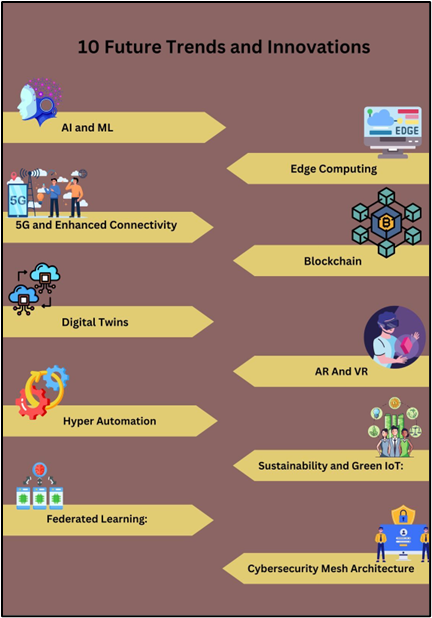
Figure 4: 10 Future Trends and Innovations.
8. Conclusion
This is a surprising transformation in customer relationship management (CRM) that enables organizations to provide better customer insights, improve service delivery and create personalized experiences by merging Salesforce CRM with IoT. With the help of IoT devices organizations can easily understand and predict customer behavior and extend exceptional services that elicit loyalty. The integration of IoT in CRM has the potential to revolutionize how businesses interact with their customers. This shift will be put at the forefront of defining future CRM strategies. The successful integration of IoT with CRM requires meticulous planning, operational execution and integrated control. These challenges, if carefully adhered to, can provide maximum leverage as we transform into a digital economy.
9. References
- https://www.salesforce.com/data/use-cases/manufacturing/unified-customer-view/
- https://www.salesforce.com/uk/resources/articles/internet-of-things/
- https://www.klouddata.com/salesforce-blogs/salesforce-and-iot-the-future-of-customer-relationship-management
- https://iqratechnology.com/blogs/connecting-modern-iot-devices-to-salesforce/
- https://delegate.team/salesforce-and-iot-unlocking-new-business-opportunities/
- https://www.salesforce.com/crm/crm-integration/
- https://www.londondaily.news/how-ai-and-iot-are-revolutionising-salesforce-crm/
- https://www.itechcloudsolution.com/blogs/salesforce-iot-integration/
- https://www.salesforce.com/data/
- https://reintech.io/blog/salesforce-iot-integrating-connected-devices-with-crm
- https://www.reuters.com/technology/artificial-intelligence/salesforce-closes-1000-paid-agentforce-deals-looks-robot-future-2024-12-17/