Strategic Procurement for Hyperscale Cloud Infrastructure: Enabling Delivery through Supplier Partnerships
Abstract
The rapid
expansion of hyperscale cloud infrastructure, driven by AI workloads and global
digital transformation, has elevated procurement from a transactional function
to a strategic enabler of growth. Traditional procurement models, focused on
cost and predictability, are ill-suited to the demands of hyperscale
build-outs, which require speed, resilience, and supplier accountability. This
paper examines how sourcing strategies, contracting frameworks, and supplier
partnerships accelerate delivery in the hyperscale era. Drawing on case studies
from AWS and Microsoft, it highlights both the challenges-supply shortages,
geopolitical dependencies, and logistics constraints-and the mitigation
strategies that hyperscalers employ, such as nearshoring, strategic buffers,
and collaborative planning. The analysis also explores the future of
procurement in an AI-driven era, emphasizing predictive analytics,
sustainability mandates, and autonomous supply chain ecosystems. The findings
underscore procurement’s role as a competitive differentiator, positioning
supplier partnerships as catalysts for innovation, resilience, and sustainable
hyperscale expansion.
Keywords: Hyperscale cloud, Strategic procurement,
Supplier partnerships, Contracting models, Supply chain resilience, AI-Driven procurement,
Sustainability, Data center expansion
1. Introduction
The cloud
industry has entered a new era defined by hyperscale expansion and the deep
integration of artificial intelligence (AI) across infrastructure and services.
Global hyperscaler’s-such as Amazon Web Services (AWS), Microsoft Azure, and
Google Cloud-are competing aggressively to provide not just scalable compute
and storage, but also AI-driven platforms that underpin enterprise
transformation, digital sovereignty, and next-generation applications. This
competitive dynamic has accelerated the pace of innovation, fueling
unprecedented demand for global capacity.
This growth
is evident in the data center sector: as of late 2024, the number of hyperscale
data center facilities surpassed 1,100 globally, having doubled over the
previous five years. Moreover, industry analysts forecast that total
operational hyperscale capacity will nearly triple by 2030 as generative AI
dramatically increases per-facility compute loads, particularly in GPU-oriented
infrastructure1,2. In addition,
hyperscale operators already account for approximately 44 % of global data
center capacity, a share expected to grow to over 60 % by 2030. The U.S.,
hosting the lion’s share of this infrastructure, continues to lead in both
capacity and new development3.
Data center
development and financing are also surging. In 2025 alone, an estimated 10 GW
of hyperscale and colocation capacity is projected to break ground globally,
with 7 GW reaching completion-representing roughly US $170
billion in asset value4. In North
America, an even more striking trajectory is forecast: over US $1 trillion in new data center development could
occur by 2030, driven by AI and cloud demand. Notably, vacancy rates have
fallen to just 2–3 %, and more than 100 GW of new hyperscale and colocation
capacity is expected to commence within the next five years5.
During the
COVID-19 pandemic, hyperscale demand surged as enterprises accelerated digital
transformation, while global supply chain disruptions exposed vulnerabilities
in hardware and construction procurement (Figure 1). These pressures
elevated procurement from a transactional function to a strategic enabler,
ensuring resilience and accelerating post-pandemic cloud build-outs6,7.
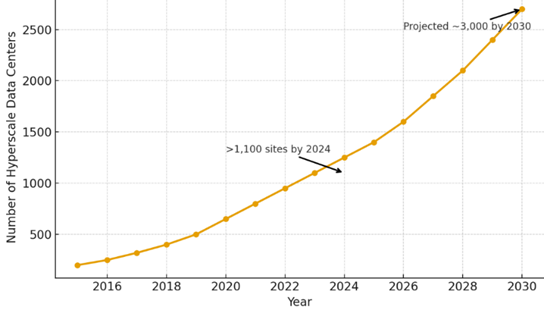
Figure 1: Global Hyperscale Data Center Growth
(2015-2030 Projection).
Within this
rapidly expanding environment, strategic procurement emerges as a critical
enabler of hyperscale growth. Unlike traditional procurement-which often
focuses narrowly on cost efficiency and transactional processing-hyperscale
procurement must secure scarce, specialized resources (such as high-density
power systems, networking, and AI accelerators), mitigate global supply chain
risks, and forge resilient supplier ecosystems capable of scaling at pace.
Strategic sourcing practices, emphasizing total cost, supplier development, and
continuous risk assessment, become essential for managing such complexity8,9.
Purpose and scope of this paper. This paper explores how sourcing strategies,
contracting models, and supplier accountability frameworks accelerate global
hyperscale cloud build-outs. Through analysis of leading hyperscaler
procurement practices, identification of common risks and bottlenecks, and
projection of future trends shaped by AI-driven supply chains, the aim is to
demonstrate how procurement functions have evolved into strategic
differentiators in the cloud industry. The scope encompasses tactical
procurement mechanisms-such as supplier selection, contracting, and performance
monitoring-as well as broader governance structures aligning supplier
ecosystems with hyperscaler goals.
2. Procurement in Transition and Problem
Statement
Traditional
procurement in IT and infrastructure has historically emphasized cost
minimization, standardized contracts, and predictability. Organizations would
negotiate long-term vendor agreements, run competitive bidding processes, and
follow sequential approval cycles. While these methods optimized for financial
control and compliance, they often introduced rigidity, slow response times,
and limited supplier innovation.
By
contrast, hyperscale procurement requires speed, flexibility, and global reach.
Providers such as AWS, Microsoft, and Google Cloud must scale capacity in
months rather than years, sourcing highly specialized equipment (GPUs,
high-density servers, advanced cooling systems) and securing capacity across
multiple continents. In this environment, procurement is not a back-office
function but a strategic enabler of competitive advantage. It must foster
long-term partnerships, create frameworks for accelerated contracting, and
ensure suppliers can deliver at hyperscale speed4,6.
Table 1: Traditional vs Hyperscale Procurement Needs.
|
Dimension |
Traditional Procurement |
Hyperscale Procurement |
|
Focus |
Cost minimization |
Speed, resilience, scalability |
|
Lead Times |
Long (months) |
Short (weeks) |
|
Contracting |
Rigid, fixed-price |
Flexible, outcome-based |
|
Supplier Base |
Regional, limited |
Global, multi-sourcing |
|
Risk Approach |
Supplier-led |
Shared risk, joint governance |
2.1. Several
bottlenecks illustrate the magnitude of this shift
· Long lead times: Specialized components such as semiconductors
and power distribution units have extended production cycles. In hyperscale
contexts, delays can translate into months of deferred cloud capacity expansion1.
· Supply chain volatility: Events like COVID-19, semiconductor shortages,
and energy price shocks highlight the fragility of global supply chains.
Hyperscalers increasingly adopt multi-sourcing and near-shoring strategies to
mitigate risk7.
· Capital intensity: Data center build-outs are capital-heavy,
often requiring $500 million to $1 billion per site. Procurement must balance cost
competitiveness with supplier commitments to scale and long-term innovation5.
· Geopolitical constraints: Export restrictions, data localization
mandates, and trade disputes complicate supplier choices. Procurement now
integrates geopolitical risk modeling into sourcing strategies9.
· Competitive advantage through speed: Procurement speed has become a direct
determinant of market position. The ability to secure land, equipment, and
skilled contractors at lightning pace enables first-mover advantage in
high-demand regions4,6.
· Technology upgrade cycles: Hyperscale cloud is shaped by rapid adoption
of AI-optimized hardware, liquid cooling, and energy-efficient designs.
Procurement teams must anticipate refresh cycles and avoid lock-in with
suppliers that cannot adapt2.
· Risks of misaligned suppliers: Global delivery depends on accountability
frameworks that align incentives. Misaligned suppliers risk causing cascading
delays, eroding reliability, and damaging customer trust8.
In essence,
procurement has moved from transactional sourcing to strategic orchestration,
balancing cost with speed, resilience, and innovation. This transition is what
differentiates hyperscale procurement from traditional models and underpins the
ability of cloud providers to sustain global growth.
3. Procurement Strategies and Sourcing Models
As
hyperscale cloud providers race to expand global capacity, procurement
strategies are evolving from transactional buying to integrated ecosystem
management. Instead of focusing narrowly on price competition, organizations
now view procurement as a lever to accelerate delivery, secure scarce
resources, and manage risks across complex supply chains3,6.
3.1. Strategic sourcing approaches
In the
hyperscale environment, sourcing teams are expected to do more than run bidding
cycles. They must anticipate future demand and position contracts ahead of
market shifts. This includes forward purchasing of critical components such as
GPUs and networking equipment, and establishing framework agreements with
engineering and construction firms to guarantee delivery capacity when demand
peaks4. Multi-sourcing is
increasingly common to reduce overreliance on single suppliers, while
sole-sourcing is reserved for specialized technologies where innovation is
concentrated in only a few global players5.
3.2. Knowledge and market awareness
One of the
most important enablers of effective procurement is the capability of the
sourcing team itself. Teams must stay constantly updated on technology trends,
supply market dynamics, and pricing shifts to make the right choices at the
right time. For example, the rapid rise of AI workloads has transformed demand
for GPUs, liquid cooling systems, and high-density servers almost overnight.
Procurement specialists who track these trends closely can anticipate
shortages, negotiate favorable terms, and secure products at the right cost
before the rest of the market catches up. This requires not only technical
understanding but also strong relationships with suppliers, industry forums,
and market intelligence providers.
3.3. Partnership and ecosystem models
A defining
feature of hyperscale procurement is the emphasis on long-term partnerships.
Rather than chasing the lowest price in every cycle, providers work with
strategic suppliers to co-develop next-generation technologies and improve
efficiency across the supply chain2,6.
These relationships often extend beyond hardware to include construction firms,
energy providers, and logistics partners, creating an ecosystem capable of
scaling rapidly and innovating continuously.
3.4. Regionalization and localization
As data
sovereignty rules and trade restrictions become more complex, sourcing
strategies also lean toward regional diversification. Hyperscalers increasingly
source materials, labor, and energy within the regions where data centers are
built. This helps mitigate regulatory risk while also improving community
acceptance and strengthening local partnerships9.
3.5. Balancing speed with governance
Even with
the pressure to move at lightning speed, procurement strategies must be
underpinned by governance and transparency. Digital procurement platforms,
analytics, and automation are being adopted to speed up supplier evaluation and
contract execution, while still ensuring accountability and compliance8. The ability to move quickly without
losing control is what sets leading hyperscalers apart from traditional
procurement organizations.
In sum,
procurement strategies in hyperscale contexts prioritize speed, awareness, and
supplier innovation over short-term cost savings. By combining informed
sourcing teams, long-term partnerships, regional diversification, and digital
procurement tools, hyperscalers can stay ahead of market shifts while ensuring
resilience in global expansion.
4. Contracting Models and Supplier
Accountability
As
hyperscale demand accelerates, contracting models must evolve beyond
traditional, transactional agreements. In conventional procurement, contracts
often emphasize fixed prices, standardized service levels, and annual
renegotiation cycles. While predictable, such models are too rigid for
hyperscale cloud, where capacity expansions are measured in gigawatts, hardware
generations turn over in months, and regional requirements shift rapidly.
4.1. Outcome-based and flexible contracts
Hyperscale
providers increasingly rely on outcome-based contracting, where suppliers are
incentivized not just on delivery, but on achieving operational outcomes such
as uptime, sustainability targets, or speed of deployment. Microsoft has
highlighted the value of flexible, data-driven supplier partnerships that
prioritize resilience and sustainability over lowest-cost bids10. This shift allows contracts to absorb
volatility - from supply chain disruptions to geopolitical shocks - without
derailing construction timelines.
4.2. Shared risk and forward commitments
A defining
feature of hyperscale contracting is the allocation of risk. Rather than
offloading all uncertainty onto suppliers, leading cloud providers increasingly
adopt shared-risk models. These include forward commitments for hardware and
construction capacity, pre-purchasing critical components like GPUs, and joint
investments in new facilities. AWS, for instance, emphasizes supplier
collaboration supported by AI-driven lead-time insights, enabling proactive
negotiation when vendors consistently underperform11.
Such mechanisms ensure supply continuity while creating accountability loops
grounded in real data.
4.3. Supplier accountability frameworks
Contracting
is not only about risk allocation but also about accountability. Hyperscale
operators use joint governance structures with key suppliers, embedding regular
performance reviews, predictive risk assessments, and escalation pathways into
contracts. Google and Meta, both with massive global build-outs, have openly
discussed the importance of supplier alignment with sustainability goals and
open-standards initiatives (e.g., Open Compute Project). These frameworks
extend accountability beyond delivery timelines to include environmental
impact, ethical sourcing, and innovation milestones12.
4.4. Incentives for innovation and
sustainability
Contracts
in the hyperscale context also increasingly embed innovation clauses, rewarding
suppliers who bring forward cost-saving designs, energy-efficient hardware, or
automation capabilities. Microsoft reports that its own supplier collaboration
initiatives reduced supplier data review time by over 90%, demonstrating how
aligned incentives can drive both efficiency and resilience10. Similarly, AWS explores the use of
generative AI to automate purchase orders and invoicing, making contract
execution itself a space for innovation13.
5. Case Studies in Hyperscale Procurement
5.1. AWS - AI-driven procurement and supply
chain resilience
Amazon Web
Services (AWS) has transformed its procurement function into a predictive,
data-driven engine. Facing unprecedented demand for GPUs and high-performance
networking equipment to power AI workloads, AWS applies machine learning models
to forecast supplier lead times and detect potential disruptions. This enables
procurement teams to shift orders, secure alternative suppliers, and negotiate
forward commitments before shortages occur14.
By integrating predictive analytics into its supply chain dashboards, AWS
reduces deployment delays and ensures critical resources are available when
building new data centers. Procurement is no longer reactive but anticipatory,
directly supporting AWS’s ability to scale capacity faster than competitors.
5.2. Microsoft - Supplier accountability and
sustainability
Microsoft
has embedded supplier accountability into the core of its procurement
practices. Through initiatives like the Microsoft Supplier Sustainability
Scorecard, vendors are evaluated not only on cost and delivery speed but also
on their compliance with environmental and social standards15. Suppliers must commit to
carbon-reduction targets and transparent reporting of emissions, aligning
procurement with Microsoft’s pledge to be carbon negative by 2030. This
approach transforms contracts into governance frameworks, ensuring that rapid
infrastructure expansion does not come at the expense of resilience or ethics.
Procurement thus acts as both a growth accelerator and a guardian of corporate
values, demonstrating how hyperscale sourcing strategies can balance speed,
accountability, and sustainability.
6. Risks and Mitigation
Hyperscale
procurement faces a range of risks that can derail even the most well-planned
build-out programs. Supply shortages remain the most immediate threat,
particularly for GPUs, advanced semiconductors, and high-voltage power
equipment. Lead times have stretched from weeks to several quarters, creating
potential bottlenecks for AI-driven workloads14.
Another
major risk stems from geopolitical dependencies. Rare earth minerals and
advanced chips are concentrated in a few regions, while trade restrictions and
export controls introduce volatility in global sourcing16. These risks are compounded by logistics
and labor constraints: congested shipping lanes, rising transport costs, and
shortages of skilled construction labor can delay data center projects and
inflate budgets5.
To mitigate
these risks, hyperscalers are adopting a combination of proactive strategies:
· Strategic buffers of critical components to smooth supply shocks.
· Nearshoring and regional supplier diversification to reduce
geopolitical exposure.
· Collaborative planning with suppliers, including forward
commitments and joint investments, to align capacity with demand.
· AI-driven scenario modeling, already piloted at AWS, which helps
procurement teams forecast potential disruptions and reallocate resources in
advance14.
By
combining these approaches, procurement leaders can enhance resilience while
maintaining the speed and efficiency required for hyperscale expansion.
7. Future Outlook and AI-Driven Procurement
Procurement
in hyperscale cloud infrastructure is entering a new phase where artificial
intelligence, automation, and sustainability will shape the operating model.
Analysts project that over half of all hyperscaler procurement decisions will
be supported by AI-based forecasting and digital platforms by 202716. Already, companies like AWS and
Microsoft are embedding AI into their procurement workflows: AWS applies
machine learning to predict global supply chain risks, while Microsoft uses
generative AI tools to streamline contracting and compliance processes14,15.
A defining
trend is the rise of autonomous procurement ecosystems, where sourcing teams
leverage AI agents to continuously scan supplier markets, evaluate risks, and
recommend optimal sourcing options. This reduces manual bottlenecks and allows
hyperscalers to keep pace with the rapid cycles of AI hardware releases,
especially GPUs and networking components. Google, for instance, has piloted
AI-driven scenario modeling to balance regionalized supplier networks with
sovereignty requirements16.
Another key
outlook is procurement as a driver of sustainability and resilience.
Hyperscalers are increasingly embedding sustainability clauses,
carbon-reduction targets, and circular-economy practices into contracts. Meta’s
Open Compute Project is a strong example, where supplier co-innovation results
in more efficient, modular designs that reduce waste and lifecycle costs17. Future procurement strategies will
emphasize not just “time-to-deploy” but also “time-to-sustain,” ensuring that
infrastructure buildouts align with climate commitments.
Finally,
the governance of supplier ecosystems is expected to evolve into real-time
accountability frameworks, powered by digital dashboards and blockchain-enabled
transparency. Procurement will thus act as both an orchestrator of speed and a
guardian of resilience and ethics, shaping how hyperscale infrastructure grows
in the AI era.
8. Conclusion and Call to Action
Procurement
has emerged as a strategic differentiator in hyperscale cloud delivery. No
longer limited to transactional cost control, it now functions as an
orchestrator of speed, resilience, and sustainability. The ability to secure
scarce components, align suppliers with aggressive build-out timelines, and
embed accountability into contracts directly determines whether hyperscale
providers can keep pace with AI-driven demand.
The
evidence shows that procurement excellence depends on more than efficiency-it
requires trust-based supplier ecosystems, strengthened through long-term
partnerships, shared risk mechanisms, and co-innovation. Organizations like AWS
and Microsoft demonstrate how predictive analytics, sustainability scorecards,
and collaborative models transform procurement into a catalyst for competitive
advantage.
Looking
forward, procurement leaders must embrace AI-enabled forecasting,
sustainability mandates, and transparent accountability frameworks as part of
their operating model. By doing so, procurement will not just enable hyperscale
expansion but also set the foundation for a resilient, sustainable, and
innovative cloud ecosystem.
The call to
action is clear: hyperscalers should invest in strategic partnerships that
accelerate innovation and build resilience. Procurement is not merely a support
function—it is the backbone of hyperscale growth in the AI era.
9. References
- https://www.srgresearch.com
- International Data Corporation (IDC). Global
DataSphere and AI Infrastructure Forecast 2024-2030. IDC Market Analysis, 2024.
- https://www.us.jll.com
- McKinsey & Company. The trillion-dollar
data center buildout: How AI is reshaping demand. McKinsey Technology Report,
2025.
- CBRE.
North America Data Center Trends H2 2024. CBRE Research, 2024.
- Harvard
Business Review. Global supply chain resilience lessons from COVID-19. HBR,
2021.
- Deloitte.
Building resilient supply chains for cloud and AI infrastructure. Deloitte
Insights, 2023.
- Gartner.
Strategic Sourcing Trends for Cloud Infrastructure and Services. Gartner
Research, 2024.
- Forrester.
Evolving IT Procurement in the Age of AI. Forrester Research Report, 2024.
- Microsoft. Reduce Risk and Improve Resilience:
Insights from Microsoft on Advancing Supply Chain Sustainability. Microsoft
Industry Blog, 2025.
- AWS. Enhancing Supply Chain Agility with AWS
Supply Chain Lead Time Insights. AWS Supply Chain Blog, 2024.
- Open
Compute Project. Driving Efficient, Sustainable Data Center Designs. OCP
Foundation, 2024.
- AWS. Optimize Your Supply Chain Processes with
Generative AI on AWS. AWS Industries Blog, 2024.
- AWS. Using AI/ML to improve supply chain
resilience. AWS News Blog, 2023.
- Microsoft.
Supplier sustainability requirements. Microsoft Corporate Blogs, 2023.
- Google
Cloud. AI-driven supply chain and infrastructure planning. Google Cloud Blog,
2024.
-
Open
Compute Project. Meta’s role in driving sustainable and open innovation. OCP
Publications, 2023.