Unmasking Bias: A Framework for Testing and Mitigating AI Bias in Insurance Underwriting Models
Abstract
The integration of
Artificial Intelligence (AI) in insurance underwriting has catalyzed a paradigm
shift towards hyper-personalized risk assessment and operational optimization.
However, the proliferation of AI-powered models in this space introduces a latent
risk - algorithmic bias - which, if unaddressed, can perpetuate systemic
inequities, exposing insurers to compliance violations, reputational risks and
ethical dilemmas. This research delves into the critical need for rigorous bias
testing frameworks within AI-driven underwriting models, advocating for a
multi-faceted approach that incorporates fairness metrics, data sanitization
and transparency enhancing mechanisms. Leveraging advanced explainable AI (XAI)
techniques and fairness-centric model architectures, we propose a comprehensive
bias detection and mitigation strategy that spans the entirety of the AI
lifecycle, from pre-processing through to post-deployment monitoring. By
embedding continuous calibration loops and real-time fairness monitoring, this
paper posits that insurers can not only mitigate the risk of algorithmic
discrimination but also foster a future of equitable, compliant and transparent
underwriting systems. Through a confluence of machine learning fairness
strategies, regulatory adherence protocols and ethical AI practices, this work
lays the foundation for a transformative shift towards trustworthy AI in the
insurance domain.
Keywords: AI-driven Underwriting,
Algorithmic Bias, Fairness in AI, Bias Testing Frameworks, Explainable AI
(XAI), Ethical AI, AI Bias Mitigation, Equitable Underwriting, Bias Detection
Algorithms,
1. Introduction
The
convergence of Artificial Intelligence (AI) with the insurance underwriting
process marks a pivotal transformation in the industry, heralding an era
characterized by data-driven decision-making and hyper-personalized risk
profiling. Leveraging sophisticated machine learning (ML) algorithms, insurers
now harness vast amounts of structured and unstructured data to generate highly
accurate predictions, optimize pricing strategies and enhance operational
efficiencies. AI-driven underwriting models promise not only unprecedented
levels of precision but also the agility to dynamically adjust to fluctuating
market conditions, customer behaviors and evolving risk landscapes. However,
the rapid deployment of AI in underwriting introduces a latent yet formidable
challenge-algorithmic bias-which threatens the integrity, fairness and equity
of automated decision-making systems.
Bias
in AI arises from a multitude of sources, including biased training data,
inadvertent algorithmic assumptions and hidden feature correlations, all of
which can distort predictions and lead to discriminatory outcomes. In the
context of insurance, such biases manifest as unfair risk assessments, where
certain demographic groups—often marginalized or underrepresented—may be
subjected to higher premiums, denied coverage or receive suboptimal policy
conditions based on non-relevant or unjust factors. As AI models rely heavily
on historical datasets that may perpetuate these biases, even the most advanced
machine learning systems are vulnerable to replicating societal inequities. The
result is not only a violation of ethical principles but also a legal minefield,
as discriminatory practices in underwriting violate numerous
anti-discrimination laws such as the Equal Credit Opportunity Act (ECOA) and
other regulations that prohibit biases based on race, gender, ethnicity and
other protected characteristics.
Given
these risks, there is an urgent need for bias testing and mitigation in
AI-driven underwriting systems to ensure that these technologies serve their
intended purpose - empowering insurers to make fair, transparent and compliant
decisions. Bias detection is not a monolithic task but rather a multifaceted
challenge that spans the entire lifecycle of AI model development—from the
initial stages of data collection and preprocessing to the subsequent phases of
model training, deployment and post-deployment monitoring. Addressing this
challenge necessitates the integration of fairness metrics such as demographic
parity, equal opportunity and individual fairness into the core fabric of AI
model design, fostering a more comprehensive and equitable model development
pipeline.
Furthermore,
the opacity inherent in many AI models, particularly in deep learning-based
systems, exacerbates the difficulty of detecting and addressing bias. These
so-called “black box” models offer little transparency in terms of how
decisions are made, rendering it challenging to ascertain the exact reasons for
bias or discriminatory behavior. Consequently, the adoption of Explainable AI
(XAI) techniques becomes indispensable, enabling stakeholders-from data
scientists and business leaders to regulatory bodies and end-users—to gain
insight into the decision-making processes of these models. Model
interpretability not only aids in identifying potential biases but also ensures
accountability and trustworthiness in AI-driven decision-making.
In
this paper, we propose a comprehensive bias testing framework designed to
detect, assess and mitigate biases within AI-based underwriting systems in the
insurance industry. Our framework incorporates automated fairness audits,
adversarial debiasing algorithms and data sanitization techniques to identify
biased patterns and ensure that models adhere to both legal and ethical
standards. Additionally, we emphasize the importance of ongoing post-deployment
monitoring, using real-time fairness dashboards and continuous model
recalibration strategies to mitigate any drift or emerging biases that may arise
once models are operationalized. The integration of such rigorous testing
practices not only aligns with regulatory mandates but also reinforces
insurers’ commitments to equitable business practices, customer trust and
long-term sustainability.
By
leveraging cutting-edge AI fairness strategies, this paper aims to bridge the
gap between technological innovation and social responsibility in the insurance
sector. Through the implementation of a robust bias testing and mitigation
framework, insurers can ensure that their AI-powered underwriting models
deliver outcomes that are not only accurate but also fair, transparent and in
line with broader societal values.
2. Challenges
of Bias in AI-Driven Underwriting
The
incorporation of Artificial Intelligence (AI) into insurance underwriting has
undeniably revolutionized the industry's operational landscape. However, the
underlying challenges posed by algorithmic bias threaten to undermine the
efficiency, fairness and transparency that these innovations promise. Below, we
explore the multi-dimensional challenges of bias in AI-driven underwriting
systems, delving into the technical, ethical and operational complexities.
2.1 Data Quality and
Representational Bias
AI
models are fundamentally data-driven and their efficacy is intrinsically tied
to the quality, diversity and representativeness of the data they are trained
on. Unfortunately, real-world datasets often carry the imprint of historical
inequities and systemic biases. In the context of underwriting, this translates
to training data that may disproportionately underrepresent minority
populations or encode discriminatory patterns reflective of past decisions.
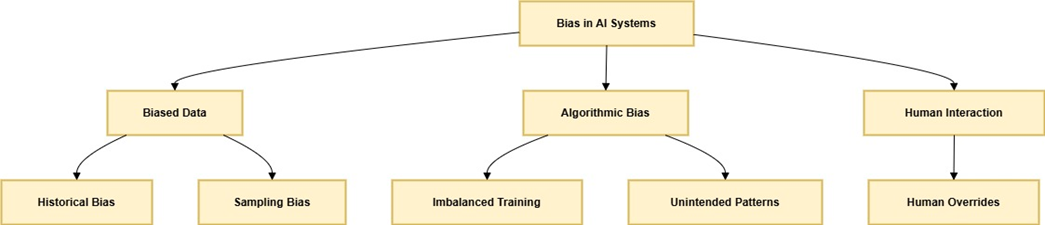
Sampling
bias can
lead to disparate impact, where
models systematically disadvantage certain demographic groups.
Feature
engineering bias
arises when proxy variables in the dataset inadvertently correlate with
sensitive attributes like race, gender or socioeconomic status.
Historical
bias
perpetuates systemic inequities, even when a model is technically accurate, by
reflecting discriminatory practices embedded in historical decision-making
processes.
Addressing
these biases requires advanced data preprocessing techniques such as
re-sampling, re-weighting and synthetic data generation to ensure that training
datasets are both diverse and balanced.
2.2 Model Design and Hidden
Bias Propagation
AI
models, particularly those utilizing deep learning architectures, are often
susceptible to hidden bias propagation during training. These models
automatically identify patterns and relationships within data, but without
explicit fairness constraints, they may amplify or even create new forms of
bias.
Complexity
in feature interaction: High-dimensional feature spaces in AI models make it challenging
to interpret which features are driving predictions, increasing the risk of
latent bias.
Algorithmic
opacity:
Many AI models, particularly those employing ensemble methods or neural
networks, function as “black boxes,” limiting visibility into the
decision-making process. This lack of interpretability complicates the
detection of biased behavior and impedes stakeholder trust.
Bias
amplification loops: Feedback loops created by biased model predictions can lead to
compounding inequities, especially in iterative systems where predictions
influence future datasets.
To
mitigate these issues, the adoption of fairness-aware machine learning
techniques and model explainability tools is critical.
2.3 Regulatory and Ethical
Constraints
AI-driven
underwriting systems operate in a highly regulated domain, with stringent laws
and guidelines designed to protect consumers from discrimination. However,
compliance with these regulations-such as the Fair Housing Act (FHA) or the
Equal Credit Opportunity Act (ECOA)-is increasingly complex when using AI
models.
Regulatory
ambiguity:
Many existing regulations were not designed with AI in mind, leading to
uncertainty about how compliance should be interpreted and enforced in
algorithmic contexts.
Unintended
discrimination:
Even when direct discrimination is avoided, indirect discrimination, where
seemingly neutral variables disproportionately affect protected groups, can
result in significant legal repercussions.
Ethical
considerations:
Beyond legal compliance, insurers face mounting pressure to adhere to ethical
AI principles, such as transparency, accountability and fairness, which require
proactive measures to identify and eliminate bias.
Navigating
these challenges necessitates the integration of fairness audits, bias-testing
frameworks and cross-functional collaborations involving data scientists, legal
teams and ethicists.
2.4 Post-Deployment
Challenges and Bias Drift
Bias
does not cease to be a concern once an AI model is deployed. Bias drift or the
emergence of biases over time due to shifts in the underlying data
distribution, poses a significant challenge to the long-term reliability of
AI-driven underwriting systems.
Dynamic
risk profiles:
Changes in market conditions, demographics or societal norms can render
initially fair models biased over time.
Adversarial
exploitation:
Malicious actors may attempt to exploit algorithmic vulnerabilities,
introducing biases that were not present during initial training.
Monitoring
and recalibration: Continuous monitoring and recalibration are essential to ensure
that models remain aligned with fairness objectives, but these processes often
require substantial computational and operational resources.
To
combat these issues, insurers must deploy real-time fairness monitoring
systems, incorporating automated bias detection algorithms and self-healing
models capable of recalibrating their decision-making processes autonomously.
2.5 Business and Operational
Impacts
The
presence of bias in AI-driven underwriting systems can have far-reaching
implications for insurers, affecting not only their compliance posture but also
their business outcomes and reputational standing.
Customer
trust erosion:
Discriminatory practices, whether real or perceived, can lead to public
backlash, damaging an insurer’s brand and eroding customer trust.
Operational
inefficiencies:
Biased models may lead to suboptimal decision-making, resulting in financial
losses due to mispriced policies or increased claims ratios.
Competitive disadvantage: As the industry moves toward ethical AI adoption, insurers failing to address bias risk being left behind, both in terms of technological capability and customer appeal.
By
embedding bias-mitigation strategies into their AI pipelines, insurers can not
only protect themselves from potential liabilities but also position themselves
as leaders in the ethical application of AI technology.
3. Bias
Testing Framework for AI-Driven Insurance Underwriting
To ensure fairness, transparency
and accountability in AI-driven insurance underwriting, a robust bias testing
framework must address the lifecycle stages of AI systems. By integrating
real-world examples, this section demonstrates the practical implementation of
bias detection, evaluation and mitigation.
3.1 Data Preprocessing and
Bias Detection
Challenge: An insurer trains an AI
model to predict policyholder risk using historical data, but the data
disproportionately represent urban male policyholders. This underrepresentation
of rural and female applicants leads to biased predictions.
Framework Implementation:
Example: The training dataset includes demographic features like location (urban/rural) and gender. Analysis reveals a skewed distribution, with 80% urban male applicants.
Solution: Apply oversampling
techniques to balance the data by adding synthetic rural and female applicant
records using SMOTE (Synthetic Minority Over-sampling Technique).
Use Aequitas, a fairness assessment
tool, to calculate metrics like the disparate impact ratio, ensuring balanced
representation across demographics.
By addressing these imbalances, the
model is less likely to favor urban male applicants in its predictions.
3.2 Bias-Aware Model
Training
Challenge: A neural network underwriting model uses income as a feature. However, income correlates strongly with gender in the dataset, leading to lower approval rates for female applicants.
Framework
Implementation:
Example: During training, the
insurer applies adversarial debiasing, where a secondary model tries to predict
gender from the underwriting model’s predictions.
Outcome: If
the adversarial model succeeds in identifying gender, the primary model is
penalized, forcing it to make predictions independent of gender.
Use Explainable AI tools to ensure
that the model’s decisions are driven by neutral factors like credit score or
claim history, not proxy variables for gender.
This ensures the final model treats
applicants equitably, regardless of gender.
3.3 Bias Evaluation Metrics
Challenge: After training, the model shows a 10% higher rejection rate for applicants from minority ethnic groups compared to the majority group.
Framework
Implementation:
Example: Calculate
fairness metrics like:
Equal
Opportunity Difference: Measures whether qualified minority
applicants have the same approval rates as majority applicants.
Counterfactual
Fairness: Test whether changing an applicant’s ethnicity while keeping other
features constant changes the approval decision.
Results indicate a disparity in approval rates caused by historical bias in the dataset.
This evaluation allows insurers to
pinpoint and address systemic biases, ensuring fair outcomes.
3.4 Deployment with
Real-Time Bias Monitoring
Challenge: Post-deployment, a drift in the data distribution causes the model to reject a higher proportion of rural applicants over time.
Framework
Implementation:
Example: Implement
real-time fairness monitoring dashboards using tools
Detect concept drift, where the
proportion of rural applicants in the data shifts from 20% to 30%, creating new
biases in predictions.
Deploy automated alerts that trigger retraining of the model with updated data to recalibrate fairness.
This proactive approach prevents
bias from accumulating and ensures continuous fairness in underwriting
decisions.
3.5 Bias Mitigation
Strategies
Challenge: A
model trained to predict premium pricing systematically assigns higher premiums
to older applicants, even when risk factors are identical to younger
applicants.
Framework
Implementation:
Example: Apply
post-hoc mitigation by adjusting premium thresholds using recalibration
techniques.
Recalculate premiums using a
fairness-aware algorithm that equalizes pricing for applicants with similar
risk profiles, regardless of age.
Implement latent variable disentanglement to remove age-related biases from the model’s intermediate computations.
This ensures that age is only
considered where directly relevant to risk assessment, maintaining equitable
pricing.
3.6 Regulatory and Ethical
Compliance
Challenge: An
insurer faces regulatory scrutiny under the Equal Credit Opportunity Act (ECOA)
after a model disproportionately denies coverage to applicants from
lower-income regions.
Framework Implementation:
Example: Conduct
a bias audit comparing the model’s outcomes against regulatory fairness
standards.
Partner with external auditors to
validate that the model adheres to ethical AI principles like transparency and
accountability.
Use a fairness checklist aligned with ECOA to ensure compliance.
The audit not only ensures legal
compliance but also builds public trust in the insurer’s underwriting
practices.
3.7 Stakeholder
Collaboration
Challenge: End-users (insurance agents) report that the model frequently denies coverage without clear explanations, leading to dissatisfaction and lack of trust.
Framework
Implementation:
Example: Facilitate
collaboration between data scientists and agents by integrating explainable AI
(XAI) modules into the underwriting system.
Agents can access explanations for
each decision, such as “The denial was based on low credit score and high claim
history risk.”
Incorporate feedback loops where agents highlight questionable decisions, allowing data scientists to refine the model.
This approach ensures that the
underwriting system aligns with both technical objectives and real-world needs.
4. Case
Study
Addressing Bias in AI-Driven Life Insurance Underwriting
Background
A leading life insurance provider implemented an AI-driven underwriting system to automate and enhance its policy approval process. The system utilized machine learning algorithms to assess applicant risk based on demographic, medical and financial data. While the solution reduced processing time and operational costs, an internal audit revealed evidence of bias in policy decisions. Certain demographic groups experienced higher rejection rates or less favorable premium pricing, raising ethical, regulatory and reputational concerns.
Challenge
The insurer faced the following challenges related to bias in its AI-driven underwriting system:
Data Bias: Historical data used
for training reflected societal inequalities, such as underrepresentation of
certain ethnic groups.
Algorithmic
Bias:
The machine learning model disproportionately weighed specific attributes
(e.g., zip codes or income levels) that indirectly correlated with race and
socioeconomic status.
Regulatory
Risks:
Bias in the decision-making process posed compliance risks under
anti-discrimination laws.
Reputational Damage: Reports of unfair treatment could erode trust among customers and stakeholders.
Intervention
Using the Bias Testing Framework
To address these challenges, the insurer adopted the Bias Testing Framework described in this paper. The steps included:
Bias
Identification:
Conducted exploratory data analysis (EDA) to identify skewed distributions in
the training dataset, focusing on demographic variables like age, gender and
ethnicity.
Leveraged Explainable AI (XAI)
tools to examine feature importance and identify disproportionately impactful
variables.
Used fairness metrics such as demographic parity and equal opportunity to measure bias
in the model's decisions.
Bias
Mitigation:
Deployed re-sampling techniques to
balance underrepresented groups in the training data.
Implemented algorithmic debiasing methods, such as
adversarial debiasing, to adjust the model's decision boundaries.
Introduced constraints during model
training to enforce fairness without compromising accuracy.
Bias
Monitoring:
Established a real-time monitoring system to track bias metrics in production,
flagging anomalies for human review.
Conducted periodic fairness audits
to ensure compliance with evolving regulatory standards and societal norms.
Stakeholder
Collaboration:
Engaged with regulators to validate bias mitigation practices.
Conducted focus groups with policyholders to understand their concerns and perspectives.
Outcome
The insurer achieved the following
outcomes through the intervention:
Improved
Fairness:
The updated AI model demonstrated a significant reduction in bias-related
disparities across demographic groups.
Regulatory Compliance: The bias testing and mitigation framework ensured adherence to anti-discrimination laws, reducing regulatory exposure.
Enhanced
Trust:
Transparent communication of the steps taken to address bias strengthened
customer and stakeholder confidence in the company.
Sustained
Performance:
Despite fairness constraints, the AI system maintained high accuracy and
efficiency, achieving the dual goals of ethical and operational excellence.
Lessons
Learned
Proactive
Bias Management:
Early identification and correction of biases prevent downstream ethical and
reputational risks.
Continuous
Monitoring:
Bias in AI models is not static; ongoing evaluation and adaptation are
necessary.
Multi-Stakeholder
Involvement:
Collaboration with regulators, customers and internal teams ensures
comprehensive and sustainable solutions.
Conclusion
This case study illustrates the
practical application of the Bias Testing Framework to real-world insurance
underwriting challenges. By prioritizing fairness alongside efficiency, the
insurer not only mitigated bias but also set a benchmark for ethical AI
practices in the insurance industry.
Future
Directions
The future directions for bias
testing in AI-driven insurance underwriting models present significant
opportunities to enhance fairness, transparency and ethical accountability in
the industry. As AI technologies become increasingly integrated into
decision-making processes within insurance, addressing and mitigating biases in
these systems will be essential for fostering trust and ensuring equitable outcomes
for all stakeholders. This section explores emerging trends and potential
avenues for advancing bias detection and correction in AI models, highlighting
key areas of development such as the integration of Explainable AI (XAI),
adaptive mitigation techniques and the establishment of standardized fairness
metrics. Additionally, the future of bias testing extends beyond technical
solutions to encompass ethical, societal and regulatory considerations, paving
the way for a more inclusive and responsible application of AI in insurance.
Integration
of Explainable AI (XAI): Future research could focus on using XAI to improve transparency and help insurers understand how biases
are introduced into AI underwriting decisions.
Adaptive
Bias Mitigation: Developing adaptive
bias correction techniques that evolve with new data, ensuring
real-time bias detection and correction in underwriting models.
Multi-Dimensional
Fairness Metrics: Expanding fairness metrics to consider various factors like
economic and social outcomes, providing a more comprehensive approach to
fairness in AI models.
Collaboration
with Regulators: Working with regulatory
bodies to establish standardized bias
testing guidelines for AI systems in insurance, ensuring ethical
and compliant use.
Cross-Domain
Bias Detection:
Examining how biases from other industries (e.g., credit scoring, healthcare)
affect AI-driven insurance models and addressing these issues with
cross-disciplinary insights.
Long-Term
Impact Analysis: Studying the long-term
effects of bias mitigation on business outcomes like customer
satisfaction, trust and financial performance.
AI and
Human Collaboration: Combining AI and
human expertise to detect complex biases that AI alone may not
identify, ensuring a more holistic approach to fairness.
Real-Time
Bias Detection:
Implementing real-time bias
detection systems in live underwriting environments to
automatically flag and correct biased decisions as they happen.
Ethical
and Societal Implications: Investigating the broader ethical and societal implications of AI bias mitigation,
ensuring fairness while addressing historical inequalities.
Multi-Stakeholder
Involvement:
Involving multiple stakeholders (e.g.,
customers, policymakers) in the bias testing process to develop more inclusive
and diverse fairness frameworks.
5.
Conclusion
In conclusion, the integration of
AI-driven models in insurance underwriting heralds a transformative shift in
the industry, offering unparalleled efficiency and personalization. However,
this advancement is fraught with the potential for inherent biases that could
undermine fairness and perpetuate systemic inequities. This paper has
illuminated the critical need for robust bias testing frameworks that can
systematically identify, measure and mitigate biases embedded within AI
systems. Through a comprehensive exploration of strategies such as Explainable
AI (XAI), adaptive bias correction mechanisms and the development of
multi-dimensional fairness metrics, we have outlined a path toward more
transparent, accountable and ethically sound AI systems in insurance.
Furthermore, the collaboration
between technologists, regulators and stakeholders is essential in ensuring
that AI models are not only optimized for performance but are also designed to
foster social equity and trust. By embracing the future directions highlighted
in this paper - ranging from real-time bias detection to cross-domain bias
analysis - insurance companies can lead the charge in establishing
industry-wide standards for fairness and inclusivity. Ultimately, the evolution
of bias testing in AI-driven underwriting will not only enhance the operational
integrity of insurance platforms but will also serve as a cornerstone for a
more responsible, customer-centric approach in the ever-evolving landscape of
AI-powered decision-making.
6.
References
- Drew Roselli, Jeanna Matthews and Nisha Talagala. Managing Bias in
AI. In Companion Proceedings of the 2019 World Wide Web Conference, San
Francisco, CA USA, May 2019 (WWW '19 Companion), 2019;10.
- McKinsey Global Institute
“Artificial Intelligence: The Next Digital Frontier?”, 2017.
- Kahn J. “Artificial
Intelligence Has Some Explaining to Do”. Bloomberg Businessweek, 2018.
- Dastin J. “Amazon scraps secret AI
recruiting tool that showed bias against women”. Reuters Business News, 2018.
- Goodman B and Flaxman S. “European
Union regulations on algorithmic decision-making and a 'right to explanation'”.
ICML Workshop on Human Interpretability in Machine Learning, New York, NY,
2016.
- Buolamwini J.
“Aritificial Intelligence Has a Problem with Gender and Racial Bias”. TIME,
2019.
- Ribeiro MT, Singh S and Guestrin C. “’Why Should I Trust you?’: Explaining the Predictions of Any Classifier”. Proceedings of the 22nd ACM SIGKDD International Conference on Knowledge Discovery and Data Mining. San Francisco, CA, 2016.